Skip to content

Marc Lee Shannon Live in Concert | Wed. Nov. 19th

  • Online Recovery
    • Quit Opioids
    • Suboxone
    • Insurance or self-pay
    • At-home drug screenings
    • Quit Kratom
    • Medication assistance
    • Insurance or self-pay
    • Whole-person care (anxiety, insomnia, etc.)
    • Quit Drinking
    • Campral
    • Naltrexone
    • Insurance or self-pay
    • 100% Online
    • Non-judgmental providers
    • Help with co-occurring disorders​
    • Recovery groups
    • Real people (No AI bots)
  • About Us
    • Our Research

    Advancing substance use treatment through rigorous, peer-reviewed research and actionable insights.

    • Our Mission

    Everyone deserves access to the gold standard of treatment, without judgment.

    • Growing Our Team

    Join us in transforming addiction treatment and improving lives through digital care.

    • Founded and operated by people in recovery since 2015
  • Resources
    • Workit Health
    • Insurance checker
    • Locations
    • Reviews
    • Articles
    • Member stories
    • Opioid addiction help
    • Suboxone Basics
    • Quit drinking
    • Naltrexone basics
    • For friends and family
    • Resources
    • Help a loved one with addiction
    • Mental health apps
    • Helplines and support
    • Community in recovery
    • Medication resources
    • 32k+ App store reviews
    • 35k+ Members
    • 33% Referred by friends or family
  • Partners
  • Make A Referral
Book now
Book now
Book now
Login
  • Quit Opioids
  • Suboxone
  • Insurance or self-pay
  • At home drug screenings
  • Quit Kratom
  • Medication assistance
  • Insurance or self-pay
  • Whole-person care (anxiety, insomnia,etc.)
  • Quit Drinking
  • Medication assistance
  • Insurance or self-pay
  • Recovery groups
  • 100% Online
  • Non-judgmental providers
  • 35k+ Members
  • 3.2k+ Reviews
About Us
  • Our Research
  • Our Mission
  • Growing Our Team
Resources
  • Workit Health
  • Insurance checker
  • Locations
  • Reviews
  • Articles
  • Member stories
  • Opioid addiction help
  • Suboxone Basics
  • Quit drinking
  • Naltrexone basics
  • For friends and family
  • Resources
  • Help a loved one with addiction
  • Mental health apps
  • Helplines and support
  • Community in recovery
  • Medication resources
  • Partners
  • Make A Referral
  • Sobriety Tips and Tools, Stories Of Recovery
  • eating, mental health

How To Use Mindfulness In Eating Disorder Recovery Without Getting Stressed

  • Fact Checked and Peer Reviewed

We recently caught up with Brooke, one of Workit's interns, to talk about her own journey through eating disorder recovery. Brooke recently mentioned how valuable of a tool mindfulness can be in eating disorder recovery. But in much mindfulness work, the focus is on the on the body, an area of anxiety and concern for those in eating disorder recovery.

  • By Workit Team

A future free of addiction is in your hands

Recover from addiction at home with medication, community, and support—from the nonjudmental experts who really care.

Get started today

What's your goal?

Join the 35k+ members who treated addiction via their phone

Snowy mountain peaks beneath a clear blue sky.

Why Try Dry January?

Alaine Sepulveda
Several doctors, masked for surgery, stand in a circle, staring down at the camera.

How to Advocate for Yourself With Medical Providers

Olivia Pennelle
Cubes with letters on them spell out the word Why

Discover Your Why (Why You’re Taking a Break From Booze)

Tawny Lara

In this article

Mindfulness can be a powerful tool in eating disorder recovery.

We recently caught up with Brooke, Workit’s Head of Care Management, to talk about her journey through eating disorder recovery. Brooke recently mentioned that mindfulness can be a valuable tool in eating disorder recovery. But in much mindfulness work, the focus is on the on the body, an area of anxiety and concern for those in eating disorder recovery.

 Brooke Houser with dog on a beach

Brooke, how long have you been in recovery from an eating disorder?

I’ve been in recovery for about three years.

Mindfulness is not a word everyone might be familiar with. What does it mean to you?

To me, mindfulness means truly listening to your body and your mind. It involves taking time for yourself to notice thoughts and bodily sensations you are having. One of the most valuable skills that mindfulness has taught me is forgiveness. A lot of people think that meditation and mindfulness requires full attention and complete relaxation, but to me it’s more about simply taking time to be present and forgiving yourself when your thoughts wander. You don’t have to be sitting cross-legged in complete silence to be mindful. It can be as simple as noticing things you don’t usually stop to look at, or taking some deep breaths when you’re feeling overwhelmed.

And what sort of role does mindfulness play in your recovery today?

I tend to be pretty bad at regularly meditating, so I try to practice mindfulness in little ways throughout my day. When I am feeling anxious about food, I’ll reflect into myself about why I am feeling this way. When I get the urge to purge after I eat, I’ll often try to take time to appreciate how the food I ate will nourish my body instead of thinking about how it might affect my weight. The forgiving nature of mindfulness often comes into play for me when I’m having trouble meeting my goals. If I diverge from eating healthy, I try to forgive my actions and remind myself that one cheat meal is not realistically going to impact my weight. When I just cannot finish my workout, I forgive myself. Instead of beating myself up, I think of how much I’ve achieved by even stepping foot in the gym!

What are some problems with traditional mindfulness exercises for those struggling with eating issues?

Mindfulness in eating disorder recovery can be so helpful, but there are some obstacles. Eating issues commonly come with negative body thoughts and anxiety. These often translate into intrusive thoughts. When I first tried to meditate, it was basically an invitation for these negative thoughts to take over my mind. This is something I think everyone works through with meditation, but it was definitely made worse by my eating disorder and anxiety.

Also, a lot of mindfulness is centered around breathing deeply from your stomach. Sometimes you’re even asked to put your hands on your waist to feel your breath. During these practices, it was as if my mindfulness instructor was saying, “Touch your most-hated body part and focus on how disgusting it is!” It was very distracting to me. When there is so much negativity around your body, I think it needs to be addressed in the practice in order to be effective.

For those of us not struggling with eating issues, how can we be more aware of body issues when recommending mindfulness?

I would recommend staying away from traditional meditation at first. Instead, suggest exercises that are more structured. Like a mindful walk or listening to music in a mindful way. You can also directly address the problems with eating disorder-informed practices, such as positive body scans or mindful eating.

Always note that mindfulness requires practice. It’s hard for everyone when they first start. We live in a fast-paced world and really aren’t used to slowing down and listening to ourselves. In a way, mindfulness goes against what we’re taught will make us successful. Overcoming the urge to constantly be doing something or thinking a mile a minute is difficult for anyone!
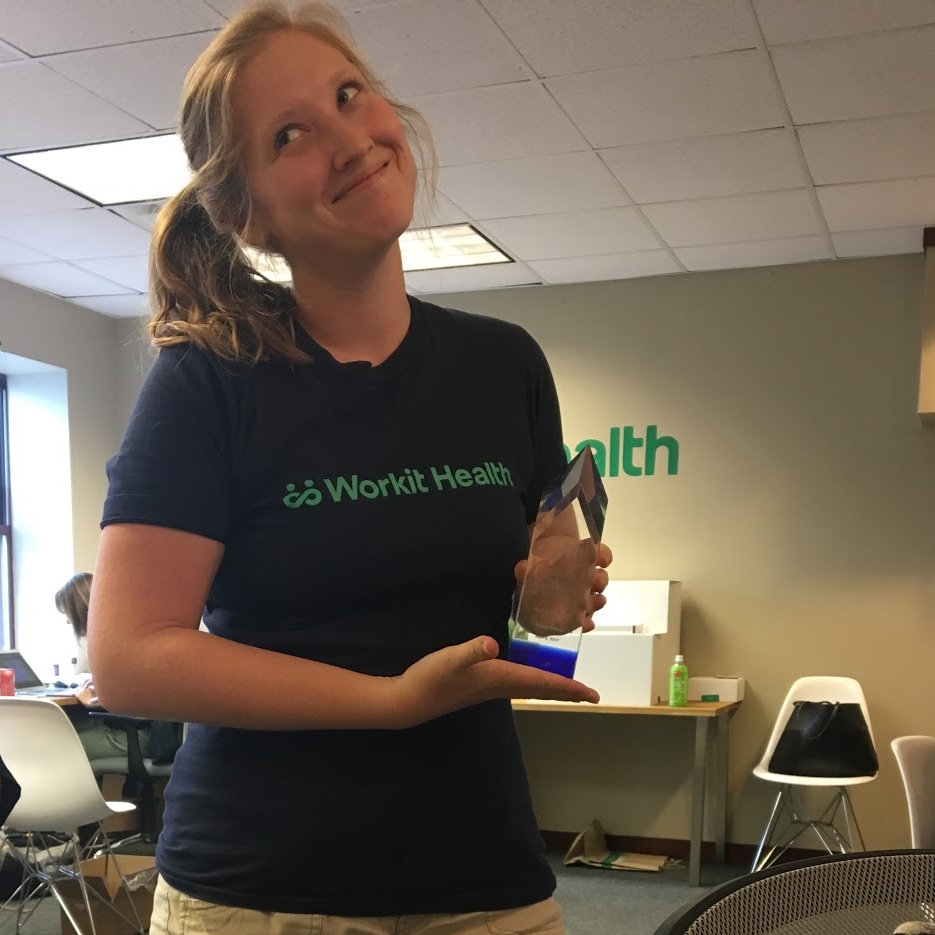
 Brooke Houser Workit Health

Now let’s drop this into our Workit World. Did overcoming an eating disorder influence your decision to come work with us at Workit Health?

Definitely! Workit is run by people who truly understand eating issues and addiction. We’ve been there and we know what works. In a world that shames mental illness and seeking help, it is incredibly refreshing and empowering to see a group of successful people all owning their struggles and using their experiences to help others.

How does Workit fit into your self-care solutions for your own eating issues today?

I credit so much of my recovery to being able to share my story with others. Workit allows me to do that. Helping others fight the same intrusive thoughts and behaviors I have struggled with is empowering. It is also amazing to work with people who understand that some days are just hard. You’ll never be judged or shamed at Workit for taking a much-needed mental health day!

Thanks so much, Brooke!

Workit Health was created by two women in recovery who wanted to build a better addiction treatment experience. Our online program includes proven tools to beat addiction, including medication and support. We believe that everyone deserves access to the gold standard of treatment, without judgment, and that telehealth is a powerful way to deliver trusted, effective addiction care.

PrevBenefits of Long-Term Suboxone (Buprenorphine) Treatment
What My Eating Disorder Looked LikeNext

Any general advice posted on our blog, website, or app is for informational purposes only and is not intended to replace or substitute for any medical or other advice. Workit Health, Inc. and its affiliated professional entities make no representations or warranties and expressly disclaim any and all liability concerning any treatment, action by, or effect on any person following the general information offered or provided within or through the blog, website, or app. If you have specific concerns or a situation arises in which you require medical advice, you should consult with an appropriately trained and qualified medical services provider.

Top

Get the latest recovery news

Instagram Linkedin-in Facebook-f Youtube
  • Treatments
  • Opioids
  • Alcohol: Core Program
  • Alcohol: Flex Program
  • About Workit Health
  • Contact us
  • Our team
  • Media spotlight
  • Careers
  • We Accept Insurance
  • Check insurance
  • Aetna
  • Anthem of Ohio
  • Horizon BCBSNJ
  • Humana
  • Resources
  • What is harm reduction?
  • Addiction recovery resources
  • Suboxone FAQs
  • Blog
  • Friends and Family
  • Resources for friends and family
  • Help Them Heal Guide
  • Members
  • Login
  • Community
  • Request medical records
  • Tech support guides
  • Call us: 855-659-7734 M-F 8am-9pm EST
    • Partners
    • Make a referral
    • For health plans
    • For providers and hospitals
    • Third-party medical records requests
Read more about Suboxone risks and concerns

Suboxone (buprenorphine/naloxone) is indicated for the treatment of opioid dependence in adults. Suboxone should not be taken by individuals who have been shown to be hypersensitive to buprenorphine or naloxone as serious adverse reactions, including anaphylactic shock, have been reported. Taking Suboxone (buprenorphine/naloxone) with other opioid medicines, benzodiazepines, alcohol, or other central nervous system depressants can cause breathing problems that can lead to coma and death. Other side effects may include headaches, nausea, vomiting, constipation, insomnia, pain, increased sweating, sleepiness, dizziness, coordination problems, physical dependence or abuse, and liver problems. For more information about Suboxone (buprenorphine/naloxone) see Suboxone.com, the full Prescribing Information, and Medication Guide, or talk to your healthcare provider. You are encouraged to report negative side effects of drugs to the FDA. Visit www.fda.gov/medwatch or call 1-800-FDA-1088.

All clinical and medical services are provided by licensed physicians and clinicians who are practicing as employees or contractors of independently owned and operated professional medical practices that are owned by licensed physicians. These medical practices include Workit Health (MI), PLLC; Workit Health (CA), P.C.; Workit Health (NJ), LLC; Workit Health (OH), LLC; Virtual Physician Practice (NY), PLLC; and any other Workit Health professional entity that is established in the future.

Clinic locations

Arizona
9700 N. 91st. St.
Ste A-115
Scottsdale, AZ 85258
fax (HIPAA): (833) 664-5441

California
1460 Maria Lane
Ste 300
Walnut Creek, CA 94596
fax (HIPAA): (855) 716-4494

Florida
600 Heritage Dr.
Ste 210, #17
Jupiter, FL 33458
fax (HIPAA): (813) 200-2822

Illinois
1280 Iroquois Ave
Ste 402
Naperville, IL 60563
fax (HIPAA): (855) 716-4494

Michigan
3300 Washtenaw Ave
Ste 280
Ann Arbor, MI 48104
fax (HIPAA): (855) 716-4494

Montana
415 N Higgins Ave
Ste 6
Missoula, MT 59802
fax (HIPAA): (855) 716-4494

New Jersey
5 Greentree Center
Ste 117
Marlton, NJ 08053
fax (HIPAA): (609) 855-5027

New Mexico
5901 Indian School Road, NE
Ste 212
Albuquerque, NM 87110
fax (HIPAA): (855) 716-4494

Ohio
6855 Spring Valley Dr
Ste 110
Holland, OH 43528
fax (HIPAA): (513) 823-3247

Oklahoma
1010 24th Ave NW
Suite 100
Norman, OK 73069
fax (HIPAA): (855) 716-4494

Texas
5373 W Alabama St
Ste 204
Houston, TX 77056
fax (HIPAA): (737) 738-5046

Washington
9116 Gravelly Lake Dr SW
Ste 107 #3, PMB 1963
Lakewood, WA 98499-3148.
fax (HIPAA): (833) 328-1407

AICPA SOC

Terms of Service

Privacy Policy

Notice of Privacy Practice

View Accessibility Statement

© 2025 Workit Health. All rights reserved.

Your recovery, your way—
100% online

Book your appointment
Check your insurance coverage
  • Aetna
  • Humana
  • Horizon
  • Cigna
  • Blue Cross Blue Shield
  • and more

👉 Using insurance? Coverage checks are always for free in the Workit Health app.

Check your coverage

Not ready to start? We'll send you more information:

  • *Messaging frequency varies. I can unsubscribe at any time.

    **Messaging frequency varies. Message and data rates may apply. I can opt out at any time by replying STOP. I can reply HELP to receive support. If I do not consent to receive SMS, and Workit Health is unable to reach me by email, I understand that they will not be able to contact me by text.

    View our Privacy Policy, Terms of Service, and Consent to SMS and Email.

  • Should be Empty:

This site uses cookies to improve your experience. By using this site, you consent to our use of cookies.

Accept Cookies