



Skip to content

Marc Lee Shannon Live in Concert | Wed. Nov. 19th

  • Online Recovery
    • Quit Opioids
    • Suboxone
    • Insurance or self-pay
    • At-home drug screenings
    • Quit Kratom
    • Medication assistance
    • Insurance or self-pay
    • Whole-person care (anxiety, insomnia, etc.)
    • Quit Drinking
    • Campral
    • Naltrexone
    • Insurance or self-pay
    • 100% Online
    • Non-judgmental providers
    • Help with co-occurring disorders​
    • Recovery groups
    • Real people (No AI bots)
  • About Us
    • Our Research

    Advancing substance use treatment through rigorous, peer-reviewed research and actionable insights.

    • Our Mission

    Everyone deserves access to the gold standard of treatment, without judgment.

    • Growing Our Team

    Join us in transforming addiction treatment and improving lives through digital care.

    • Founded and operated by people in recovery since 2015
  • Resources
    • Workit Health
    • Insurance checker
    • Locations
    • Reviews
    • Articles
    • Member stories
    • Opioid addiction help
    • Suboxone Basics
    • Quit drinking
    • Naltrexone basics
    • For friends and family
    • Resources
    • Help a loved one with addiction
    • Mental health apps
    • Helplines and support
    • Community in recovery
    • Medication resources
    • 32k+ App store reviews
    • 35k+ Members
    • 33% Referred by friends or family
  • Partners
  • Make A Referral
Book now
Book now
Book now
Login
  • Quit Opioids
  • Suboxone
  • Insurance or self-pay
  • At home drug screenings
  • Quit Kratom
  • Medication assistance
  • Insurance or self-pay
  • Whole-person care (anxiety, insomnia,etc.)
  • Quit Drinking
  • Medication assistance
  • Insurance or self-pay
  • Recovery groups
  • 100% Online
  • Non-judgmental providers
  • 35k+ Members
  • 3.2k+ Reviews
About Us
  • Our Research
  • Our Mission
  • Growing Our Team
Resources
  • Workit Health
  • Insurance checker
  • Locations
  • Reviews
  • Articles
  • Member stories
  • Opioid addiction help
  • Suboxone Basics
  • Quit drinking
  • Naltrexone basics
  • For friends and family
  • Resources
  • Help a loved one with addiction
  • Mental health apps
  • Helplines and support
  • Community in recovery
  • Medication resources
  • Partners
  • Make A Referral
  • Culture, Stories Of Recovery
  • alcohol, LGBT+

Being Open About My Bisexuality is a Huge Part of My Sobriety

  • Fact Checked and Peer Reviewed
Hiding and secrecy kept me drinking and miserable. Being open about my bisexuality and sobriety bring me freedom and joy.
  • By Irina Gonzalez

A future free of addiction is in your hands

Recover from addiction at home with medication, community, and support—from the nonjudmental experts who really care.

Get started today

What's your goal?

Join the 35k+ members who treated addiction via their phone

New Mexico in the sunset

How to Find Drug Addiction Help in New Mexico

Alaine Sepulveda
Snowy mountain peaks beneath a clear blue sky.

Why Try Dry January?

Alaine Sepulveda
Several doctors, masked for surgery, stand in a circle, staring down at the camera.

How to Advocate for Yourself With Medical Providers

Olivia Pennelle

In this article

When I got sober, a lot of things changed in my life. I stopped spending time with some of the friends who weren’t being supportive because our entire relationship revolved around “going out.” I moved out of New York City—a place I had called home for the past 12 years—and went back to Florida, where I’m from, to figure out what was next.

And most of all, I started to embrace my bisexuality in a way that I hadn’t before.

For many of us, quitting alcohol leads to re-evaluating the other elements of our lives and questioning whether they are serving us or not. There were a lot of things I questioned in my first few years of sobriety, but my queer identity was never in question. What was in question was how I could stay sober and celebrate my sexuality without falling victim to the rainbow-washing popularized by alcohol brands like Smirnoff. That was a struggle.

My early days of bisexual pride

I know a handful of people who didn’t come out as a member of the LGBTQIA+ community until after they stopped numbing themselves with substances. In fact, many of these friends didn’t even realize that they were queer in some way until being sober opened their eyes. However, my story began at age 16.

I was lucky to have supportive friends in high school, so I was able to come out sooner than many of my peers. Although my Latinx parents didn’t understand my sexuality, I had a good sense of self at the time and didn’t tie my bisexuality to my drinking habits.

It wasn’t until I moved to New York City that I saw how much alcohol had become a part of the queer community. You couldn’t go to a Pride event without seeing advertisements for all of the companies that supposedly “supported” us. And when my queer friends wanted to go dancing late into the night, alcohol was always a part of our socializing.

At the time, I didn’t recognize that this culture of rainbow bottles of vodka and who-knows-what-else could lead to dangerous behavior for me, but those fun nights would occasionally lead to me kissing people I shouldn’t have been kissing, losing track of my belongings, and even blacking out. Even worse, I didn’t know that being queer put me at a higher risk of alcohol use disorder (AUD); 12.4% of LGBTQIA+ folks report having AUD versus 10.1% of the overall population.

What’s more, being a bisexual woman put me at an even higher risk of substance misuse than my heterosexual and homosexual peers. And because I am Latina, I was also at higher risk of mental health challenges going untreated. Only 33% of Latinx adults with a mental illness receive treatment, versus 43% of the U.S. population.

On the first day of rehab, I found out that I had an undiagnosed anxiety disorder. Without even realizing it, I had been self-medicating my anxiety for years while telling myself that I’d just been “having fun” with my queer friends.

Embracing being queer and sober

After rehab and almost a year of trying to make sobriety work in NYC, I had to leave. Many of my friends wholeheartedly supported my recovery from AUD, but it was very difficult for me to ignore my old haunts and the desire to numb out the way I used to. A few slips later, I moved back home to Florida.

Shortly afterward, I met my now-husband. He was unlike anyone I had ever dated before, male or female, and he embraced my sobriety and sexuality without question. But after realizing that we were going to “end up together,” I began to feel some of that well-known anxiety creeping back up. Although I was (and am!) happy in my relationship and wouldn’t trade it for anything, I suddenly became very aware of becoming an invisible minority.

This is a phenomenon that often happens to bisexual folks when we enter into relationships with opposite-sex partners. It’s difficult to feel “queer” when I am not sexually involved with anyone but my cis male heterosexual spouse. There’s nothing wrong with being bi and in a heterosexual marriage, but our culture tends to place people in black and white boxes—so being queer but in an opposite-sex marriage can often feel invalidating, as others in your life assume that they have now “figured you out” and that your bisexuality was “just a phase.”

These negative stereotypes about bisexuals in our society are at least partially responsible for why so many of us have trouble coming out, why we numb our invisible pain with alcohol, and why our mental health suffers in the process.

Well, I found the perfect way to overcome these stigmas: Be out and proud!

Living sober and bi out loud

I know that not everyone can be vocal about their sexuality—either due to safety concerns or internalized homophobia—but it’s something that has kept me on the path of lifelong sobriety. In fact, acknowledging to myself and others that I am still bi, even if my partner is of the opposite sex, has strengthened my sobriety tenfold.

When others ask me how this is possible or what the relationship is between sobriety and sexuality, I always point them to the transformative way in which sobriety changes us, inside and out.

It all goes back to that life re-evaluation that so many of us go through after we put down the cocktail and pick up a mocktail instead. Sobriety gives us the clear head and space to figure out what it is that we enjoy about our lives and what could be cut out. Hiding and secrecy, at least in my experience, serve no one. Hiding and secrecy are painful. Hiding and secrecy led to increased anxiety and depression when I was a teen, and that is not a pattern I want to repeat these days.

So, I shout my pride whenever I can (and is appropriate). And you know what? After being sober for seven years, I am very proud of myself. I wouldn’t have gotten here without my support system—which definitely includes my husband—and being supported for my bisexuality as well as my sobriety has been a crucial part of that.
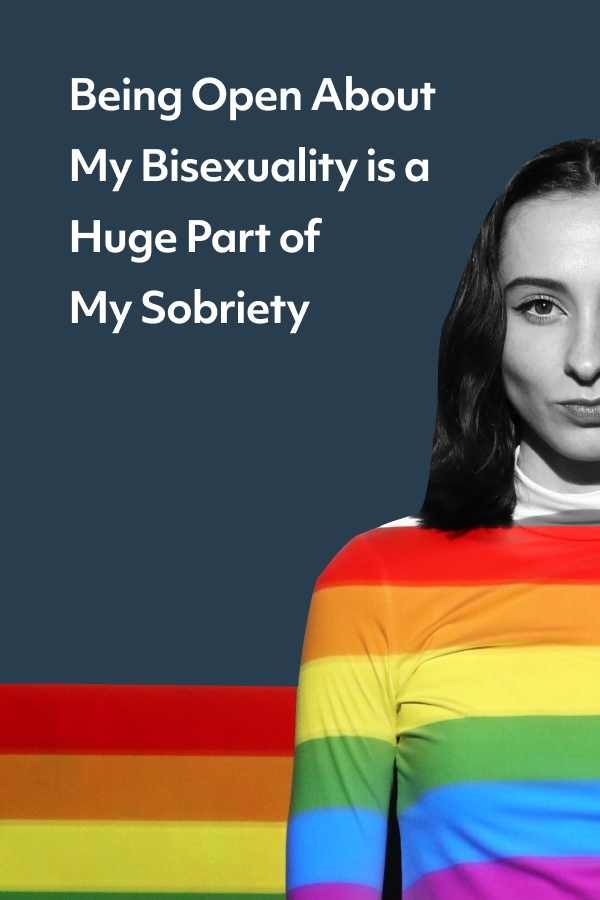
Hiding and secrecy kept me drinking and miserable. Being open about my bisexuality and sobriety bring me freedom and joy.

Irina Gonzalez is an editor, writer, and podcaster. Over the past 15 years, she’s been an editor at some of the top women’s lifestyle brands, been published in 50 national publications and counting, and has written over 100 personal essays on a variety of topics. She’s a freelance writer covering parenting, recovery, and Latinx culture. She is also the creator and host of the Pandemic Mama podcast and recently launched newsletter, which features honest conversations about having a baby during COVID-19 times. In her spare time, you can find Irina exploring her colorful state with my husband and spunky toddler. 

PrevWhat is Emotional Sobriety (And Why Don’t I Have It Yet)?
Ryan’s StoryNext

Any general advice posted on our blog, website, or app is for informational purposes only and is not intended to replace or substitute for any medical or other advice. Workit Health, Inc. and its affiliated professional entities make no representations or warranties and expressly disclaim any and all liability concerning any treatment, action by, or effect on any person following the general information offered or provided within or through the blog, website, or app. If you have specific concerns or a situation arises in which you require medical advice, you should consult with an appropriately trained and qualified medical services provider.

Top

Get the latest recovery news

Instagram Linkedin-in Facebook-f Youtube
  • Treatments
  • Opioids
  • Alcohol: Core Program
  • Alcohol: Flex Program
  • About Workit Health
  • Contact us
  • Our team
  • Media spotlight
  • Careers
  • We Accept Insurance
  • Check insurance
  • Aetna
  • Anthem of Ohio
  • Horizon BCBSNJ
  • Humana
  • Resources
  • What is harm reduction?
  • Addiction recovery resources
  • Suboxone FAQs
  • Blog
  • Friends and Family
  • Resources for friends and family
  • Help Them Heal Guide
  • Members
  • Login
  • Community
  • Request medical records
  • Tech support guides
  • Call us: 855-659-7734 M-F 8am-9pm EST
    • Partners
    • Make a referral
    • For health plans
    • For providers and hospitals
    • Third-party medical records requests
Read more about Suboxone risks and concerns

Suboxone (buprenorphine/naloxone) is indicated for the treatment of opioid dependence in adults. Suboxone should not be taken by individuals who have been shown to be hypersensitive to buprenorphine or naloxone as serious adverse reactions, including anaphylactic shock, have been reported. Taking Suboxone (buprenorphine/naloxone) with other opioid medicines, benzodiazepines, alcohol, or other central nervous system depressants can cause breathing problems that can lead to coma and death. Other side effects may include headaches, nausea, vomiting, constipation, insomnia, pain, increased sweating, sleepiness, dizziness, coordination problems, physical dependence or abuse, and liver problems. For more information about Suboxone (buprenorphine/naloxone) see Suboxone.com, the full Prescribing Information, and Medication Guide, or talk to your healthcare provider. You are encouraged to report negative side effects of drugs to the FDA. Visit www.fda.gov/medwatch or call 1-800-FDA-1088.

All clinical and medical services are provided by licensed physicians and clinicians who are practicing as employees or contractors of independently owned and operated professional medical practices that are owned by licensed physicians. These medical practices include Workit Health (MI), PLLC; Workit Health (CA), P.C.; Workit Health (NJ), LLC; Workit Health (OH), LLC; Virtual Physician Practice (NY), PLLC; and any other Workit Health professional entity that is established in the future.

Clinic locations

Arizona
9700 N. 91st. St.
Ste A-115
Scottsdale, AZ 85258
fax (HIPAA): (833) 664-5441

California
1460 Maria Lane
Ste 300
Walnut Creek, CA 94596
fax (HIPAA): (855) 716-4494

Florida
600 Heritage Dr.
Ste 210, #17
Jupiter, FL 33458
fax (HIPAA): (813) 200-2822

Illinois
1280 Iroquois Ave
Ste 402
Naperville, IL 60563
fax (HIPAA): (855) 716-4494

Michigan
3300 Washtenaw Ave
Ste 280
Ann Arbor, MI 48104
fax (HIPAA): (855) 716-4494

Montana
415 N Higgins Ave
Ste 6
Missoula, MT 59802
fax (HIPAA): (855) 716-4494

New Jersey
5 Greentree Center
Ste 117
Marlton, NJ 08053
fax (HIPAA): (609) 855-5027

New Mexico
5901 Indian School Road, NE
Ste 212
Albuquerque, NM 87110
fax (HIPAA): (855) 716-4494

Ohio
6855 Spring Valley Dr
Ste 110
Holland, OH 43528
fax (HIPAA): (513) 823-3247

Oklahoma
1010 24th Ave NW
Suite 100
Norman, OK 73069
fax (HIPAA): (855) 716-4494

Texas
5373 W Alabama St
Ste 204
Houston, TX 77056
fax (HIPAA): (737) 738-5046

Washington
9116 Gravelly Lake Dr SW
Ste 107 #3, PMB 1963
Lakewood, WA 98499-3148.
fax (HIPAA): (833) 328-1407

AICPA SOC

Terms of Service

Privacy Policy

Notice of Privacy Practice

View Accessibility Statement

© 2025 Workit Health. All rights reserved.

Your recovery, your way—
100% online

Book your appointment
Check your insurance coverage
  • Aetna
  • Humana
  • Horizon
  • Cigna
  • Blue Cross Blue Shield
  • and more

👉 Using insurance? Coverage checks are always for free in the Workit Health app.

Check your coverage

Not ready to start? We'll send you more information:

  • *Messaging frequency varies. I can unsubscribe at any time.

    **Messaging frequency varies. Message and data rates may apply. I can opt out at any time by replying STOP. I can reply HELP to receive support. If I do not consent to receive SMS, and Workit Health is unable to reach me by email, I understand that they will not be able to contact me by text.

    View our Privacy Policy, Terms of Service, and Consent to SMS and Email.

  • Should be Empty:

This site uses cookies to improve your experience. By using this site, you consent to our use of cookies.

Accept Cookies