Skip to content

Supporting Loved Ones in Addiction | Wed. March 25th

  • Online Recovery
    • Quit Opioids
    • Including prescription pain medication and heroin
    • Suboxone
    • Insurance or self-pay
    • At-home drug screenings
    • Quit Kratom
    • Including 7-OH
    • Medication assistance
    • Insurance or self-pay
    • Whole-person care (anxiety, insomnia, etc.)
    • Quit Drinking
    • Campral
    • Naltrexone
    • Insurance or self-pay
    • 100% Online
    • Non-judgmental providers
    • Help with co-occurring disorders​
    • Recovery groups
    • Real people (No AI bots)
  • About Us
    • Our Research

    Advancing substance use treatment through rigorous, peer-reviewed research and actionable insights.

    • Our Mission

    Everyone deserves access to the gold standard of treatment, without judgment.

    • Growing Our Team

    Join us in transforming addiction treatment and improving lives through digital care.

    • Founded and operated by people in recovery since 2015
  • Resources
    • 33% of members were referred by friends or family
    Free Help Them Heal Guide
    • Articles
    • Member stories
    • Opioid addiction help
    • Suboxone Basics
    • Quit drinking
    • Naltrexone basics
    • For friends and family
    • Workit Health
    • Insurance checker
    • Locations
    • Reviews
    • Resources
    • Mental health apps
    • Helplines and support
    • Community in recovery
    • Medication resources
    • 32k+ App store reviews
    • 35k+ Members
    • 85% of Workit clinicians have supported a loved one
  • Make A Referral
    • Friends and Family

    For friends or family members supporting someone they care about.

    • Partners and Providers

    For healthcare professionals making a patient referral.

    • 33% of members were referred by friends or family
  • Partners
Book now
  • Sobriety Tips and Tools, Stories Of Recovery
  • Recovery, tech addiction

One Simple Trick for Managing My Cell Phone Addiction

  • Fact Checked and Peer Reviewed
  • By Rebecca Rush

A future free of addiction is in your hands

Recover from addiction at home with medication, community, and support—from the nonjudmental experts who really care.

Get started today

What's your goal?

Join the 35k+ members who treated addiction via their phone

Seen from a distance, a man walks to the edge of a jutting, rocky cliff.

What to Know About Precipitated Withdrawal from Opioids

Olivia Pennelle
A young Black man raises an eyebrow skeptically.

Take a Closer Look at Your Drinking

Alaine Sepulveda
Boston Paul is a White man with a shaved head and a goatee, holding a small dog

Boston Paul’s Story

Workit Team

In this article

Can’t put your phone down all day? Try 30 minutes without it in the morning to reset your phone addiction.

The pandemic exacerbated my phone addiction to the point that I began watching thrillers and then horror movies for the first time in my life … because they were the only thing that could capture my attention enough to get me to put my phone down for a moment. 

Realizing my phone use is a problem for me

When I step back and observe my phone behavior, it doesn’t even make me feel good during the times when it is addictive. It’s a compulsion that feels somewhat like gambling—every time I look, I am hoping for some email or notification that is going to change my life. When I look and find nothing that sparks any dopamine, I feel worse. This is a classic case of intermittent reinforcement working on my brain.

I grew up without cell phones, and the idea of spending my life staring into my phone terrifies me. I regularly have to remind myself that my phone will be here in ten years but my dog won’t.

Since March of 2020, I’ve been on a journey to find the right practice that will limit my phone use. Too much phone makes me feel bad about myself in so many different ways. The ‘compare and despair’ aspect of viewing the highlights of other people’s lives is much talked about, but for me, the time wasting aspect hurts the most. Of course that time wasting is directly linked to the ‘comparing and despairing.’ When a day flies by and I’ve barely gotten any of my tasks accomplished because I have been lost in my phone, I lose faith in my ability to create the life I want. 

Strategies for using my phone less that worked … for a while

All the methods of breaking my phone addiction that I have tried worked, but not all of them are sustainable as a regular practice for me. During 2020, I did a series on dopamine detoxing, which was great. When I ended the series, I was convinced I was going to do that all the time. I have done it just a few times. There was the time I rented an Airstream in Ojai, turned my phone off for three days, and finished a writing project. That was fantastic. I’ll do it again. Some day. 

There was the period that I wouldn’t turn my phone on in the morning until I had completed certain tasks—journaling, meditation, walking the dog, writing 1000 words of my current writing project out by hand. That was amazing, while it lasted. Then I started going to a morning meeting that a friend also went to and wanted to text with him during it. Also I finished the writing project. There goes that motivation.

The next thing I tried was not using my phone in the first two hours of the day. This is more flexible, and I was able to do it some of the time. If I looked at my phone once during that time, I would just kind of give up for that day, but every day I resolved to do it better tomorrow.

But then I found a podcast where a British woman reads you bedtime stories, and my phone was next to my bed again. When I woke up, it was way too hard to resist the phone right next to me. I eventually figured out that I could take social media, email, and messaging off my iPad and put that next to my bed instead. The two hours part was still unsustainable.

The strategy that is making a real difference in my phone addiction

I thought a solution needed to be dramatic to work. But what I really need is something that I can—and will—actually do on a regular basis. So I started taking just the first 30 minutes of the day off from my phone. I found that this time grounds me in reality, in my body and surroundings in a way I remember from being young. Just those 30 minutes were enough. Actually, it was more than enough, because I could show up for it regularly. Every time I create a plan for myself and don’t show up for it, it’s a tiny act of self-abandonment that hooks into a lifetime of that trauma. 

I got even more generous with myself one morning when I absentmindedly grabbed my phone, got caught up in the whirlwind of everyone else’s agenda, and jumped into my tasks for the day without a plan or having done any of the things that keep me centered throughout the day—meditation, journaling, my daily gratitude list. Instead of giving up on my 30 phoneless minutes that day, I realized that I could just start the morning over. Restarting the day is a thing I’d heard of before in recovery but never thought about in this sense. Now, if I wake up and rush into the stream of online life without thinking, I can just take those thirty minutes the moment I do think.

The goal is so small and achievable that I can easily exceed my expectations rather than fall short, which feels so much better. I will put my phone on airplane mode throughout the day—when I need to focus or when I just need a moment to re-center into physical reality. 

Why 30 minute phone breaks work for me

The beauty of the 30 minute phone break is that it accomplishes exactly the same thing as the other, more dramatic breaks I’ve tried (three day detox, all day in an Airstream, two hours in the morning). It breaks the hold my phone has on me for the entire day. By refocusing my brain into my external world and my own thoughts, the phone world and what it wants to tell me feel less important. 

Constant phone checking begets more and more checking and diminishing dopamine returns. But taking small breaks begets more breaks. When I take those 30 minutes, I no longer feel like my phone is calling me the way I was once called by a liquor store or a bag of cocaine that was still not empty at 7 am. 

Taking small breaks from the phone works to reset my relationship with it the way that people who try Dry January seek to reset their relationship with alcohol. I just have to keep doing it regularly, and to remind myself that it’s okay when I forget or fail—I can always start now.
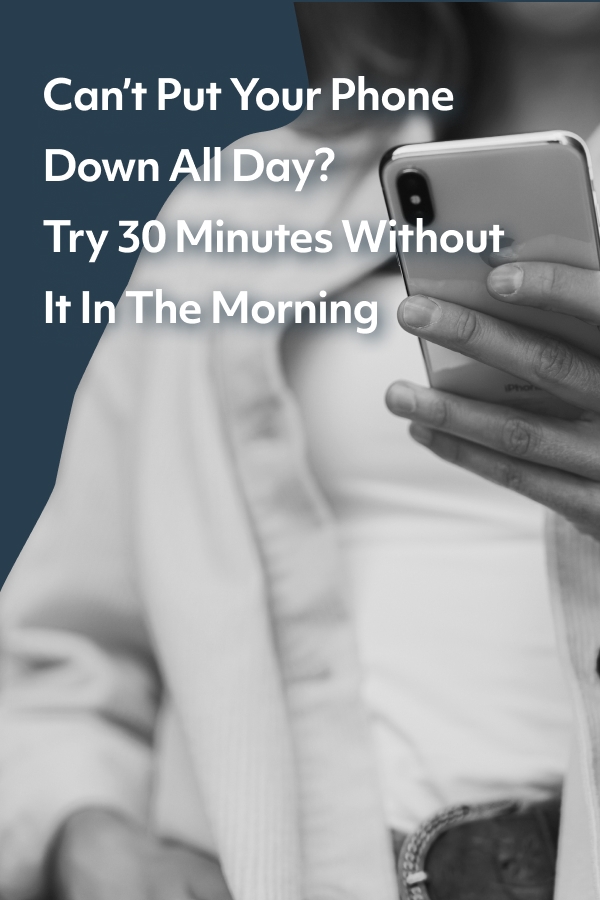
Rebecca Rush shares her experiences in trying to disengage from her phone, and the one strategy that finally worked.
Rebecca Rush is a writer and comedian from Westbrook, CT. She hosts Vulnerability: A Comedy Show at The Hollywood Improv and the Brutal Vulnerability Podcast and is a regular contributor to Workit Health. She’s been featured on Viceland and Funny or Die. Her words have appeared in numerous outlets, including Input Mag, The Miami New Times, Fodor’s Travel, and Huffington Post. Her personal essay “I’ve Been Swindled” is pending publication in a red flags-themed anthology from Running Wild Press. She holds a B.A. in English Literature with a Concentration in Creative Writing from the University of Connecticut. She lives in Los Angeles, where she is currently shopping a collection of essays.
PrevHow Meth Affects Your Overall Health
Real Signs I Had a Drinking ProblemNext

Any general advice posted on our blog, website, or app is for informational purposes only and is not intended to replace or substitute for any medical or other advice. Workit Health, Inc. and its affiliated professional entities make no representations or warranties and expressly disclaim any and all liability concerning any treatment, action by, or effect on any person following the general information offered or provided within or through the blog, website, or app. If you have specific concerns or a situation arises in which you require medical advice, you should consult with an appropriately trained and qualified medical services provider.

Top

Get the latest recovery news

Instagram Linkedin-in Facebook-f Youtube
    • Treatments
    • Opioids
    • Kratom
    • Alcohol


  • About Workit Health
  • Contact us
  • Our team
  • Media spotlight
  • Careers
  • We Accept Insurance
  • Check insurance
  • Aetna
  • Anthem of Ohio
  • Horizon BCBSNJ
  • Humana
  • Resources
  • What is harm reduction?
  • Addiction recovery resources
  • Suboxone FAQs
  • Blog
  • Friends and Family
  • Resources for friends and family
  • Help Them Heal Guide
  • Refer a loved one
  • Members
  • Login
  • Community
  • Medical records request form
  • Medical Records Fax: 833-923-0584
  • Tech support guides
  • Call us: 855-659-7734 M-F 8am-9pm EST
    • Partners
    • Make a referral
    • For health plans
    • For providers and hospitals
    • Third-party medical records requests
Treatments
    • Opioids
    • Kratom
    • Alcohol
About Us
  • Contact us
  • Our team
  • Media spotlight
  • Careers
Resources
  • What is harm reduction?
  • Addiction recovery resources
  • Suboxone FAQs
  • Blog
Insurance
  • Check insurance
  • Aetna
  • Anthem of Ohio
  • Horizon BCBSNJ
  • Humana
Members
  • Login
  • Community
  • Medical records request form
  • Medical Records Fax: 833-923-0584
  • Tech support guides
  • Call us: 855-659-7734
    M-F 8am-9pm EST
Resources
  • What is harm reduction?
  • Addiction recovery resources
  • Suboxone FAQs
  • Blog
Friends and Family
  • Resources for friends and family
  • Help Them Heal Guide
Partners
    • Make a referral
    • For health plans
    • For providers and hospitals
    • Third-party medical records requests
Locations
  • Arizona
  • California
  • Florida
  • Illinois
  • Michigan
  • Montana
  • New Jersey
  • New Mexico
  • North Carolina
  • Ohio
  • Oklahoma
  • Texas
  • Washington
Read more about Suboxone risks and concerns

Suboxone (buprenorphine/naloxone) is indicated for the treatment of opioid dependence in adults. Suboxone should not be taken by individuals who have been shown to be hypersensitive to buprenorphine or naloxone as serious adverse reactions, including anaphylactic shock, have been reported. Taking Suboxone (buprenorphine/naloxone) with other opioid medicines, benzodiazepines, alcohol, or other central nervous system depressants can cause breathing problems that can lead to coma and death. Other side effects may include headaches, nausea, vomiting, constipation, insomnia, pain, increased sweating, sleepiness, dizziness, coordination problems, physical dependence or abuse, and liver problems. For more information about Suboxone (buprenorphine/naloxone) see Suboxone.com, the full Prescribing Information, and Medication Guide, or talk to your healthcare provider. You are encouraged to report negative side effects of drugs to the FDA. Visit www.fda.gov/medwatch or call 1-800-FDA-1088.

All clinical and medical services are provided by licensed physicians and clinicians who are practicing as employees or contractors of independently owned and operated professional medical practices that are owned by licensed physicians. These medical practices include Workit Health (MI), PLLC; Workit Health (CA), P.C.; Workit Health (NJ), LLC; Workit Health (OH), LLC; Virtual Physician Practice (NY), PLLC; and any other Workit Health professional entity that is established in the future.

Clinic locations

Arizona
2501 N Hayden Rd.
Ste 103
Scottsdale, AZ 85257
fax (HIPAA): (833) 664-5441

California
1460 Maria Lane
Ste 300
Walnut Creek, CA 94596
fax (HIPAA): (855) 716-4494

Florida
600 Heritage Dr.
Ste 210, #17
Jupiter, FL 33458
fax (HIPAA): (813) 200-2822

Illinois
1280 Iroquois Ave
Ste 402
Naperville, IL 60563
fax (HIPAA): (855) 716-4494

Michigan
3300 Washtenaw Ave
Ste 280
Ann Arbor, MI 48104
fax (HIPAA): (855) 716-4494

Montana
415 N Higgins Ave
Ste 6
Missoula, MT 59802
fax (HIPAA): (855) 716-4494

New Jersey
5 Greentree Center
Ste 117
Marlton, NJ 08053
fax (HIPAA): (609) 855-5027

New Mexico
5901 Indian School Road, NE
Ste 212
Albuquerque, NM 87110
fax (HIPAA): (855) 716-4494

North Carolina
3719 Latrobe Drive
Ste 850-M
Charlotte, NC 28211-4827
fax (HIPAA): (855) 716-4494

Ohio
6855 Spring Valley Dr
Ste 110
Holland, OH 43528
fax (HIPAA): (513) 823-3247

Oklahoma
1010 24th Ave NW
Suite 100
Norman, OK 73069
fax (HIPAA): (855) 716-4494

Texas
5373 W Alabama St
Ste 204
Houston, TX 77056
fax (HIPAA): (737) 738-5046

Washington
9116 Gravelly Lake Dr SW
Ste 107 #3, PMB 1963
Lakewood, WA 98499-3148.
fax (HIPAA): (833) 328-1407

AICPA SOC

Terms of Service

Privacy Policy

Notice of Privacy Practice

View Accessibility Statement

© 2026 Workit Health. All rights reserved.

Not ready to start? We'll send you more information:

  • Workit Health

    When I opt in, Workit Health will send information about their program and recovery resources.

    *I agree to receive marketing and member care messages by email. Messaging frequency varies. I can unsubscribe at any time.

    **I agree to receive marketing and member care messages by text (SMS). Messaging frequency varies. Message and data rates may apply. I can opt out at any time by replying STOP. I can reply HELP to receive support. If I do not consent to receive SMS, and Workit Health is unable to reach me by email, I understand that they will not be able to contact me by text.

    Carriers are not liable for delayed or undelivered messages.

    View our Privacy Policy, Terms of Service, and Consent to SMS and Email.

  • Should be Empty:

This site uses cookies to improve your experience. By using this site, you consent to our use of cookies.

Accept Cookies