Skip to content

Marc Lee Shannon Live in Concert | Wed. Nov. 19th

  • Online Recovery
    • Quit Opioids
    • Suboxone
    • Insurance or self-pay
    • At-home drug screenings
    • Quit Kratom
    • Medication assistance
    • Insurance or self-pay
    • Whole-person care (anxiety, insomnia, etc.)
    • Quit Drinking
    • Campral
    • Naltrexone
    • Insurance or self-pay
    • 100% Online
    • Non-judgmental providers
    • Help with co-occurring disorders​
    • Recovery groups
    • Real people (No AI bots)
  • About Us
    • Our Research

    Advancing substance use treatment through rigorous, peer-reviewed research and actionable insights.

    • Our Mission

    Everyone deserves access to the gold standard of treatment, without judgment.

    • Growing Our Team

    Join us in transforming addiction treatment and improving lives through digital care.

    • Founded and operated by people in recovery since 2015
  • Resources
    • Workit Health
    • Insurance checker
    • Locations
    • Reviews
    • Articles
    • Member stories
    • Opioid addiction help
    • Suboxone Basics
    • Quit drinking
    • Naltrexone basics
    • For friends and family
    • Resources
    • Help a loved one with addiction
    • Mental health apps
    • Helplines and support
    • Community in recovery
    • Medication resources
    • 32k+ App store reviews
    • 35k+ Members
    • 33% Referred by friends or family
  • Partners
  • Make A Referral
Book now
Book now
Book now
Login
  • Quit Opioids
  • Suboxone
  • Insurance or self-pay
  • At home drug screenings
  • Quit Kratom
  • Medication assistance
  • Insurance or self-pay
  • Whole-person care (anxiety, insomnia,etc.)
  • Quit Drinking
  • Medication assistance
  • Insurance or self-pay
  • Recovery groups
  • 100% Online
  • Non-judgmental providers
  • 35k+ Members
  • 3.2k+ Reviews
About Us
  • Our Research
  • Our Mission
  • Growing Our Team
Resources
  • Workit Health
  • Insurance checker
  • Locations
  • Reviews
  • Articles
  • Member stories
  • Opioid addiction help
  • Suboxone Basics
  • Quit drinking
  • Naltrexone basics
  • For friends and family
  • Resources
  • Help a loved one with addiction
  • Mental health apps
  • Helplines and support
  • Community in recovery
  • Medication resources
  • Partners
  • Make A Referral
  • Culture
  • celebrity, featured, overdose

The Death of Foo Fighters Drummer Taylor Hawkins and Polysubstance Drug Use

  • Fact Checked and Peer Reviewed
  • By Kali Lux

A future free of addiction is in your hands

Recover from addiction at home with medication, community, and support—from the nonjudmental experts who really care.

Get started today

What's your goal?

Join the 35k+ members who treated addiction via their phone

In a dark space, a person wears a gleaming golden comedy mask and gestures widely with their arms.

Toxic Positivity vs. Healthy Optimism

Olivia Pennelle
A person's feet in brown hiking boots, standing in the snow.

Alone On Christmas: How To Cope If You Aren’t With Family Or Friends This Year

Kali Lux
New Mexico in the sunset

How to Find Drug Addiction Help in New Mexico

Alaine Sepulveda

In this article

Taylor Hawkins, the drummer of the Foo Fighters died in a Bogota hotel room on Friday, March 25th. The cause of death has not yet been announced, but on Saturday, the District Attorney of Columbia released a preliminary toxicology report stating that Hawkins had ten substances in his system, including benzodiazepines and opioids. The police also reported that those close to Hawkins suspect the death may be drug-related.

Many fans and music lovers are grieving

For many millennials like myself, the Foo Fighters was the soundtrack of our adolescence. Hawkins joined the band in 1999 and has played on each album since, including on hit songs like Best of You, Times Like These, and All My Life. Hawkins told Spin in 2002, “A lot of my insecurities—which led to a lot of my drug use—had to do with me not feeling like I was good enough to be in this band.” Despite those insecurities, Hawkins and the Foo Fighters excelled at their craft, winning 12 Grammys and joining the Rock & Roll Hall of Fame. Hawkins is survived by his wife, Alison, and his three children. 

The deaths of celebrities always hurt. We may have never met them, but—through TV and in magazines—they’re the people we’ve grown up with. They’ve created work that speaks to something in ourselves we aren’t able to quantify. For those of us in recovery, celebrity deaths that are drug-related can hit especially hard. I remember where I was when I heard Amy Winehouse died in 2011. At two years sober, I was haunted with questions. If someone with all that talent and brilliance can’t make it in this big world without drugs and alcohol, however could I? We’ve lost over a million Americans to drug overdose: not all of them are celebrities, but each death is a staggering loss for family, friends, and our communities.

Hawkins’ passing reveals a larger trend

Whether or not Hawkins’ death is ultimately found to be drug-related, the ten substances in his system are reflective of a larger trend—we’re currently in a fourth wave of the overdose epidemic, where polydrug use and overdose is becoming more common. Although 70% of drug overdoses include opioids, over half of opioid overdoses also include additional drugs, most often stimulants like methamphetamine and cocaine, or depressants like the benzodiazepines found in Hawkins’ system.

Taking either stimulants or depressants in combination with opioids can increase the risk of overdose. Taylor Hawkins didn’t have stimulants in his system, but stimulant and opioid overdose deaths are on the rise. Up to 40% of cocaine overdoses involve opioids, and people who use opioids may turn to stimulants to counteract opioids’ depressant effects. Illegally manufactured fentanyl analogs are increasingly being mixed into non-opioid drugs, increasing the likelihood that someone may not realize they’re taking the incredibly potent fentanyl. Because these two classes of substances affect the brain in opposite ways, taking methamphetamine or cocaine can mask the effects of opioids. The effects of stimulants will wear off more quickly than those of opioids, increasing the risk of respiratory failure or heart rate changes once the stimulants wear off. 

Benzodiazepines, one of the medications listed on Taylor Hawkins’ toxicology report, are one of the most widely used medications in the world, prescribed to treat anxiety and insomnia. Benzodiazepines and opioids are both depressants, and combined they can suppress breathing and increase the risk of overdose. 30% of opioid overdose deaths include benzodiazepines, and roughly 20-30% of people taking benzodiazepines in the United States are also receiving a prescription for opioids.

Where do we go from here?

If you’re still struggling with drugs or alcohol, practice harm reduction strategies to take care of yourself: go slow; listen to your body’s need for food, water, and sleep; don’t use alone; test your supply. 

If you’re in recovery, and the news of Hawkins’ death has left you shattered, give yourself space to grieve. Many of us form personal attachments with celebrities who resonate with us, and feel like we’ve lost a friend. Do something to take care of yourself, whether that means preparing a healthy meal, taking a walk, or reaching out to a friend you haven’t talked with in a while. And let Hawkins’ memory live on for you through his music. As the Foo Fighters said on Twitter, “His musical spirit and infectious laughter will live on with all of us forever.”
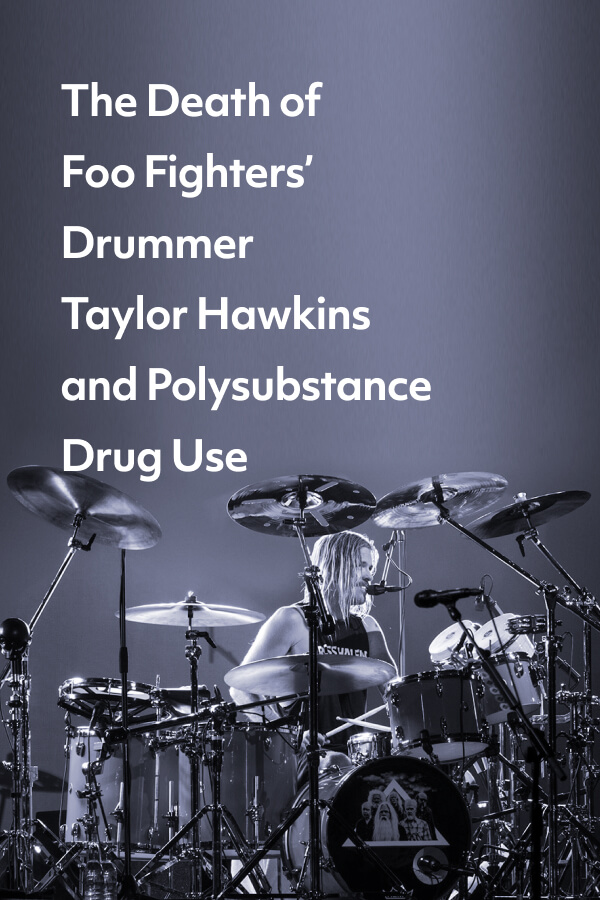
The death of Foo Fighters' drummer Taylor Hawkins brings a wave of grief but also spotlights the rising danger of polysubstance drug use.

Kali Lux is a consumer marketing leader with a focus on healthcare and wellness. She has over a decade of experience in building and operating metrics-driven brand, demand generation, and customer experience teams. A founding member of Workit Health’s team and a person in recovery herself, she’s passionate about fighting stigma and developing strategies that allow more people access to quality treatment at the moment they’re ready for help.

PrevDoes Suboxone Show Up On a Drug Test?
The Future of RecoveryNext

Any general advice posted on our blog, website, or app is for informational purposes only and is not intended to replace or substitute for any medical or other advice. Workit Health, Inc. and its affiliated professional entities make no representations or warranties and expressly disclaim any and all liability concerning any treatment, action by, or effect on any person following the general information offered or provided within or through the blog, website, or app. If you have specific concerns or a situation arises in which you require medical advice, you should consult with an appropriately trained and qualified medical services provider.

Top

Get the latest recovery news

Instagram Linkedin-in Facebook-f Youtube
  • Treatments
  • Opioids
  • Alcohol: Core Program
  • Alcohol: Flex Program
  • About Workit Health
  • Contact us
  • Our team
  • Media spotlight
  • Careers
  • We Accept Insurance
  • Check insurance
  • Aetna
  • Anthem of Ohio
  • Horizon BCBSNJ
  • Humana
  • Resources
  • What is harm reduction?
  • Addiction recovery resources
  • Suboxone FAQs
  • Blog
  • Friends and Family
  • Resources for friends and family
  • Help Them Heal Guide
  • Members
  • Login
  • Community
  • Request medical records
  • Tech support guides
  • Call us: 855-659-7734 M-F 8am-9pm EST
    • Partners
    • Make a referral
    • For health plans
    • For providers and hospitals
    • Third-party medical records requests
Read more about Suboxone risks and concerns

Suboxone (buprenorphine/naloxone) is indicated for the treatment of opioid dependence in adults. Suboxone should not be taken by individuals who have been shown to be hypersensitive to buprenorphine or naloxone as serious adverse reactions, including anaphylactic shock, have been reported. Taking Suboxone (buprenorphine/naloxone) with other opioid medicines, benzodiazepines, alcohol, or other central nervous system depressants can cause breathing problems that can lead to coma and death. Other side effects may include headaches, nausea, vomiting, constipation, insomnia, pain, increased sweating, sleepiness, dizziness, coordination problems, physical dependence or abuse, and liver problems. For more information about Suboxone (buprenorphine/naloxone) see Suboxone.com, the full Prescribing Information, and Medication Guide, or talk to your healthcare provider. You are encouraged to report negative side effects of drugs to the FDA. Visit www.fda.gov/medwatch or call 1-800-FDA-1088.

All clinical and medical services are provided by licensed physicians and clinicians who are practicing as employees or contractors of independently owned and operated professional medical practices that are owned by licensed physicians. These medical practices include Workit Health (MI), PLLC; Workit Health (CA), P.C.; Workit Health (NJ), LLC; Workit Health (OH), LLC; Virtual Physician Practice (NY), PLLC; and any other Workit Health professional entity that is established in the future.

Clinic locations

Arizona
9700 N. 91st. St.
Ste A-115
Scottsdale, AZ 85258
fax (HIPAA): (833) 664-5441

California
1460 Maria Lane
Ste 300
Walnut Creek, CA 94596
fax (HIPAA): (855) 716-4494

Florida
600 Heritage Dr.
Ste 210, #17
Jupiter, FL 33458
fax (HIPAA): (813) 200-2822

Illinois
1280 Iroquois Ave
Ste 402
Naperville, IL 60563
fax (HIPAA): (855) 716-4494

Michigan
3300 Washtenaw Ave
Ste 280
Ann Arbor, MI 48104
fax (HIPAA): (855) 716-4494

Montana
415 N Higgins Ave
Ste 6
Missoula, MT 59802
fax (HIPAA): (855) 716-4494

New Jersey
5 Greentree Center
Ste 117
Marlton, NJ 08053
fax (HIPAA): (609) 855-5027

New Mexico
5901 Indian School Road, NE
Ste 212
Albuquerque, NM 87110
fax (HIPAA): (855) 716-4494

Ohio
6855 Spring Valley Dr
Ste 110
Holland, OH 43528
fax (HIPAA): (513) 823-3247

Oklahoma
1010 24th Ave NW
Suite 100
Norman, OK 73069
fax (HIPAA): (855) 716-4494

Texas
5373 W Alabama St
Ste 204
Houston, TX 77056
fax (HIPAA): (737) 738-5046

Washington
9116 Gravelly Lake Dr SW
Ste 107 #3, PMB 1963
Lakewood, WA 98499-3148.
fax (HIPAA): (833) 328-1407

AICPA SOC

Terms of Service

Privacy Policy

Notice of Privacy Practice

View Accessibility Statement

© 2025 Workit Health. All rights reserved.

Your recovery, your way—
100% online

Book your appointment
Check your insurance coverage
  • Aetna
  • Humana
  • Horizon
  • Cigna
  • Blue Cross Blue Shield
  • and more

👉 Using insurance? Coverage checks are always for free in the Workit Health app.

Check your coverage

Not ready to start? We'll send you more information:

  • *Messaging frequency varies. I can unsubscribe at any time.

    **Messaging frequency varies. Message and data rates may apply. I can opt out at any time by replying STOP. I can reply HELP to receive support. If I do not consent to receive SMS, and Workit Health is unable to reach me by email, I understand that they will not be able to contact me by text.

    View our Privacy Policy, Terms of Service, and Consent to SMS and Email.

  • Should be Empty:

This site uses cookies to improve your experience. By using this site, you consent to our use of cookies.

Accept Cookies