




Skip to content

Marc Lee Shannon Live in Concert | Wed. Nov. 19th

  • Online Recovery
    • Quit Opioids
    • Suboxone
    • Insurance or self-pay
    • At-home drug screenings
    • Quit Kratom
    • Medication assistance
    • Insurance or self-pay
    • Whole-person care (anxiety, insomnia, etc.)
    • Quit Drinking
    • Campral
    • Naltrexone
    • Insurance or self-pay
    • 100% Online
    • Non-judgmental providers
    • Help with co-occurring disorders​
    • Recovery groups
    • Real people (No AI bots)
  • About Us
    • Our Research

    Advancing substance use treatment through rigorous, peer-reviewed research and actionable insights.

    • Our Mission

    Everyone deserves access to the gold standard of treatment, without judgment.

    • Growing Our Team

    Join us in transforming addiction treatment and improving lives through digital care.

    • Founded and operated by people in recovery since 2015
  • Resources
    • Workit Health
    • Insurance checker
    • Locations
    • Reviews
    • Articles
    • Member stories
    • Opioid addiction help
    • Suboxone Basics
    • Quit drinking
    • Naltrexone basics
    • For friends and family
    • Resources
    • Help a loved one with addiction
    • Mental health apps
    • Helplines and support
    • Community in recovery
    • Medication resources
    • 32k+ App store reviews
    • 35k+ Members
    • 33% Referred by friends or family
  • Partners
  • Make A Referral
Book now
Book now
Book now
Login
  • Quit Opioids
  • Suboxone
  • Insurance or self-pay
  • At home drug screenings
  • Quit Kratom
  • Medication assistance
  • Insurance or self-pay
  • Whole-person care (anxiety, insomnia,etc.)
  • Quit Drinking
  • Medication assistance
  • Insurance or self-pay
  • Recovery groups
  • 100% Online
  • Non-judgmental providers
  • 35k+ Members
  • 3.2k+ Reviews
About Us
  • Our Research
  • Our Mission
  • Growing Our Team
Resources
  • Workit Health
  • Insurance checker
  • Locations
  • Reviews
  • Articles
  • Member stories
  • Opioid addiction help
  • Suboxone Basics
  • Quit drinking
  • Naltrexone basics
  • For friends and family
  • Resources
  • Help a loved one with addiction
  • Mental health apps
  • Helplines and support
  • Community in recovery
  • Medication resources
  • Partners
  • Make A Referral
  • Culture
  • featured, mental health

Toxic Positivity vs. Healthy Optimism

  • Fact Checked and Peer Reviewed
Toxic positivity is weirdly common in recovery circles, and has the potential to be very harmful. How can we recognize it, and how is it different from healthy optimism?
  • By Olivia Pennelle

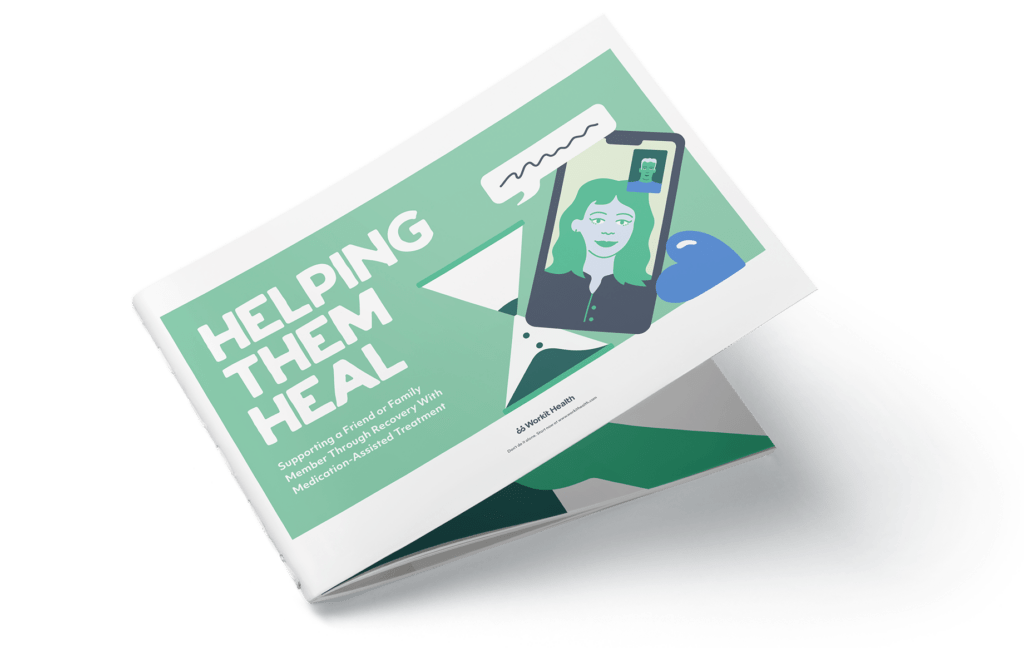
Concerned about a loved one?​

Download our free guide about how to better support a loved one with substance use disorder.

Free Help Them Heal Guide (PDF)

What's your goal?

Join the 35k+ members who treated addiction via their phone

In a dark space, a person wears a gleaming golden comedy mask and gestures widely with their arms.

Toxic Positivity vs. Healthy Optimism

Olivia Pennelle
A person's feet in brown hiking boots, standing in the snow.

Alone On Christmas: How To Cope If You Aren’t With Family Or Friends This Year

Kali Lux
New Mexico in the sunset

How to Find Drug Addiction Help in New Mexico

Alaine Sepulveda

In this article

Toxic positivity has the potential to be very harmful, especially if you’re a person in recovery. Toxic positivity can promote the idea that if you feel a “negative” feeling, you’re somehow doing recovery wrong.

I remember when I first got sober, people in my recovery circle and in the rooms of Alcoholics Anonymous (AA) seemed almost fearful of negative emotions. Instead, they would promote an unhealthy obsession with toxic positivity. I’d hear things like, “Resentment or anger is the beginning of a relapse,” all the time. That kind of perspective, in my opinion, is a form of toxic positivity that avoids dealing with the reality of being a human. I’d argue that facing challenges and feeling your feelings makes you a whole human being, more resilient, and even strengthens your recovery.

What is toxic positivity?

Toxic positivity is a form of bypassing by taking a positive mindset to the extreme. It overlooks circumstances and minimizes painful emotions in favor of optimism, according to the Anxiety and Depression Association of America. In other words, toxic positivity is the perspective that people should have a positive attitude no matter what. This should not be confused with healthy optimism—which is a balanced perspective that considers both challenges and a positive outlook. Toxic positivity looks like:

  • Dismissing negative emotions: When experiencing a difficult situation, people might recite positive phrases that minimize valid struggles. These phrases might look like:
    •  “Just stay positive!”
    • “It could be worse!”
    • “At least they had a long life.”
    • “Just look on the bright side.”
    • “Everything happens for a reason.”
    • “Just go to a meeting.”
    • “Meeting makers make it.”
    • “Never had a bad day sober!”
    • “Anger is the first sign of relapse.”
    • “Happiness is a choice.”
  • Pressuring people to be “happy:” Expects others to suppress negative emotions in favor of presenting a cheerful facade.
  • Leading to guilt: You might feel guilt or shame for feeling difficult emotions when you can’t focus on the positive.
  • Promoting avoidant tendencies: Ignoring or suppressing negative emotions or brushing them under the rug is not a coping mechanism because the feelings or situation still needs a resolution. This is how problems, particularly relational difficulties, fester and continue to be repeated.
  • Hindering connection: Relationships flourish on authentic and honest communication. By avoiding facing difficult emotions, you’re not showing up as your whole self and losing the opportunity to be vulnerable and receive empathy and support.

Recovery is living life on life’s terms

I am not dismissing the effects of a positive mindset. Studies show that cultivating gratitude increases resilience, improves mood, and enhances relationships. I am saying, however, that avoiding difficult emotions doesn’t help us recover. Recovery is about living in the vastness of the human experience. We will all likely encounter many  stressors in our lives, such as:

  • Divorce
  • Grief
  • Losing a job
  • Relationship breakups
  • Natural disasters
  • Assaults
  • Violence
  • Political turmoil
  • Moving
  • Legal troubles
  • Financial difficulties

This means we are also likely to encounter some big emotions like fear, anger, worry, anxiety, loss, rejection, and despair. Avoiding those emotions is tantamount to avoiding life on life’s terms, a central component of many recovery programs. Living life on life’s terms means experiencing the breadth of emotion that is perfectly normal.

Emotions don’t have intrinsic value judgments—they are not “negative” or “bad.” Emotions are simply a response to an experience. They are also messengers. For instance, anger tells us that someone has crossed a boundary or acted outside our value system. That doesn’t mean we should fear anger or see the emotion as a sign of impending relapse.

Powerful emotions are precisely that: powerful. What matters about big emotions is how we process them: acknowledging the feeling, processing it, and finding ways to move through it while honoring our values and what matters most, as well as finding an adaptive mindset. For example, my friend recently ditched me on my birthday in favor of going on a date. I felt angry. Acknowledging that, I took a moment to see what lay underneath that emotion, which was hurt. I was hurt that my friend had broken a promise and wouldn’t be celebrating my birthday with me. I process those feelings and honor my values by expressing my hurt and finding ways to celebrate despite their behavior.

So, the healthy optimism here is that I know my boundaries and am confident about how I want to be treated. Hating this person or making assumptions about their motivations doesn’t serve how I want to live my life or my well-being. Instead, I validate the feeling, honor myself by expressing my hurt, and move on. I know there are plenty of people in this world who want to celebrate life with me.

Olivia Pennelle (Liv) has a masters in clinical social work from Portland State University. She is a mental health therapist, writer, and human activist. Her writing has appeared in STAT News, Insider, Filter Magazine, Ravishly, The Temper, and Shondaland. She is the founder of Liv’s Recovery Kitchen, Life After 12-Step Recovery, and Tera Collaborations. She lives near Portland, Oregon. Follow her on Instagram @Livwritesrecovery and @teracollaborations

PrevI Hate the Holidays—But I’m Staying Sober Anyway
Alone On Christmas: How To Cope If You Aren’t With Family Or Friends This YearNext

Any general advice posted on our blog, website, or app is for informational purposes only and is not intended to replace or substitute for any medical or other advice. Workit Health, Inc. and its affiliated professional entities make no representations or warranties and expressly disclaim any and all liability concerning any treatment, action by, or effect on any person following the general information offered or provided within or through the blog, website, or app. If you have specific concerns or a situation arises in which you require medical advice, you should consult with an appropriately trained and qualified medical services provider.

Top

Get the latest recovery news

Instagram Linkedin-in Facebook-f Youtube
  • Treatments
  • Opioids
  • Alcohol: Core Program
  • Alcohol: Flex Program
  • About Workit Health
  • Contact us
  • Our team
  • Media spotlight
  • Careers
  • We Accept Insurance
  • Check insurance
  • Aetna
  • Anthem of Ohio
  • Horizon BCBSNJ
  • Humana
  • Resources
  • What is harm reduction?
  • Addiction recovery resources
  • Suboxone FAQs
  • Blog
  • Friends and Family
  • Resources for friends and family
  • Help Them Heal Guide
  • Members
  • Login
  • Community
  • Request medical records
  • Tech support guides
  • Call us: 855-659-7734 M-F 8am-9pm EST
    • Partners
    • Make a referral
    • For health plans
    • For providers and hospitals
    • Third-party medical records requests
Read more about Suboxone risks and concerns

Suboxone (buprenorphine/naloxone) is indicated for the treatment of opioid dependence in adults. Suboxone should not be taken by individuals who have been shown to be hypersensitive to buprenorphine or naloxone as serious adverse reactions, including anaphylactic shock, have been reported. Taking Suboxone (buprenorphine/naloxone) with other opioid medicines, benzodiazepines, alcohol, or other central nervous system depressants can cause breathing problems that can lead to coma and death. Other side effects may include headaches, nausea, vomiting, constipation, insomnia, pain, increased sweating, sleepiness, dizziness, coordination problems, physical dependence or abuse, and liver problems. For more information about Suboxone (buprenorphine/naloxone) see Suboxone.com, the full Prescribing Information, and Medication Guide, or talk to your healthcare provider. You are encouraged to report negative side effects of drugs to the FDA. Visit www.fda.gov/medwatch or call 1-800-FDA-1088.

All clinical and medical services are provided by licensed physicians and clinicians who are practicing as employees or contractors of independently owned and operated professional medical practices that are owned by licensed physicians. These medical practices include Workit Health (MI), PLLC; Workit Health (CA), P.C.; Workit Health (NJ), LLC; Workit Health (OH), LLC; Virtual Physician Practice (NY), PLLC; and any other Workit Health professional entity that is established in the future.

Clinic locations

Arizona
9700 N. 91st. St.
Ste A-115
Scottsdale, AZ 85258
fax (HIPAA): (833) 664-5441

California
1460 Maria Lane
Ste 300
Walnut Creek, CA 94596
fax (HIPAA): (855) 716-4494

Florida
600 Heritage Dr.
Ste 210, #17
Jupiter, FL 33458
fax (HIPAA): (813) 200-2822

Illinois
1280 Iroquois Ave
Ste 402
Naperville, IL 60563
fax (HIPAA): (855) 716-4494

Michigan
3300 Washtenaw Ave
Ste 280
Ann Arbor, MI 48104
fax (HIPAA): (855) 716-4494

Montana
415 N Higgins Ave
Ste 6
Missoula, MT 59802
fax (HIPAA): (855) 716-4494

New Jersey
5 Greentree Center
Ste 117
Marlton, NJ 08053
fax (HIPAA): (609) 855-5027

New Mexico
5901 Indian School Road, NE
Ste 212
Albuquerque, NM 87110
fax (HIPAA): (855) 716-4494

Ohio
6855 Spring Valley Dr
Ste 110
Holland, OH 43528
fax (HIPAA): (513) 823-3247

Oklahoma
1010 24th Ave NW
Suite 100
Norman, OK 73069
fax (HIPAA): (855) 716-4494

Texas
5373 W Alabama St
Ste 204
Houston, TX 77056
fax (HIPAA): (737) 738-5046

Washington
9116 Gravelly Lake Dr SW
Ste 107 #3, PMB 1963
Lakewood, WA 98499-3148.
fax (HIPAA): (833) 328-1407

AICPA SOC

Terms of Service

Privacy Policy

Notice of Privacy Practice

View Accessibility Statement

© 2025 Workit Health. All rights reserved.

Your recovery, your way—
100% online

Book your appointment
Check your insurance coverage
  • Aetna
  • Humana
  • Horizon
  • Cigna
  • Blue Cross Blue Shield
  • and more

👉 Using insurance? Coverage checks are always for free in the Workit Health app.

Check your coverage

Not ready to start? We'll send you more information:

  • *Messaging frequency varies. I can unsubscribe at any time.

    **Messaging frequency varies. Message and data rates may apply. I can opt out at any time by replying STOP. I can reply HELP to receive support. If I do not consent to receive SMS, and Workit Health is unable to reach me by email, I understand that they will not be able to contact me by text.

    View our Privacy Policy, Terms of Service, and Consent to SMS and Email.

  • Should be Empty:

This site uses cookies to improve your experience. By using this site, you consent to our use of cookies.

Accept Cookies