Skip to content

Workit Health Presents: A Dopey Interview of Amy Dresner · Live on YouTube · June 10, 2026 · 7pm est

  • Treatments
    • Opioid Use Disorder

    Start Suboxone treatment online with a licensed provider without judgment.

    • Alcohol Use Disorder

    Flexible goals — moderation or abstinence. Evidence-based, no 12-step requirement

    • Kratom & 7-OH

    Medication options that actually work for withdrawals and cravings.

    Anxiety · Depression · Insomnia · Hepatitis C · And more

    Substance use often goes hand-in-hand with other conditions. Your provider can prescribe for many of these, including anxiety, depression, and insomnia—so you can get back on solid ground. They can even treat hepatitis C and prescribe PrEP for HIV prevention.

    Start treatment
  • Pricing
  • Locations

    Available now

    • Arizona
    • California
    • Florida
    • Illinois
    • Michigan
    • Montana
    • New Jersey
    • New Mexico
    • New York
    • North Carolina
    • Ohio
    • Oklahoma
    • Texas
    • Washington
    Get notified if we open in your state
  • Reviews
  • About
    • About Workit Health

    Our mission, founders, and clinical team.

    • Workit Labs · Research

     Peer-reviewed publications on telehealth addiction care.

    • Blog

    Plain language guides on recovery, medication, and family-support.

    • Careers

    Join the team building the future of addiction care

    • Please reach out—we’re here to help:
    • Hello@WorkitHealth.com
    • 855-659-7734
  • Help Someone
Login
Get started
Get started
  • Login to my account
Treatments
  • Opioid use disorder
  • Suboxone
  • Alcohol use disorder
  • Kratom & 7-OH dependency

whole person care included

Substance use often goes hand-in-hand with other conditions. Your provider can prescribe for many of these, including anxiety, depression, insomnia, hepatitis C, and more—so you can get back on solid ground.

  • Insurance or Self-pay
Locations
  • Arizona
  • California
  • Florida
  • Illinois
  • Michigan
  • Montana
  • New Jersey
  • New Mexico
  • New York
  • North Carolina
  • Ohio
  • Oklahoma
  • Texas
  • Washington
  • Get notified of new state openings →
  • Reviews
About
  • About Workit Health
  • Workit Labs · Research
  • Blog
  • Careers
  • Hello@WorkitHealth.com
  • 855-659-7734
  • Refer a friend
  • Help Someone
Get started

In crisis? Call or text: 988

Home > Blog > Can You Really Exercise Too Much?

  • Stories Of Recovery

Can You Really Exercise Too Much?

The answer is, yes you can! Of course, that is not all I have to say on this subject, or we would not have a blog post; let me explain! As someone in recovery from an eating disorder as well as mental health issues, I have found a new profound love of exercise. The activity I once despised is the activity I have found joy in. However, I despised it because I was utilizing exercise incorrectly in my life.

BY

  • Justin Gillespie
  • Fact-checked & medically reviewed

on this page

The answer is, yes you can!

Of course, that is not all I have to say on this subject, or we wouldn’t have a blog post. Let me explain! As someone in recovery from an eating disorder as well as mental health issues, I have found a new profound love of exercise. The activity I once despised is the activity I have found joy in. I’ve discovered that despised exercise because I was utilizing it incorrectly in my life.

My Binge Eating Disorder and exercise.

I have been in recovery from Binge Eating Disorder for just over 2 years now. Whenever I say “Binge Eating Disorder,” I generally get one of two reactions. The first one is confusion about what the hell I even mean. The second is the assumption that, “oh, so it’s like bulimia!” No, it is not. They are two totally different things. Bulimia involves binging and purging to lose excess weight. Binge Eating Disorder simply involves binging … that’s it. Believe me, I have tried to purge before. After trying for 2 hours on my bathroom floor in an attempt to control my eating disorder and my compulsive eating once and for all, I still could not make my body do it. No matter how many times I stuck my hand down my throat or even punched myself in the stomach, I could not seem to make my body throw up at will. (Yeah, those were some dark times.)

The one thing that I did do prior to recovery in an attempt to control my eating disorder was to diet and exercise. With Binge Eating Disorder, you often gain a lot of weight. Then you feel guilty for overeating. Because you feel guilty for months of binging, you eventually try to select another disorder in a vain attempt to recover from the disorder you already have. In my case, it would often be anorexia. Of course, because I was a binge eater, the anorexia symptoms often would not last long. I could go a few weeks eating barely anything, but then my stress and anxiety would flare up and I would simply say “fuck it.” Back on the binging wagon, I went.

“Overexercising can lead to an unbalanced relationship with food, nutrition, and wellness, and can lead to eating disorders.”

Prior to recovery, we binge eaters often try to arrest our disorder and our urges to significantly overeat through crash diets (or trying not to eat at all, as I mentioned) and then by overexercising. For me, this would often mean working out for 4 hours per day for scheduled sessions. And if I did slip up and eat (God forbid it!), I would feel required to add on a 10 mile bike ride and another hour of strength training. This pattern kept pushing me back and forth between active relapse in my eating disorder and starvation/exhaustion. My relationship was food was dysfunctional to say the least, and exercise was my punishment for being a bad person.

So why is overexercising bad for us?

Take a look at the following questions:

  • Am I exercising just to burn calories?

  • Is exercise making my body weaker rather than stronger?

  • Do I become moody if I exercise less?

  • Is working out more important to me than my family and friends, school or work?

  • Do I continue to exercise even when I have an injury?

  • Have friends or family expressed concern about how much I am working out?

If you answered “Yes” to any of these questions, you may want to look into possible professional assistance. No shame—I know I answered “Yes” to at least four of them for some part of my life. Truth be told, I catch myself having occasional flare-ups of some of these to this day. So if overexercising is dangerous, what are some of the consequences of it, exactly?:

Dysfunctional relationships with food.

If you have not caught on yet, overexercising can lead to an unbalanced relationship with food, nutrition, and wellness, and can lead to eating disorders. By exercising 4-5 hours per day in an attempt to stop my eating disorder, I ironically ultimately enhanced it. The combination of overexercising and not losing as much weight as I thought I should stressed me out. I reacted to that stress by just throwing it all away and binging for months afterward. This led me to gain back any weight I had lost, plus more.

Resentment of exercise.

This leads into the original point above. If you overexercise and use fitness as a punishment rather than a positive prosocial activity and coping skill, you will learn to hate it. You will avoid it at any cost, sending you back to a life of imbalanced living.

Poor self-esteem.
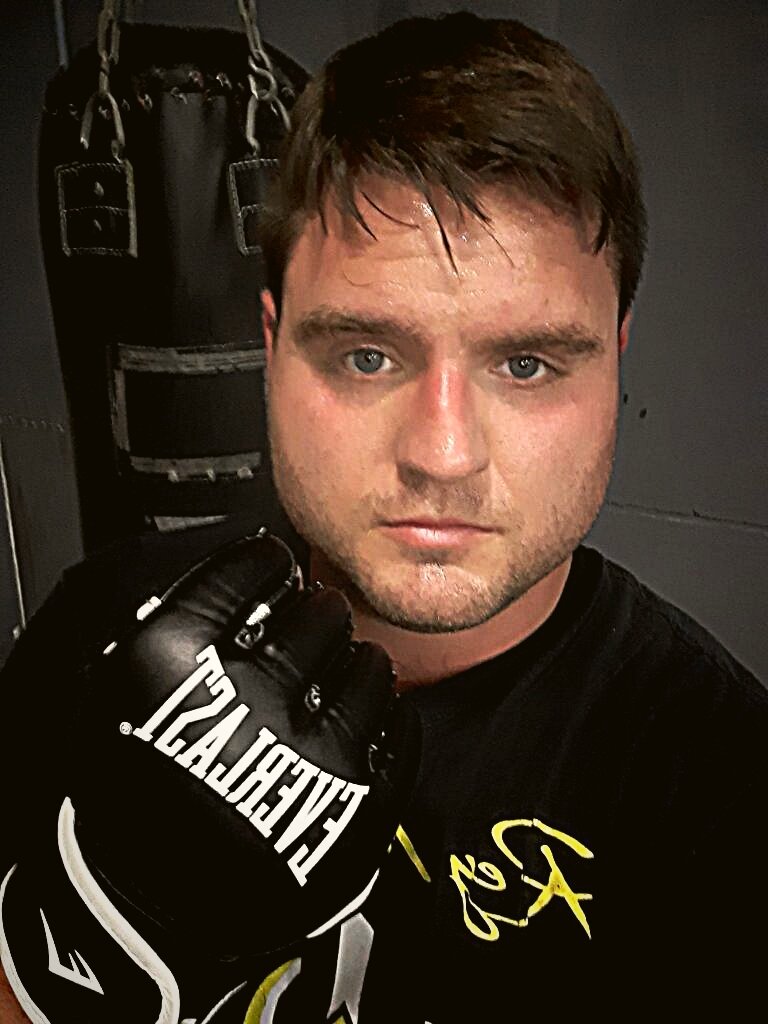
Justin Gillespie wearing boxing gloves, standing in front of a heavy bag

Do you see how these points tie into one another? Eating disorders often come with body image issues or self-worth issues—they just comes with the territory. When you have self-image issues and you overexercise as a means to control your eating disorder and/or weight, the scale does not move as fast as you would like. You want to see yourself thin, ripped, or jacked and yet you still look the same. Of course you do, because it has only been about 4 weeks! But in our dysfunctional way of thinking, we believe we should see an immediate change. “What is even the point?” we ask ourselves. We give up, we pity ourselves, and our self-esteem is now in the toilet.

Increased risk of serious injury.

This kind of goes without saying: if you lift something that is too heavy, you might get hurt. Unfortunately, overexercising is not just about time; it is also about how intensely you are working out. Perhaps you be okay after a 3-hour hike. However, if you are able to safely lift 100lbs, but you insist on lifting 300lb weights … maybe … you might be susceptible to injury. Also for those who are significantly overweight or obese as a result of Binge Eating Disorder, you can cause injury to yourself much more easily through overexercising simply by running. This can cause knee damage, broken bones, or other internal injuries.

Relationship issues.

If you spend more time at the gym than with your girlfriend, boyfriend, mother, father, etc., you might have some social issues as well. If you are in a constant mode of working out and obsessing about fitness, what else do you bring to the table? What else do you like to do? Are you a good friend? Are you being a good significant other? If you are one of those “Fuck everybody, I’mma do me!” people, then this might be acceptable to you. However, just know that you might not get invited to any family functions any time soon.

But you work out now! So is exercise really bad?

Did you not read this blog all the way through? (Sigh …) Yes, I do work out now. In fact, as a therapist, I have found fitness to be one of the greatest coping skills, prosocial activities, and life enhancers for those struggling with mental health and substance use disorders. It has transformed my life drastically in the last two years. However, much like in any other dysfunctional relationship, I needed to change my mindset and my actions. Today, I can work out for an hour or two and feel satisfied. I can miss a workout from time to time and not feel like it is life or death. I can eat a Kit Kat and only have one, rather than spiraling into a dilemma of, “Okay, do I go work it off now? Or do I have to eat 4 of them?”. It sounds cliché, but it is all about balance. Some things are cliché because they’re true.



PrevpreviousSober and Suddenly Single
nextGetting Through the Holidays With A Loved One in RecoveryNext

on this page

need help?

Stop the cycle of cravings and withdrawal

  • Suboxone prescribed online*
  • Most major insurance accepted
  • $25–$35/mo with insurance
  • ~2 days to first appointment

*as clinically appropriate

Download the app →

Learn about treatment

PrevpreviousSober and Suddenly Single
nextGetting Through the Holidays With A Loved One in RecoveryNext

ABOUT THE AUTHOR

Justin Gillespie is a recovery coach with Workit Health. He has a passion for finding alternative treatments for clients that are evidence-based. He has utilized these alternative interventions with many of his patients and speaks passionately about the balance of fitness, mental health and substance use disorder recovery in other ventures outside of Workit. Justin has his own journey in recovery from Binge Eating Disorder as well as several other co-occurring disorders and uses fitness as well as several other alternative methods to continue his long-term recovery.

ready when you are​

Download the app. Get back to yourself.

Sign up takes about 5 minutes. Most members have their first appointment within 2 days. Covered by most insurance.

Download the app
Learn more

KEEP READING

Why Is Suboxone Taken Sublingually?

Many medications are swallowed, but Suboxone (buprenorphine/naloxone) is taken under the tongue (sublingually) or on the cheek (buccally).

Read now

5 Questions About Online Suboxone Treatment, Answered

Workit Health treats opioid addiction with medication like Suboxone online via telehealth. How do we do it? In this post, we answer several common questions.

Read now

Heroin Detox: The First Three Days Survival Guide

Ready to detox from heroin? Here’s what to expect and how to handle the cravings and physical withdrawal symptoms. Trust us, it’s worth it.

Read now

Any general advice posted on our blog, website, or app is for informational purposes only and is not intended to replace or substitute for any medical or other advice. Workit Health, Inc. and its affiliated professional entities make no representations or warranties and expressly disclaim any and all liability concerning any treatment, action by, or effect on any person following the general information offered or provided within or through the blog, website, or app. If you have specific concerns or a situation arises in which you require medical advice, you should consult with an appropriately trained and qualified medical services provider.

100% virtual addiction treatment for opioid, alcohol, and kratom use disorders. Evidence-based medication, therapy, and recovery support—from your phone.

Please reach out—we’re here to help:
hello@workithealth.com
855-659-7734

Instagram Linkedin-in Facebook-f Youtube
    • TREATMENTS
    • Opioids
    • Kratom & 7-OH
    • Alcohol
    • Insurance & Cost
    • Locations
    • Get started
    • HELP SOMEONE
    • Help a loved one
    • Refer a friend
    • Recovery blog
    • Narcan guide
    • COMPANY
    • About
    • Workit Labs · Research
    • Careers
    • Partnerships
      • MEMBERS
      • Login
      • Create account
      • Refer a friend
      • Medical records request form
      • Fax: 833-923-0584
AICPA SOC
  • 42 CFR Part 2
  • WCAG 2.1 AA

contact information

Arizona
2501 N Hayden Rd.
Ste 103
Scottsdale, AZ 85257
fax (HIPAA): (833) 664-5441

California
1460 Maria Lane
Ste 300
Walnut Creek, CA 94596
fax (HIPAA): (833) 244-6705

Florida
600 Heritage Dr.
Ste 210, #17
Jupiter, FL 33458
fax (HIPAA): (813) 200-2822

Illinois
1280 Iroquois Ave
Ste 402
Naperville, IL 60563
fax (HIPAA): (833) 664-8715

Michigan
3300 Washtenaw Ave
Ste 280
Ann Arbor, MI 48104
fax (HIPAA): (855) 716-4494

Montana
415 N Higgins Ave
Ste 6
Missoula, MT 59802
fax (HIPAA): (833) 664-5486

New Jersey
5 Greentree Center
Ste 117
Marlton, NJ 08053
fax (HIPAA): (609) 855-5027

New Mexico
5901 Indian School Road, NE
Ste 212
Albuquerque, NM 87110
fax (HIPAA): (833) 664-5701

New York
845 Central Avenue
Ste 204
Albany, NY 12206
fax (HIPAA): (844) 921-1079

North Carolina
3719 Latrobe Drive
Ste 850-M
Charlotte, NC 28211-4827
fax (HIPAA): (984) 375-6710

Ohio
6855 Spring Valley Dr
Ste 110
Holland, OH 43528
fax (HIPAA): (513) 823-3247

Oklahoma
1010 24th Ave NW
Suite 100
Norman, OK 73069
fax (HIPAA): (833) 672-3125

Texas
5373 W Alabama St
Ste 204
Houston, TX 77056
fax (HIPAA): (737) 738-5046

Washington
9116 Gravelly Lake Dr SW
Ste 107 #3, PMB 1963
Lakewood, WA 98499-3148.
fax (HIPAA): (833) 328-1407

suboxone risk & concerns

Suboxone (buprenorphine/naloxone) is indicated for the treatment of opioid dependence in adults. Suboxone should not be taken by individuals who have been shown to be hypersensitive to buprenorphine or naloxone as serious adverse reactions, including anaphylactic shock, have been reported. Taking Suboxone (buprenorphine/naloxone) with other opioid medicines, benzodiazepines, alcohol, or other central nervous system depressants can cause breathing problems that can lead to coma and death. Other side effects may include headaches, nausea, vomiting, constipation, insomnia, pain, increased sweating, sleepiness, dizziness, coordination problems, physical dependence or abuse, and liver problems. For more information about Suboxone (buprenorphine/naloxone) see Suboxone.com, the full Prescribing Information, and Medication Guide, or talk to your healthcare provider. You are encouraged to report negative side effects of drugs to the FDA. Visit www.fda.gov/medwatch or call 1-800-FDA-1088.

© 2026 Workit Health. All rights reserved.
Privacy Policy

Notice of Privacy Practice

Terms of Service

View Accessibility Statement

All clinical and medical services are provided by licensed physicians and clinicians who are practicing as employees or contractors of independently owned and operated professional medical practices that are owned by licensed physicians. These medical practices include Workit Health (MI), PLLC; Workit Health (CA), P.C.; Workit Health (NJ), LLC; Workit Health (OH), LLC; Virtual Physician Practice (NY), PLLC; and any other Workit Health professional entity that is established in the future.

Not ready to start? We'll send you more information:

  • Workit Health

    When I opt in, Workit Health will send information about their program and recovery resources.

    *I agree to receive marketing and member care messages by email. Messaging frequency varies. I can unsubscribe at any time.

    **I agree to receive marketing and member care messages by text (SMS). Messaging frequency varies. Message and data rates may apply. I can opt out at any time by replying STOP. I can reply HELP to receive support. If I do not consent to receive SMS, and Workit Health is unable to reach me by email, I understand that they will not be able to contact me by text.

    Carriers are not liable for delayed or undelivered messages.

    View our Privacy Policy, Terms of Service, and Consent to SMS and Email.

  • Should be Empty:

This site uses cookies to improve your experience. By using this site, you consent to our use of cookies.

Accept Cookies