

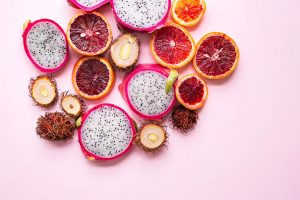
These 3 Smoothies Are Your Sobriety Self-Care Secret Weapons
Let’s talk smoothies! They can be a powerhouse of nutrients to fuel your day and having them regularly in sobriety has a whole host of benefits.

Let’s talk smoothies! They can be a powerhouse of nutrients to fuel your day and having them regularly in sobriety has a whole host of benefits.

Can you get sober alone, without 12-step or other support groups? What’s more, some people recover with no method at all—contrary to popular belief. A recent study examining the pathways of recovery shatters the myth that you need to maintain a program of recovery to stay sober.
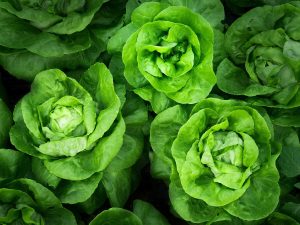
March is National Nutrition Month. As a person recovering from a disordered relationship with food, I’m a big fan of making more mindful choices and this is a perfect opportunity to take stock of some powerful tools you can use to enhance your recovery.
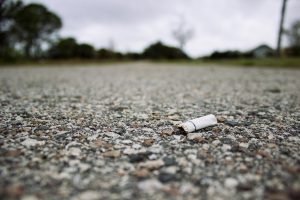
Why do we celebrate quitting drugs, but never talk about quitting smoking? Smoking in recovery is a paradox: I’d chosen to stop harming myself with drugs and alcohol and find recovery, yet I was slowly killing myself by smoking.

From my very first codeine tablet, I was hooked. That warm fuzzy feeling permeated my body and my migraine—caused by severe dehydration and four bottles of wine the night before—almost vanished into thin air. I was transported to this almost memory-foam-type-fluffy-cloud.
For anyone in recovery, exercise is your friend—especially over the holidays. I know that the last thing most people feel like doing at the end of the year is expending more energy; it’s a time we’re winding down and taking some much needed time out.
Learning to care for ourselves isn’t easy, especially if we have spent years abusing our body with disordered eating. Even though we may have stopped harming ourselves, the process of recovery goes beyond stopping that behavior—we need to learn how to take care of our needs.
I’ll never forget the first time I discovered that food could help me escape; I was around six years old.
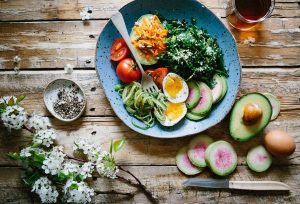
Eating healthy foods might not be the first thing on your mind early addiction recovery. But it can make a huge difference.

The stereotype of an addict—a homeless man living on the street—is wholly outdated and inaccurate. Addiction is rife in the workplace.
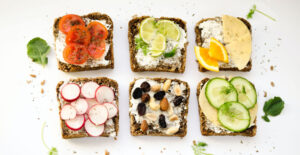
Olivia Pennelle of Liv’s Recovery Kitchen shares her best grilled cheese recipe to nourish and heal your body on National Grilled Cheese Day, April 12th.

When I arrived into recovery, my body was ravaged by addiction. I spent the first 18 months exhausted. I was 150 pounds overweight and I felt terrible most of the time. Nobody told me about the importance of a holistic recovery.

We all know that eating right makes a huge difference for your health. It’s common sense: eat well, feel good.

Sometimes things just don’t work out how you see them, and the right thing to do is move, as much as I don’t want to. My point is that sometimes; we don’t feel like doing the things that help us the most — like self-care.

Food was my first drug of choice. I recall using food to change how I felt when I was less than ten years old. My whole life followed a cycle of starvation, binging, purging, and desperately low self-esteem.

The previous chapter in this three-part series features (My Journey Into Recovery: Part I) my journey to rock bottom. In this chapter, I will share with you my experience of the first few months of recovery, and how I achieved it. Now, nearly five years on, I’m able to also share how we all recover differently.At my rock bottom, I had reached a place of surrender.