




Skip to content

Marc Lee Shannon Live in Concert | Wed. Nov. 19th

  • Online Recovery
    • Quit Opioids
    • Including prescription pain medication and heroin
    • Suboxone
    • Insurance or self-pay
    • At-home drug screenings
    • Quit Kratom
    • Including 7-OH
    • Medication assistance
    • Insurance or self-pay
    • Whole-person care (anxiety, insomnia, etc.)
    • Quit Drinking
    • Campral
    • Naltrexone
    • Insurance or self-pay
    • 100% Online
    • Non-judgmental providers
    • Help with co-occurring disorders​
    • Recovery groups
    • Real people (No AI bots)
  • About Us
    • Our Research

    Advancing substance use treatment through rigorous, peer-reviewed research and actionable insights.

    • Our Mission

    Everyone deserves access to the gold standard of treatment, without judgment.

    • Growing Our Team

    Join us in transforming addiction treatment and improving lives through digital care.

    • Founded and operated by people in recovery since 2015
  • Resources
    • 33% of members were referred by friends or family
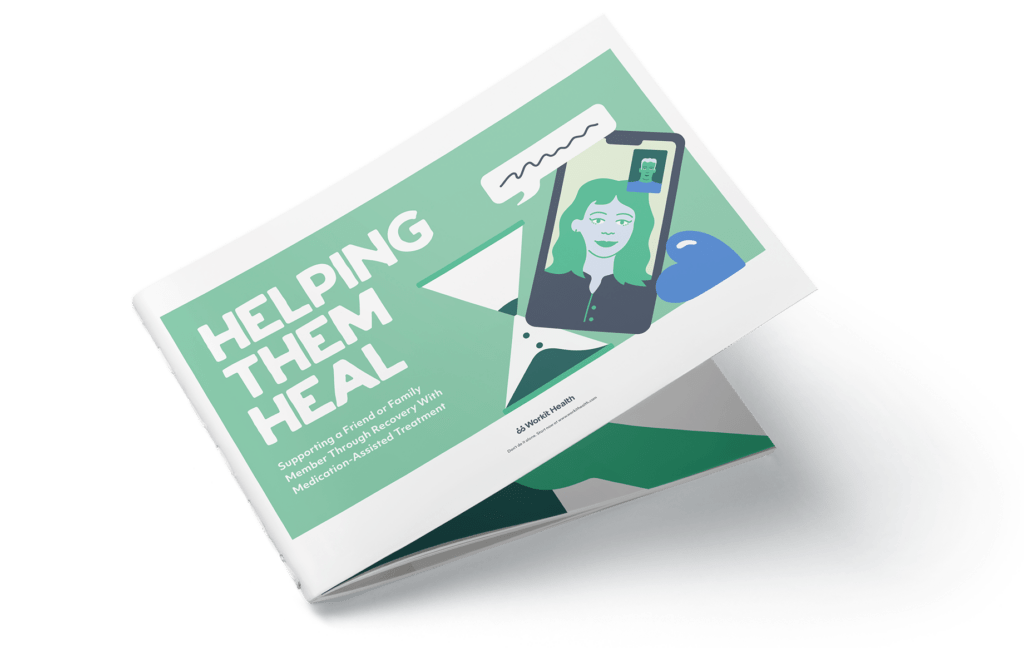
    Free Help Them Heal Guide
    • Articles
    • Member stories
    • Opioid addiction help
    • Suboxone Basics
    • Quit drinking
    • Naltrexone basics
    • For friends and family
    • Workit Health
    • Insurance checker
    • Locations
    • Reviews
    • Resources
    • Mental health apps
    • Helplines and support
    • Community in recovery
    • Medication resources
    • 32k+ App store reviews
    • 35k+ Members
    • 85% of Workit clinicians have supported a loved one
  • Make A Referral
    • Friends and Family

    For friends or family members supporting someone they care about.

    • Partners and Providers

    For healthcare professionals making a patient referral.

    • 33% of members were referred by friends or family
  • Partners
Book now
Book now
Book now
Login
  • Quit Opioids
  • Including prescription pain medication and heroin
  • Suboxone
  • Insurance or self-pay
  • At home drug screenings
  • Quit Kratom
  • Including 7-OH
  • Medication assistance
  • Insurance or self-pay
  • Whole-person care (anxiety, insomnia,etc.)
  • Quit Drinking
  • Medication assistance
  • Insurance or self-pay
  • Recovery groups
  • 33% of members are referred by friends or family
Free Help them Heal Guide
  • 100% Online
  • Non-judgmental providers
  • 35k+ Members
  • 3.4k+ Reviews
About Us
  • Our Research
  • Our Mission
  • Growing Our Team
Resources
  • Workit Health
  • Insurance checker
  • Locations
  • Reviews
  • Articles
  • Member stories
  • Opioid addiction help
  • Suboxone Basics
  • Quit drinking
  • Naltrexone basics
  • For friends and family
  • Resources
  • Mental health apps
  • Helplines and support
  • Community in recovery
  • Medication resources
Make a Referral
  • Friends and Family
  • Partners and Providers
  • Partners
  • Culture, Stories Of Recovery
  • featured, mental health

Addicted to Drama

  • Fact Checked and Peer Reviewed
Author Amy Dresner takes a closer look at addiction to drama, why we have it, and how we can overcome it.
  • By Amy Dresner

Concerned about a loved one?​

Download our free guide about how to better support a loved one with substance use disorder.

Free Help Them Heal Guide (PDF)

What's your goal?

Join the 35k+ members who treated addiction via their phone

A couple's bare feet, sticking out from beneath a blanket.

Sexual Side Effects of Suboxone

Jozlin Semelbauer
A man with a short, brown beard hugs his pillow to him as he sleeps.

Having Dreams About Drinking or Using

Olivia Pennelle
A man with tattoos on his arms and a Volcom t-shirt stands in front of a background of desert mountains. One hand is in front of his chin in a thoughtful pose.

How to Get Ready for Suboxone Induction

Alaine Sepulveda

In this article

I know what you’re thinking. These days it feels like everything is an “addiction”: video games, plastic surgery, tattooing, pornography, piercing  … and now drama? Come on. I’m with you; it sounds farfetched. But unfortunately, you can be addicted to drama. It’s not as uncommon as you think.

So, I’m kind of a drama queen

We’ve all heard the term “drama queen,” but psychologists call this maladaptive personality trait “NFD” (Need For Drama). It’s also known colloquially as being a “drama addict.”

My boyfriend and one of my best friends called me out for creating unnecessary drama and saying I was “addicted” to it. I was offended, but deep down, I knew there was some truth to the accusation. I thought that maybe it was because my life had been chaotic for so long (starting in early childhood), that drama felt like homeostasis to me—familiar, no matter how uncomfortable. After diving into the research for this article, I discovered that that’s probably part of it, but there’s more to it. Much more.

Emotion and biology play a part

“The research identifies three key components of NFD—interpersonal manipulation to control others’ behaviors and reactions or to meet a personal need or goal; impulsive, uncontrolled outspokenness (often with fabrication or exaggeration) when they share thoughts, stories, and opinions; and persistent perceived victimhood, “ writes Lesley Finlay, MFA.

Meredith Van Ness, LCSW, founder of Balanced + Well says that people with NFD “may also have difficulty regulating their emotions and may rely on drama as a way to cope with stress or feelings of loneliness.” She continues on to say that people addicted to drama seek it out due to boredom, a need for excitement, or a distraction from deeper psychological issues. They might also just want attention.

And of course, like most addictions and process disorders, there are biochemical underpinnings at play. Witnessing or engaging in some good drama can trigger the release of neurotransmitters like dopamine, adrenaline, and cortisol.  We all know the feeling when our hearts pounding as we argue with someone. It’s like that; just for a minute, we get to feel mad and energized instead of sad and lethargic.

What do we get out of drama addiction?

Last year. Dr. Scott Lyons, wrote a book called “Addicted to Drama” born out of his own addiction to crisis, something that he has researched for over 10 years. When he first started exploring it, most of what he found were shaming articles about seeking attention as Meredith Van Ness spoke of. But he came to realize that the issue is much more complex than that. On a podcast with host Sheleana Aiyana, Dr. Lyons says that drama addiction is “a way of escaping our own trauma by chasing the drama.”  I think his view offers us a much more compassionate view of those with an “addiction to drama.” In effect, it’s a coping or survival mechanism. Yes, it’s maladaptive, for sure. But the underlying goal, like so many other addictions, is to escape pain.

Okay, so what is “drama?” In that podcast episode, Dr. Scott Lyons defines drama as “the unnecessary turmoil and the exaggeration and intensification of experience and emotions that brings us further into that turmoil.” He goes on to say, “Our addiction is our attachment or dependency on something, meaning that it serves some purpose.”

Addiction to drama serves the purposes of distraction from an even deeper wound, giving sensation to escape numbness from disassociation or feeling like we don’t matter, and—of course—filling a void. Even the surface goal of “getting attention” can come from childhood trauma, when we didn’t feel seen or heard by a primary caregiver. We learned that, hey, create some drama and all eyes and ears are on you! Again, it’s not the greatest coping mechanism, but it’s often effective nonetheless. Some people also just unconsciously adopt this coping strategy because they grew up with caregivers who were in crisis all the time.

Drama addiction and other addictions go hand-in-hand

I was reflecting on how chaotic active addiction is and the thrill you can get from copping, eluding death, risk-taking, hiding your use, etc. Many people in early recovery complain that it’s “boring” because life lacks those big highs and deep lows. It’s hardly surprising that I, and other people in recovery, would find other ways to feed the need for drama and excitement. And of course, the people around us—the partners, the parents, the enablers—can sometimes also be addicted to drama, because addiction is just a perpetual crisis. Trying to save another person can be a fabulous distraction from your own crap.

We don’t have to wallow in drama

But fear not, there is a way out of this (although experts differ on what that is). Some say drama addiction is so subconscious that the only way to recover is through somatic exercises—basically going through the body. Other people recommend exploring the primary feeling that is driving the drama, to discover what it is that you really need. Still others suggest specific strategies:

  • refraining from gossip
  • avoiding black and white thinking
  • practicing letting go and forgiveness
  • going on a “mental diet,” where you are mindful of dramatic shows you are consuming.

A big recommendation is getting comfortable with stillness and realizing that peace is not boring.

The bottom line is if that if NFD is a learned behavior, it can be unlearned. And if it’s a coping mechanism that you’re using to meet a need, you can look into how else you might meet that need. If you seek out drama in romantic relationships, you can find ways to create excitement in partnerships in other healthier ways. Skydiving anyone?

Personally, I’m ready to retire my crown as a drama queen, and I think awareness is the first step. Now that I’m a bit older, all that drama is just too emotionally and physically draining. I don’t expect overnight change, but I am excited to start my drama-free lifestyle. I think my adrenal glands and cortisol levels will thank me, too.

Amy Dresner is a journalist, author, and former comedian as well as a recovering addict and alcoholic. She has been a columnist for the addiction/recovery magazine theFix.com since 2012 and has freelanced for Addiction.com, Psychology Today, and many other publications. Her first book, “My Fair Junkie: A Memoir of Getting Dirty and Staying Clean,” was published by Hachette in 2017 to rave reviews from critics and readers alike, and is currently in development for a TV series.

PrevGetting Sober Comes with a Tidal Wave of Anxiety
Does Amerigroup Cover Suboxone?Next

Any general advice posted on our blog, website, or app is for informational purposes only and is not intended to replace or substitute for any medical or other advice. Workit Health, Inc. and its affiliated professional entities make no representations or warranties and expressly disclaim any and all liability concerning any treatment, action by, or effect on any person following the general information offered or provided within or through the blog, website, or app. If you have specific concerns or a situation arises in which you require medical advice, you should consult with an appropriately trained and qualified medical services provider.

Top

Get the latest recovery news

Instagram Linkedin-in Facebook-f Youtube
    • Treatments
    • Opioids
    • Kratom
    • Alcohol


  • About Workit Health
  • Contact us
  • Our team
  • Media spotlight
  • Careers
  • We Accept Insurance
  • Check insurance
  • Aetna
  • Anthem of Ohio
  • Horizon BCBSNJ
  • Humana
  • Resources
  • What is harm reduction?
  • Addiction recovery resources
  • Suboxone FAQs
  • Blog
  • Friends and Family
  • Resources for friends and family
  • Help Them Heal Guide
  • Refer a loved one
  • Members
  • Login
  • Community
  • Request medical records
  • Tech support guides
  • Call us: 855-659-7734 M-F 8am-9pm EST
    • Partners
    • Make a referral
    • For health plans
    • For providers and hospitals
    • Third-party medical records requests
Treatments
    • Opioids
    • Kratom
    • Alcohol
About Us
  • Contact us
  • Our team
  • Media spotlight
  • Careers
Resources
  • What is harm reduction?
  • Addiction recovery resources
  • Suboxone FAQs
  • Blog
Insurance
  • Check insurance
  • Aetna
  • Anthem of Ohio
  • Horizon BCBSNJ
  • Humana
Members
  • Login
  • Community
  • Request medical records
  • Tech support guides
  • Call us: 855-659-7734 M-F 8am-9pm EST
Resources
  • What is harm reduction?
  • Addiction recovery resources
  • Suboxone FAQs
  • Blog
Friends and Family
  • Resources for friends and family
  • Help Them Heal Guide
Partners
    • Make a referral
    • For health plans
    • For providers and hospitals
    • Third-party medical records requests
Locations
  • Arizona
  • California
  • Florida
  • Illinois
  • Michigan
  • Montana
  • New Jersey
  • New Mexico
  • Ohio
  • Oklahoma
  • Texas
  • Washington
Read more about Suboxone risks and concerns

Suboxone (buprenorphine/naloxone) is indicated for the treatment of opioid dependence in adults. Suboxone should not be taken by individuals who have been shown to be hypersensitive to buprenorphine or naloxone as serious adverse reactions, including anaphylactic shock, have been reported. Taking Suboxone (buprenorphine/naloxone) with other opioid medicines, benzodiazepines, alcohol, or other central nervous system depressants can cause breathing problems that can lead to coma and death. Other side effects may include headaches, nausea, vomiting, constipation, insomnia, pain, increased sweating, sleepiness, dizziness, coordination problems, physical dependence or abuse, and liver problems. For more information about Suboxone (buprenorphine/naloxone) see Suboxone.com, the full Prescribing Information, and Medication Guide, or talk to your healthcare provider. You are encouraged to report negative side effects of drugs to the FDA. Visit www.fda.gov/medwatch or call 1-800-FDA-1088.

All clinical and medical services are provided by licensed physicians and clinicians who are practicing as employees or contractors of independently owned and operated professional medical practices that are owned by licensed physicians. These medical practices include Workit Health (MI), PLLC; Workit Health (CA), P.C.; Workit Health (NJ), LLC; Workit Health (OH), LLC; Virtual Physician Practice (NY), PLLC; and any other Workit Health professional entity that is established in the future.

Clinic locations

Arizona
2501 N Hayden Rd.
Ste 103
Scottsdale, AZ 85257
fax (HIPAA): (833) 664-5441

California
1460 Maria Lane
Ste 300
Walnut Creek, CA 94596
fax (HIPAA): (855) 716-4494

Florida
600 Heritage Dr.
Ste 210, #17
Jupiter, FL 33458
fax (HIPAA): (813) 200-2822

Illinois
1280 Iroquois Ave
Ste 402
Naperville, IL 60563
fax (HIPAA): (855) 716-4494

Michigan
3300 Washtenaw Ave
Ste 280
Ann Arbor, MI 48104
fax (HIPAA): (855) 716-4494

Montana
415 N Higgins Ave
Ste 6
Missoula, MT 59802
fax (HIPAA): (855) 716-4494

New Jersey
5 Greentree Center
Ste 117
Marlton, NJ 08053
fax (HIPAA): (609) 855-5027

New Mexico
5901 Indian School Road, NE
Ste 212
Albuquerque, NM 87110
fax (HIPAA): (855) 716-4494

Ohio
6855 Spring Valley Dr
Ste 110
Holland, OH 43528
fax (HIPAA): (513) 823-3247

Oklahoma
1010 24th Ave NW
Suite 100
Norman, OK 73069
fax (HIPAA): (855) 716-4494

Texas
5373 W Alabama St
Ste 204
Houston, TX 77056
fax (HIPAA): (737) 738-5046

Washington
9116 Gravelly Lake Dr SW
Ste 107 #3, PMB 1963
Lakewood, WA 98499-3148.
fax (HIPAA): (833) 328-1407

AICPA SOC

Terms of Service

Privacy Policy

Notice of Privacy Practice

View Accessibility Statement

© 2026 Workit Health. All rights reserved.

Not ready to start? We'll send you more information:

  • Workit Health

    When I opt in, Workit Health will send information about their program and recovery resources.

    *I agree to receive marketing and member care messages by email. Messaging frequency varies. I can unsubscribe at any time.

    **I agree to receive marketing and member care messages by text (SMS). Messaging frequency varies. Message and data rates may apply. I can opt out at any time by replying STOP. I can reply HELP to receive support. If I do not consent to receive SMS, and Workit Health is unable to reach me by email, I understand that they will not be able to contact me by text.

    Carriers are not liable for delayed or undelivered messages.

    View our Privacy Policy, Terms of Service, and Consent to SMS and Email.

  • Should be Empty:

Your recovery, your way—
100% online

Book your appointment
Check your insurance coverage
  • Aetna
  • Humana
  • Horizon
  • Cigna
  • Blue Cross Blue Shield
  • and more

👉 Using insurance? Coverage checks are always for free in the Workit Health app.

Check your coverage

Not ready to start? We'll send you more information:

This site uses cookies to improve your experience. By using this site, you consent to our use of cookies.

Accept Cookies