Skip to content

Supporting Loved Ones in Addiction | Wed. March 25th

  • Online Recovery
    • Quit Opioids
    • Including prescription pain medication and heroin
    • Suboxone
    • Insurance or self-pay
    • At-home drug screenings
    • Quit Kratom
    • Including 7-OH
    • Medication assistance
    • Insurance or self-pay
    • Whole-person care (anxiety, insomnia, etc.)
    • Quit Drinking
    • Campral
    • Naltrexone
    • Insurance or self-pay
    • 100% Online
    • Non-judgmental providers
    • Help with co-occurring disorders​
    • Recovery groups
    • Real people (No AI bots)
  • About Us
    • Our Research

    Advancing substance use treatment through rigorous, peer-reviewed research and actionable insights.

    • Our Mission

    Everyone deserves access to the gold standard of treatment, without judgment.

    • Growing Our Team

    Join us in transforming addiction treatment and improving lives through digital care.

    • Founded and operated by people in recovery since 2015
  • Resources
    • 33% of members were referred by friends or family
    Free Help Them Heal Guide
    • Articles
    • Member stories
    • Opioid addiction help
    • Suboxone Basics
    • Quit drinking
    • Naltrexone basics
    • For friends and family
    • Workit Health
    • Insurance checker
    • Locations
    • Reviews
    • Resources
    • Mental health apps
    • Helplines and support
    • Community in recovery
    • Medication resources
    • 32k+ App store reviews
    • 35k+ Members
    • 85% of Workit clinicians have supported a loved one
  • Make A Referral
    • Friends and Family

    For friends or family members supporting someone they care about.

    • Partners and Providers

    For healthcare professionals making a patient referral.

    • 33% of members were referred by friends or family
  • Partners
Book now
  • Sobriety Tips and Tools
  • harm reduction, mindfulness

9 Alternatives to Rehab You Can Start Today

  • Fact Checked and Peer Reviewed

Many alternatives to rehab are not only affordable and accessible, but also offer evidence to back them up. We have nine alternatives to help you on the path to addiction recovery.

  • By Kali Lux

A future free of addiction is in your hands

Recover from addiction at home with medication, community, and support—from the nonjudmental experts who really care.

Get started today

What's your goal?

Join the 35k+ members who treated addiction via their phone

Close-up of a woman's smiling mouth. Her teeth are straight and white, and her long brown hair falls loose around her face.

Suboxone and Your Teeth

Alaine Sepulveda
A hand holds a Suboxone box up to the camera

A Dangerous Myth: “Suboxone is Just Legal Heroin”

Olivia Pennelle
A young man in a white t-shirt looks at himself in the mirror

Self-Care in Early Recovery

Alaine Sepulveda

In this article

Not ready for rehab but ready for change?

Can’t afford rehab? Luckily, gone are the days that inpatient treatment is the only way to get sober. Many alternatives to rehab are not only affordable and accessible, but also offer evidence to back them up. We have nine alternatives to help you on the path to addiction recovery.

1. Medication

Addiction treatment has come a long way since the 1930’s. Medication can not only help co-occurring disorders like anxiety and depression, but there are also specific medical treatments that are now proven to help you quit smoking, reduce alcohol cravings, and make it through opioid withdrawal.

How to get started: Workit Health offers medication for opioid addiction in several states. To get medical treatment for addiction, check for addiction medicine doctors (the American Board of Addiction Medicine has a directory) or psychiatrists near you. Some insurance providers may require a referral, so your primary care doctor is a good first visit to start with. They may also feel comfortable prescribing some meds themselves.

2. Meditation

You’ve probably heard that meditation can help with stress, but did you know it can also help with addiction? Studies have shown that meditation can boost brain chemicals and reduce relapse. Meditation can help us gain awareness of our triggers and cravings without acting upon them. An entire support group, Refuge Recovery, has built up out of meditation and Buddhist beliefs in the last few years.

How to get started: Refuge Recovery offers a basic set of meditations for free on their website. If you try it and it feels good, you can always order their book, Refuge Recovery, to learn more at home. Luckily, meditations are not hard to find thanks to technology: search for meditations on YouTube, or try a meditation app like Insight Timer, Headspace, or Calm (most require a paid upgrade to access all features). Set a small goal for yourself, like meditating for a few minutes each morning.

Ready to start now? Try out this Body Scan meditation from Workit Health.

3. Recovery Coaching

Luckily, you aren’t the first person to struggle with addiction even if it feels like you’re incredibly alone. Many people have made it through exactly what you’re going through. People in recovery who professionally keep others accountable with their own recovery goals are called recovery coaches, and it’s a growing field. Is peer recovery coaching effective? Many studies have been reviewed and the evidence shows that recovery coaching is absolutely beneficial.

How to get started: Check your state’s local peer recovery coaching options through a Google search. Recovery community centers may act as a local hub to help you find a coach. For example, Connecticut offers a Telephone Recovery Support network. In Austin, Texas, Communities for Recovery allows people to find a coach in their area.
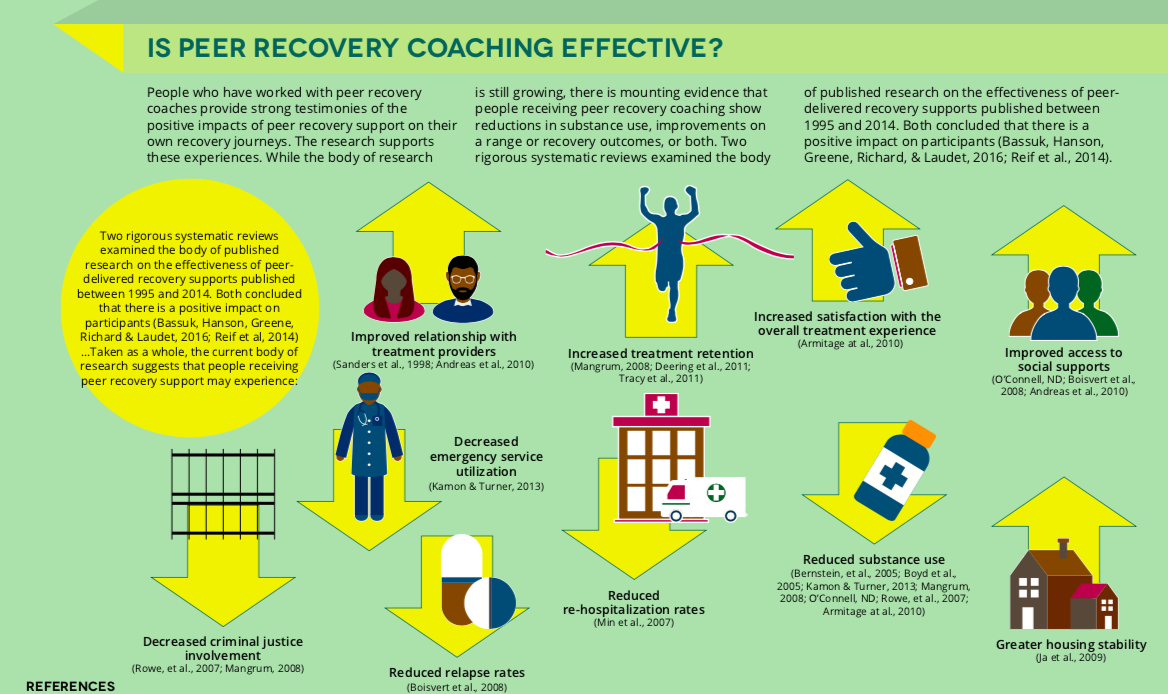
 Recovery coaching infographic via SAMSHA . Recovery coaching infographic via SAMSHA .

4. Therapy

There are so many different types of therapy, that could be another blog post entirely. A therapist can help you with past and current issues and challenges, in your addiction recovery and life in general. A therapist can work with you one-on-one or in a group, depending on how you feel most comfortable. Several types of therapy work well for addiction, including Cognitive Behavioral Therapy and Motivational Interviewing, have been proven to work well for addiction. Many therapists specialize in treating addiction, and will pick and choose techniques best suited to handle your specific issues.

How to get started: Nowadays you can find online or app-based therapy companies like TalkSpace and BetterHelp. Directories like Psychology Today have a large network of therapists to choose from, with both group therapy and individual therapy options available.

5. Intensive Outpatient Programs

If you’re ready to go to treatment but not ready to ask for time off of work, or just can’t afford a 30-day stay at rehab, an intensive outpatient program might be the right choice for you. Instead of staying in a facility for 30 days, you attend daily therapy and classes, and then return home. Programs usually take up about 10-12 hours a week, depending on the level of care. A study in 2014 found that outpatient programs are just as effective as inpatient treatment. In an outpatient program in your local area, you’ll also be able to receive therapy for situations which come up in your day-to-day life which you’re unlikely to encounter during a rehab stay. Peers you meet will more likely be from your local area, and help you establish a local recovery community.

How to get started: If you have insurance, you can call the number on the back of your insurance card to find an outpatient program near you accepting new patients. If you don’t have insurance, search online for outpatient centers with scholarship programs near you.

6. Supplement and Nutrient Therapies

When drinking and using, our nutrition and diet are the last things on our mind. This is why eating healthy in recovery and getting nutritional therapy can be the optimal choice for some people. We live in the age of biohacking, and new nutritional therapies for addiction are being developed all the time. Many swear by the coenzyme NAD to assist in recovery, and others believe that amino acids can help mood and recovery.

How to get started: A functional medicine doctor or naturopath can evaluate your current health and recommend supplements for you. If you’re not ready for an appointment, you can buy basic nutritional supplements at your local pharmacy and focus on eating whole foods. Remember when shopping online, supplements aren’t regulated by the FDA and some can be addictive themselves.

7. Peer recovery groups

If you’re ready to find affordable, accessible support you can’t go wrong with peer-support groups. 12-step groups like Alcoholics Anonymous and Narcotics Anonymous are donation-based and very popular. If you aren’t in a rural area, chances are you will be able to find a group meeting near you at some time this week.

If the idea of AA or NA isn’t appealing, there are many alternatives for all different groups and interests, including:

  • Smart Recovery: self-help addiction recovery

  • Women for Sobriety: recovery empowering women to overcome addiction

  • Refuge Recovery: Buddhist-inspired mindfulness recovery

  • Celebrate Recovery: Christ-centered 12-step recovery

  • LifeRing: abstinence-based, secular recovery

  • Wellbriety: interconnected web carrying recovery knowledge to Native Nations

  • Moderation Management: focused on reducing the harm caused by alcohol

These are just a few of the many groups out there, and if you don’t find one you resonate with, you can always post on meetup.com and try to find people looking for the same sort of support you are.

How to get started: Pick a meeting near you and check it out! If you’re intimidated, see if the group you are interested in has a hotline you can call and ask any questions you might have about your first time. You can always try out an online meeting before heading to the real thing.

8. Natural recovery

It might sound far-fetched, but natural remission from drug and alcohol addiction is the most common type of recovery out there. This is especially true for those with less severe substance use disorders, who may change their lifestyle and find that they’re able to move on from the problem. Many people choose to change their relationship with drugs and alcohol and find a new way of life without any sort of program. They may not identify as people in recovery at all. The U.S. Surgeon General’s Report on Drugs, Alcohol, and Health explained:

“For some people with Substance Use Disorders, especially those whose problems are not severe, remission is the end of a chapter in their life that they rarely think about later, if at all. But for others, particularly those with more severe Substance Use Disorders, remission is a component of a broader change in their behavior, outlook, and identity. That change process becomes an ongoing part of how they think about themselves and their experience with substances. Such people describe themselves as being ‘in recovery.’”

How to get started: Find a new healthier replacement for your addiction, like a hobby or passion. Take up exercise and build out a healthier daily routine. Focus on what would make you happy (other than drugs or alcohol), and take steps in your life to get there.

9. Harm Reduction

Not sure you’re ready to quit, but still ready to take steps to improve your quality of life? Welcome to harm reduction. While abstinence-based recovery is largely black and white (you are on the wagon or off), harm reduction lives in the gr
ay. It encourages people who use drugs to use them safely and responsibly, and empowers drug users to make positive choices.

How to get started: Print out and complete this workbook from here to help which includes harm reduction strategies. If you find it helpful, then buy the book Over the Influence: The Harm Reduction Guide to Controlling Your Drug and Alcohol Use as a clearer guide.

These options sound great, but are they ever not enough? Should you ever make sure to get into an inpatient rehab? I asked Workit Health’s Director of Counseling, Brooke Houser, and she explained, “Anytime you are going through severe withdrawal from substances (especially alcohol), 24-hour medical supervision is important, and this is a benefit of inpatient treatment. As far as substance use goes, when you feel unsafe to be alone due to your levels of use, or symptoms of other illness such as severe depression, manic episodes, psychosis, or severe cognitive impairments, inpatient may be necessary to stabilize.”

Kali Lux is a consumer marketing leader with a focus on healthcare and wellness. She has over a decade of experience in building and operating metrics-driven brand, demand generation, and customer experience teams. A founding member of Workit Health’s team and a person in recovery herself, she’s passionate about fighting stigma and developing strategies that allow more people access to quality treatment at the moment they’re ready for help.

PrevWhy It’s Important to Find Gratitude in Hard Times
Heading Home for the Holidays in Early RecoveryNext

Any general advice posted on our blog, website, or app is for informational purposes only and is not intended to replace or substitute for any medical or other advice. Workit Health, Inc. and its affiliated professional entities make no representations or warranties and expressly disclaim any and all liability concerning any treatment, action by, or effect on any person following the general information offered or provided within or through the blog, website, or app. If you have specific concerns or a situation arises in which you require medical advice, you should consult with an appropriately trained and qualified medical services provider.

Top

Get the latest recovery news

Instagram Linkedin-in Facebook-f Youtube
    • Treatments
    • Opioids
    • Kratom
    • Alcohol


  • About Workit Health
  • Contact us
  • Our team
  • Media spotlight
  • Careers
  • We Accept Insurance
  • Check insurance
  • Aetna
  • Anthem of Ohio
  • Horizon BCBSNJ
  • Humana
  • Resources
  • What is harm reduction?
  • Addiction recovery resources
  • Suboxone FAQs
  • Blog
  • Friends and Family
  • Resources for friends and family
  • Help Them Heal Guide
  • Refer a loved one
  • Members
  • Login
  • Community
  • Medical records request form
  • Medical Records Fax: 833-923-0584
  • Tech support guides
  • Call us: 855-659-7734 M-F 8am-9pm EST
    • Partners
    • Make a referral
    • For health plans
    • For providers and hospitals
    • Third-party medical records requests
Treatments
    • Opioids
    • Kratom
    • Alcohol
About Us
  • Contact us
  • Our team
  • Media spotlight
  • Careers
Resources
  • What is harm reduction?
  • Addiction recovery resources
  • Suboxone FAQs
  • Blog
Insurance
  • Check insurance
  • Aetna
  • Anthem of Ohio
  • Horizon BCBSNJ
  • Humana
Members
  • Login
  • Community
  • Medical records request form
  • Medical Records Fax: 833-923-0584
  • Tech support guides
  • Call us: 855-659-7734
    M-F 8am-9pm EST
Resources
  • What is harm reduction?
  • Addiction recovery resources
  • Suboxone FAQs
  • Blog
Friends and Family
  • Resources for friends and family
  • Help Them Heal Guide
Partners
    • Make a referral
    • For health plans
    • For providers and hospitals
    • Third-party medical records requests
Locations
  • Arizona
  • California
  • Florida
  • Illinois
  • Michigan
  • Montana
  • New Jersey
  • New Mexico
  • North Carolina
  • Ohio
  • Oklahoma
  • Texas
  • Washington
Read more about Suboxone risks and concerns

Suboxone (buprenorphine/naloxone) is indicated for the treatment of opioid dependence in adults. Suboxone should not be taken by individuals who have been shown to be hypersensitive to buprenorphine or naloxone as serious adverse reactions, including anaphylactic shock, have been reported. Taking Suboxone (buprenorphine/naloxone) with other opioid medicines, benzodiazepines, alcohol, or other central nervous system depressants can cause breathing problems that can lead to coma and death. Other side effects may include headaches, nausea, vomiting, constipation, insomnia, pain, increased sweating, sleepiness, dizziness, coordination problems, physical dependence or abuse, and liver problems. For more information about Suboxone (buprenorphine/naloxone) see Suboxone.com, the full Prescribing Information, and Medication Guide, or talk to your healthcare provider. You are encouraged to report negative side effects of drugs to the FDA. Visit www.fda.gov/medwatch or call 1-800-FDA-1088.

All clinical and medical services are provided by licensed physicians and clinicians who are practicing as employees or contractors of independently owned and operated professional medical practices that are owned by licensed physicians. These medical practices include Workit Health (MI), PLLC; Workit Health (CA), P.C.; Workit Health (NJ), LLC; Workit Health (OH), LLC; Virtual Physician Practice (NY), PLLC; and any other Workit Health professional entity that is established in the future.

Clinic locations

Arizona
2501 N Hayden Rd.
Ste 103
Scottsdale, AZ 85257
fax (HIPAA): (833) 664-5441

California
1460 Maria Lane
Ste 300
Walnut Creek, CA 94596
fax (HIPAA): (855) 716-4494

Florida
600 Heritage Dr.
Ste 210, #17
Jupiter, FL 33458
fax (HIPAA): (813) 200-2822

Illinois
1280 Iroquois Ave
Ste 402
Naperville, IL 60563
fax (HIPAA): (855) 716-4494

Michigan
3300 Washtenaw Ave
Ste 280
Ann Arbor, MI 48104
fax (HIPAA): (855) 716-4494

Montana
415 N Higgins Ave
Ste 6
Missoula, MT 59802
fax (HIPAA): (855) 716-4494

New Jersey
5 Greentree Center
Ste 117
Marlton, NJ 08053
fax (HIPAA): (609) 855-5027

New Mexico
5901 Indian School Road, NE
Ste 212
Albuquerque, NM 87110
fax (HIPAA): (855) 716-4494

North Carolina
3719 Latrobe Drive
Ste 850-M
Charlotte, NC 28211-4827
fax (HIPAA): (855) 716-4494

Ohio
6855 Spring Valley Dr
Ste 110
Holland, OH 43528
fax (HIPAA): (513) 823-3247

Oklahoma
1010 24th Ave NW
Suite 100
Norman, OK 73069
fax (HIPAA): (855) 716-4494

Texas
5373 W Alabama St
Ste 204
Houston, TX 77056
fax (HIPAA): (737) 738-5046

Washington
9116 Gravelly Lake Dr SW
Ste 107 #3, PMB 1963
Lakewood, WA 98499-3148.
fax (HIPAA): (833) 328-1407

AICPA SOC

Terms of Service

Privacy Policy

Notice of Privacy Practice

View Accessibility Statement

© 2026 Workit Health. All rights reserved.

Not ready to start? We'll send you more information:

  • Workit Health

    When I opt in, Workit Health will send information about their program and recovery resources.

    *I agree to receive marketing and member care messages by email. Messaging frequency varies. I can unsubscribe at any time.

    **I agree to receive marketing and member care messages by text (SMS). Messaging frequency varies. Message and data rates may apply. I can opt out at any time by replying STOP. I can reply HELP to receive support. If I do not consent to receive SMS, and Workit Health is unable to reach me by email, I understand that they will not be able to contact me by text.

    Carriers are not liable for delayed or undelivered messages.

    View our Privacy Policy, Terms of Service, and Consent to SMS and Email.

  • Should be Empty:

This site uses cookies to improve your experience. By using this site, you consent to our use of cookies.

Accept Cookies