Skip to content

Supporting Loved Ones in Addiction | Wed. March 25th

  • Online Recovery
    • Quit Opioids
    • Including prescription pain medication and heroin
    • Suboxone
    • Insurance or self-pay
    • At-home drug screenings
    • Quit Kratom
    • Including 7-OH
    • Medication assistance
    • Insurance or self-pay
    • Whole-person care (anxiety, insomnia, etc.)
    • Quit Drinking
    • Campral
    • Naltrexone
    • Insurance or self-pay
    • 100% Online
    • Non-judgmental providers
    • Help with co-occurring disorders​
    • Recovery groups
    • Real people (No AI bots)
  • About Us
    • Our Research

    Advancing substance use treatment through rigorous, peer-reviewed research and actionable insights.

    • Our Mission

    Everyone deserves access to the gold standard of treatment, without judgment.

    • Growing Our Team

    Join us in transforming addiction treatment and improving lives through digital care.

    • Founded and operated by people in recovery since 2015
  • Resources
    • 33% of members were referred by friends or family
    Free Help Them Heal Guide
    • Articles
    • Member stories
    • Opioid addiction help
    • Suboxone Basics
    • Quit drinking
    • Naltrexone basics
    • For friends and family
    • Workit Health
    • Insurance checker
    • Locations
    • Reviews
    • Resources
    • Mental health apps
    • Helplines and support
    • Community in recovery
    • Medication resources
    • 32k+ App store reviews
    • 35k+ Members
    • 85% of Workit clinicians have supported a loved one
  • Make A Referral
    • Friends and Family

    For friends or family members supporting someone they care about.

    • Partners and Providers

    For healthcare professionals making a patient referral.

    • 33% of members were referred by friends or family
  • Partners
Book now
  • Stories Of Recovery
  • community, featured, women in recovery

How I Found My People

  • Fact Checked and Peer Reviewed
  • By Stefanie Wilder-Taylor

Subscribe

Sign up below to receive emails with resources and inspiration

What's your goal?

Join the 35k+ members who treated addiction via their phone

Closeup on hands holding a smartphone

Drink Tracking Apps: Can They Help Reduce Your Drinking?

Olivia Pennelle
An old-fashioned pharmacy on a small town street.

Tricky, Tricky—Prescription Pills & Addiction

Daniel D. Maurer
A woman sits in a dark room with her hands over her face.

I Love Him, But I Hate This Drug Use

Amy Dresner

In this article

During the times in my life when I felt most alone, finding my people—the community who understood and empathized—was lifesaving.

In 2004 I had my first baby. At that time, I would have told you that it was the worst thing to have happened to me. Pretty shocking, I know. Not the sentiment you’d expect from someone having a planned child, am I right? I was just as surprised by my own reaction to what everyone—every TV commercial, every greeting card, every woman who rubbed my pregnant belly, even my own mother—led me to believe would be the best thing to ever happen to me, or at the very least a fun new adventure. I didn’t have a single friend with a baby to give me a head’s up or at least tell me to lower my expectations. So when I found myself at home away from the safety of the hospital, with a crying newborn, struggling to breastfeed and feeling crushing anxiety that this would never be doable, let alone fun, I was quite sure I was completely alone.

Out of sheer desperation to find some sort of connection to the outside world, I started a blog. I had no idea what I was doing, but I felt compelled to spill my vulnerable, real, decidedly anti-Hallmark thoughts onto the Internet. I didn’t really know what to expect, and I was surprised when the comments started coming in. There were comments from people who may not have shared my background, career, religion, or geographical location. But they did share my thinking, which turned out to be so much more important. There is such power in feeling understood.

I’d found my people: other like-minded moms to commiserate with me, laugh with me, and virtually raise a glass of Chardonnay (or three), to surviving witching hours, bailing on breastfeeding, attempting potty training, and accepting non-fading stretch marks. These women made me feel sane. Most of all, they made me feel a part of something bigger instead of simply apart.

After years of denial, I admitted my struggles with alcohol

Years later, in May of 2009, with shaky hands and tears streaming down my face I dropped another truth bomb on my blog: My drinking had gotten out of control and I’d made a decision to stop.

I’d always loved to drink, especially white wine. I loved everything about it but the taste. I loved the glug glug glug sound it made when you poured it into a wine glass … the sound of relaxation. I loved its reliable effect; alcohol softened the harsh edges of my day like an Instagram filter. I loved how drinking wine made me feel like my old, lighthearted self. I really didn’t want to give up drinking.

But for the last couple of years, I’d been questioning whether or not I had a drinking problem. I would sneakily take online “Are You An Alcoholic?” quizzes where signs would point to yes. Yet I had always managed to convince myself I drank like everyone else I knew, except when I didn’t.

After I’d had my first baby, I’d noticed I was drinking more but I chalked it up to postpartum anxiety and stress. But since I’d had my twins, my drinking had ratcheted up another degree and I found that as hard as I tried, I couldn’t take a night off. I would wake up with a bad headache from the night before and have every intention of refraining that night, but by 5 p.m. I would find myself automatically pouring a glass. I even managed to drink when I had the flu. I just combined it with some Nyquil and called it medicinal. I might have gone on this way indefinitely if it wasn’t for the fact that one night I drank at a friend’s house with two of my kids and drove them home thinking I was fine. The next day I knew I hadn’t been fine. The jig was up.

My people stepped up again

I decided to get help, and that’s what led to me spilling it all out on my blog.

I laid out all the gory details in an entry titled “Secrets” and braced for impact. But once again, my community came through with support instead of condemnation. Just like when I admitted to my parenting struggles, admitting to alcohol struggles struck a chord with way more readers than I expected. Lots of anonymous commenters detailed their own struggles in my comment section, which led to a string of separate comment threads. In order to connect all these people so they could help each other, I started a separate Yahoo! community called The Booze Free Brigade, which quickly took on a life of its own. The Booze Free Brigade became a Facebook group called BFB and that group has grown to 2,000 members.

In the BFB, whether a person is sober or just attempting sobriety, all are welcome. The members of that group have found a place to hold each other up, to admit they’re hurting but also to celebrate big and small wins: days they’ve put together, sober anniversaries, even driving past a liquor store on the way home for work without pulling over. To this day, I still pop into this group for support.

Your people are out there

For me, I’m going on 13 years sober, and I’ve found that having a place to feel like I’m among my people is the most important tool of my sobriety. There are so many options out there, whether it’s a 12-step support group, internet chat room, or one of hundreds of virtual and in-person programs and communities. I’ve found there’s nothing more intoxicating than the words, “Me too.” So if you’re struggling, I encourage you to take a chance and find a place where you can tell the truth. Your people are out there.
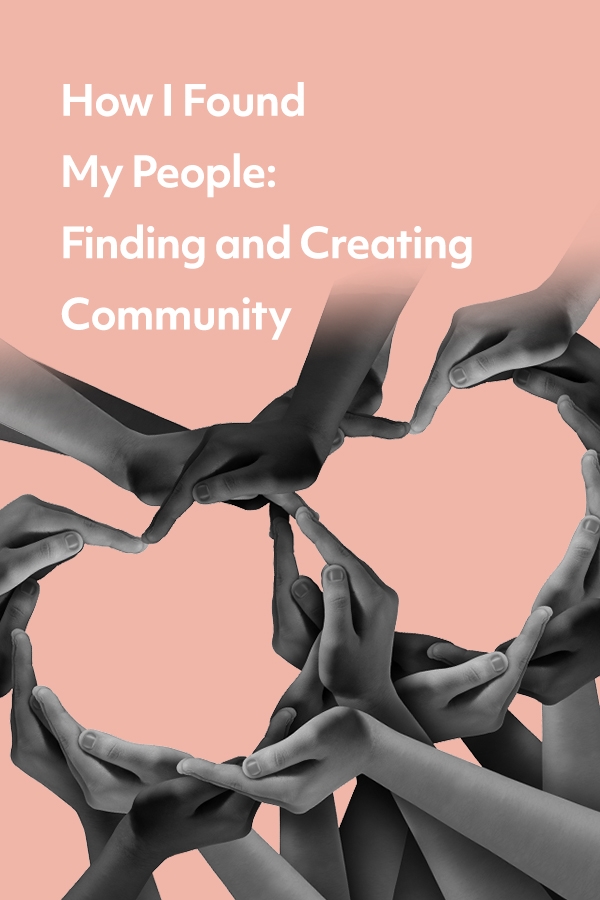

During the times in my life when I felt most alone, finding my people—the community who understood and empathized with my motherhood woes and struggles with alcohol—was lifesaving.

Stefanie Wilder-Taylor is an author, standup comedian, TV personality, writing teacher, and co-host of the popular podcasts, For Crying Out Loud, Rose Pricks, and Bored A.F. She has authored five books, starting with the irreverent best-seller, Sippy Cups Are Not for Chardonnay: And Other Things I Had to Learn as a New Mom. She’s talked sobriety on Oprah, GMA, 20/20, Dr. Oz, Dr. Phil, CNN, and more.

She lives in Los Angeles with her husband and three sporadically charming children.

PrevGrief in Recovery
Does Suboxone Show Up On a Drug Test?Next

Any general advice posted on our blog, website, or app is for informational purposes only and is not intended to replace or substitute for any medical or other advice. Workit Health, Inc. and its affiliated professional entities make no representations or warranties and expressly disclaim any and all liability concerning any treatment, action by, or effect on any person following the general information offered or provided within or through the blog, website, or app. If you have specific concerns or a situation arises in which you require medical advice, you should consult with an appropriately trained and qualified medical services provider.

Top

Get the latest recovery news

Instagram Linkedin-in Facebook-f Youtube
    • Treatments
    • Opioids
    • Kratom
    • Alcohol


  • About Workit Health
  • Contact us
  • Our team
  • Media spotlight
  • Careers
  • We Accept Insurance
  • Check insurance
  • Aetna
  • Anthem of Ohio
  • Horizon BCBSNJ
  • Humana
  • Resources
  • What is harm reduction?
  • Addiction recovery resources
  • Suboxone FAQs
  • Blog
  • Friends and Family
  • Resources for friends and family
  • Help Them Heal Guide
  • Refer a loved one
  • Members
  • Login
  • Community
  • Medical records request form
  • Medical Records Fax: 833-923-0584
  • Tech support guides
  • Call us: 855-659-7734 M-F 8am-9pm EST
    • Partners
    • Make a referral
    • For health plans
    • For providers and hospitals
    • Third-party medical records requests
Treatments
    • Opioids
    • Kratom
    • Alcohol
About Us
  • Contact us
  • Our team
  • Media spotlight
  • Careers
Resources
  • What is harm reduction?
  • Addiction recovery resources
  • Suboxone FAQs
  • Blog
Insurance
  • Check insurance
  • Aetna
  • Anthem of Ohio
  • Horizon BCBSNJ
  • Humana
Members
  • Login
  • Community
  • Medical records request form
  • Medical Records Fax: 833-923-0584
  • Tech support guides
  • Call us: 855-659-7734
    M-F 8am-9pm EST
Resources
  • What is harm reduction?
  • Addiction recovery resources
  • Suboxone FAQs
  • Blog
Friends and Family
  • Resources for friends and family
  • Help Them Heal Guide
Partners
    • Make a referral
    • For health plans
    • For providers and hospitals
    • Third-party medical records requests
Locations
  • Arizona
  • California
  • Florida
  • Illinois
  • Michigan
  • Montana
  • New Jersey
  • New Mexico
  • North Carolina
  • Ohio
  • Oklahoma
  • Texas
  • Washington
Read more about Suboxone risks and concerns

Suboxone (buprenorphine/naloxone) is indicated for the treatment of opioid dependence in adults. Suboxone should not be taken by individuals who have been shown to be hypersensitive to buprenorphine or naloxone as serious adverse reactions, including anaphylactic shock, have been reported. Taking Suboxone (buprenorphine/naloxone) with other opioid medicines, benzodiazepines, alcohol, or other central nervous system depressants can cause breathing problems that can lead to coma and death. Other side effects may include headaches, nausea, vomiting, constipation, insomnia, pain, increased sweating, sleepiness, dizziness, coordination problems, physical dependence or abuse, and liver problems. For more information about Suboxone (buprenorphine/naloxone) see Suboxone.com, the full Prescribing Information, and Medication Guide, or talk to your healthcare provider. You are encouraged to report negative side effects of drugs to the FDA. Visit www.fda.gov/medwatch or call 1-800-FDA-1088.

All clinical and medical services are provided by licensed physicians and clinicians who are practicing as employees or contractors of independently owned and operated professional medical practices that are owned by licensed physicians. These medical practices include Workit Health (MI), PLLC; Workit Health (CA), P.C.; Workit Health (NJ), LLC; Workit Health (OH), LLC; Virtual Physician Practice (NY), PLLC; and any other Workit Health professional entity that is established in the future.

Clinic locations

Arizona
2501 N Hayden Rd.
Ste 103
Scottsdale, AZ 85257
fax (HIPAA): (833) 664-5441

California
1460 Maria Lane
Ste 300
Walnut Creek, CA 94596
fax (HIPAA): (855) 716-4494

Florida
600 Heritage Dr.
Ste 210, #17
Jupiter, FL 33458
fax (HIPAA): (813) 200-2822

Illinois
1280 Iroquois Ave
Ste 402
Naperville, IL 60563
fax (HIPAA): (855) 716-4494

Michigan
3300 Washtenaw Ave
Ste 280
Ann Arbor, MI 48104
fax (HIPAA): (855) 716-4494

Montana
415 N Higgins Ave
Ste 6
Missoula, MT 59802
fax (HIPAA): (855) 716-4494

New Jersey
5 Greentree Center
Ste 117
Marlton, NJ 08053
fax (HIPAA): (609) 855-5027

New Mexico
5901 Indian School Road, NE
Ste 212
Albuquerque, NM 87110
fax (HIPAA): (855) 716-4494

North Carolina
3719 Latrobe Drive
Ste 850-M
Charlotte, NC 28211-4827
fax (HIPAA): (855) 716-4494

Ohio
6855 Spring Valley Dr
Ste 110
Holland, OH 43528
fax (HIPAA): (513) 823-3247

Oklahoma
1010 24th Ave NW
Suite 100
Norman, OK 73069
fax (HIPAA): (855) 716-4494

Texas
5373 W Alabama St
Ste 204
Houston, TX 77056
fax (HIPAA): (737) 738-5046

Washington
9116 Gravelly Lake Dr SW
Ste 107 #3, PMB 1963
Lakewood, WA 98499-3148.
fax (HIPAA): (833) 328-1407

AICPA SOC

Terms of Service

Privacy Policy

Notice of Privacy Practice

View Accessibility Statement

© 2026 Workit Health. All rights reserved.

Not ready to start? We'll send you more information:

  • Workit Health

    When I opt in, Workit Health will send information about their program and recovery resources.

    *I agree to receive marketing and member care messages by email. Messaging frequency varies. I can unsubscribe at any time.

    **I agree to receive marketing and member care messages by text (SMS). Messaging frequency varies. Message and data rates may apply. I can opt out at any time by replying STOP. I can reply HELP to receive support. If I do not consent to receive SMS, and Workit Health is unable to reach me by email, I understand that they will not be able to contact me by text.

    Carriers are not liable for delayed or undelivered messages.

    View our Privacy Policy, Terms of Service, and Consent to SMS and Email.

  • Should be Empty:

This site uses cookies to improve your experience. By using this site, you consent to our use of cookies.

Accept Cookies