Skip to content

Supporting Loved Ones in Addiction | Wed. March 25th

  • Online Recovery
    • Quit Opioids
    • Including prescription pain medication and heroin
    • Suboxone
    • Insurance or self-pay
    • At-home drug screenings
    • Quit Kratom
    • Including 7-OH
    • Medication assistance
    • Insurance or self-pay
    • Whole-person care (anxiety, insomnia, etc.)
    • Quit Drinking
    • Campral
    • Naltrexone
    • Insurance or self-pay
    • 100% Online
    • Non-judgmental providers
    • Help with co-occurring disorders​
    • Recovery groups
    • Real people (No AI bots)
  • About Us
    • Our Research

    Advancing substance use treatment through rigorous, peer-reviewed research and actionable insights.

    • Our Mission

    Everyone deserves access to the gold standard of treatment, without judgment.

    • Growing Our Team

    Join us in transforming addiction treatment and improving lives through digital care.

    • Founded and operated by people in recovery since 2015
  • Resources
    • 33% of members were referred by friends or family
    Free Help Them Heal Guide
    • Articles
    • Member stories
    • Opioid addiction help
    • Suboxone Basics
    • Quit drinking
    • Naltrexone basics
    • For friends and family
    • Workit Health
    • Insurance checker
    • Locations
    • Reviews
    • Resources
    • Mental health apps
    • Helplines and support
    • Community in recovery
    • Medication resources
    • 32k+ App store reviews
    • 35k+ Members
    • 85% of Workit clinicians have supported a loved one
  • Make A Referral
    • Friends and Family

    For friends or family members supporting someone they care about.

    • Partners and Providers

    For healthcare professionals making a patient referral.

    • 33% of members were referred by friends or family
  • Partners
Book now
Book now
Book now
Login
  • Quit Opioids
  • Including prescription pain medication and heroin
  • Suboxone
  • Insurance or self-pay
  • At home drug screenings
  • Quit Kratom
  • Including 7-OH
  • Medication assistance
  • Insurance or self-pay
  • Whole-person care (anxiety, insomnia,etc.)
  • Quit Drinking
  • Medication assistance
  • Insurance or self-pay
  • Recovery groups
  • 33% of members are referred by friends or family
Free Help them Heal Guide
  • 100% Online
  • Non-judgmental providers
  • 35k+ Members
  • 3.4k+ Reviews
About Us
  • Our Research
  • Our Mission
  • Growing Our Team
Resources
  • Workit Health
  • Insurance checker
  • Locations
  • Reviews
  • Articles
  • Member stories
  • Opioid addiction help
  • Suboxone Basics
  • Quit drinking
  • Naltrexone basics
  • For friends and family
  • Resources
  • Mental health apps
  • Helplines and support
  • Community in recovery
  • Medication resources
Make a Referral
  • Friends and Family
  • Partners and Providers
  • Partners
  • Clinical, Culture
  • featured, Recovery, treatment

Home As The New Recovery Paradigm

  • Fact Checked and Peer Reviewed
  • By Robin McIntosh

A future free of addiction is in your hands

Recover from addiction at home with medication, community, and support—from the nonjudmental experts who really care.

Get started today

What's your goal?

Join the 35k+ members who treated addiction via their phone

Seen from a distance, a man walks to the edge of a jutting, rocky cliff.

What to Know About Precipitated Withdrawal from Opioids

Olivia Pennelle
A young Black man raises an eyebrow skeptically.

Take a Closer Look at Your Drinking

Alaine Sepulveda
Boston Paul is a White man with a shaved head and a goatee, holding a small dog

Boston Paul’s Story

Workit Team

In this article

Residential rehab was the accepted recovery paradigm for decades, but the advent of telemedicine has opened the door to addiction recovery at home.

“Rehab.” It’s a wildly misunderstood word. While glossy brochures depict leisurely beach strolls, poolside shiatsu, and triumphant, power-bronzed models enjoying equine therapy—this was not my reality.  That said, I am grateful to have received treatment at all. Nine out of ten Americans diagnosed with a substance use disorder do not. We are a stigmatized, overlooked, and critically underserved population. 

My own experience with rehab

The idea of “locking someone up,” even if voluntary, is indisputably dehumanizing. I entered my first treatment center at the age of eighteen. My roommate was a brilliant professor struggling with PTSD and pain pill dependence. By day, we were thick as thieves, but by night, she suffered from ear-shattering night terrors. More often than not, I’d awaken to her screams—at times no more than two inches from my face, ripping at my neck with her nails. The night nurses would descend on us, drag her from sight, drug her with a meaty dose of Seroquel, and lay her back in bed. This was never discussed the next morning, as night nurses did not freely communicate with day staff. This was terrifying for me and humiliating for my roommate. She relapsed within a week of “graduating” from this South Florida program. She’s no longer with us today. 

Rehab is nothing like the brochure.

Take my account with a grain of salt. “Treatment” is personal, and this is my own experience. Residential rehabilitation does work for select individuals (statistically, about 21%). I’ve had many friends enter rehab broken and hopeless, and exit whole and ready for the world, abstaining from their dependence forever after. 

Barriers to care reveal the need for a new kind of treatment

One layer to the problem is affordability; of the 20 million Americans diagnosed with substance use disorders, 90% don’t receive clinical help. Why? Statistics point to exorbitant and oftentimes hidden costs as the leading obstacle to treatment. The price tag of thirty-day residential rehab varies and often exceeds $20,000 for well-known centers—in exchange for antiquated treatment and unsurprisingly poor outcomes.  Even if you’re insured, you’ll likely foot a shockingly high bill upon discharge.    

Another obvious barrier to recovery is the lack of access. In 2020, 80% of brick-and-mortar rehab centers shuttered during the onset of COVID-19. Clinical resources—already strained—were diverted from specialty care in response to the pandemic. Waitlists grew longer, premiums went up; barriers to recovery mounted. This new reality has violently supplanted the old, demanding a new paradigm for treatment.  

There is a silver lining: from chaos, a new order emerges. This pandemic has catapulted clinical programs into the twenty-first century, accelerating the implementation and adoption of telehealth solutions like Workit. Telehealth enables “anywhere, anytime” care, which is key to democratizing addiction treatment and leveling the two core barriers to entry: affordability and lack of access

Answering common questions about telehealth treatment 

This magnificent shift broaches a novel array of questions regarding home-based recovery care, five of which our Workit team has done its best to answer.

What if I actually prefer an in-person clinical setting? 

“At Workit we like to say, “Your Recovery, Your Way.” Expanding the options available for care doesn’t mean you can’t pick the best one for you—it simply means you have more choices. Telehealth helps to round out a dangerously limited menu of options, which historically are “white-knuckling it” and recovering alone, or entering a residential facility. One is dangerous, the other is an impossibility for most of us. Now, we have another pathway: recovery from your way, from anywhere.” Kali Lux, VP of Marketing and proud woman in recovery 

My home is as personal as it gets. What if I don’t want my family member to know I’m receiving help?

“We often tell members that recovery does not mean lack of privacy. Often we have members who are not ready to share their treatment with loved ones. Our advice is to find a safe place in the home where you can meet (the bathroom usually), get headphones to keep the noise down, and ultimately let us know so we can try to respect your wishes as best as we can.” Janessa Perrin, Head of Behavioral Health

My home is not safe. What do I do now?

“Reach out to us via phone, chat, or email. We have social workers on staff who can help with finding a shelter or other housing resources, or creating a safety plan if leaving is not an option.” Janessa Perrin, Head of Behavioral Health

Will home-based and telehealth recovery care be covered by my insurance?

“More health plans are covering telemedicine than ever before. By and large, this is due to changes brought about by the Affordable Care Act. If you are unsure if telemedicine is covered for you specifically, reach out to the number on the back of your insurance card or ask your provider to verify your benefits.” Amy Wilson, Member Service Manager 

Telehealth isn’t covered by my insurance. When will it be? 

“During the course of the pandemic, telehealth visits offered a cost-effective treatment option for payers and a lifeline to many homebound patients. According to an analysis of 2020 BCBS of Michigan claims, telehealth use is now 20 times higher than it was prior to the pandemic …” (Source)

“Now, in light of the continuing need for SUD treatment via telehealth, lawmakers have introduced bipartisan bills to increase coverage. One notable Senate bill, the Tele-Mental Health Improvement Act, would require commercial insurers to reimburse SUD treatment providers at the same rate for telehealth and in-person visits.” Graham Vogt, Regulatory Operations Manager 

View our guide to telemedicine addiction treatment for more resources.

We founded Workit years before the onset of this pandemic. If there’s one silver lining to COVID-19, it’s that Americans with substance use disorder can now more easily access affordable, effective care without leaving the privacy of home. Let’s make waiting rooms and waitlists a relic of a bygone model. We are ushering in a new paradigm of treatment and with it a new level of respect and dignity for end patients.
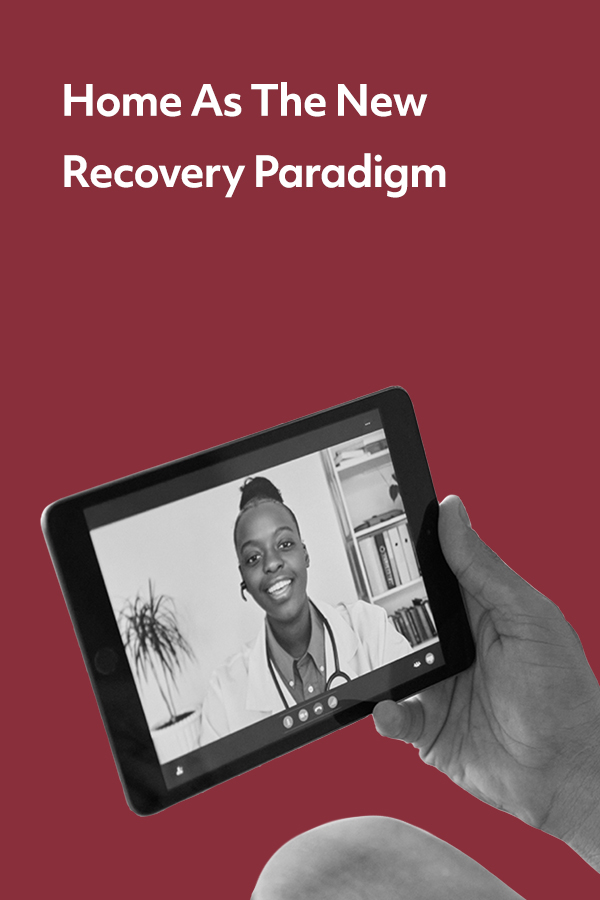

Residential rehab was the accepted recovery paradigm for decades. This article looks at telemedicine and how it has opened the door to addiction recovery at home.

Robin McIntosh is Workit Health’s Co-Founder and Chairperson of the Board of Directors. She is an experienced designer & entrepreneur. She has founded multiple companies, and has worked in health and consumer tech over the past ten years.

PrevThere’s Nothing to Lose: Modeling the Rejection of Diet Culture for Teens
We Answer Your Suboxone Withdrawal QuestionsNext

Any general advice posted on our blog, website, or app is for informational purposes only and is not intended to replace or substitute for any medical or other advice. Workit Health, Inc. and its affiliated professional entities make no representations or warranties and expressly disclaim any and all liability concerning any treatment, action by, or effect on any person following the general information offered or provided within or through the blog, website, or app. If you have specific concerns or a situation arises in which you require medical advice, you should consult with an appropriately trained and qualified medical services provider.

Top

Get the latest recovery news

Instagram Linkedin-in Facebook-f Youtube
    • Treatments
    • Opioids
    • Kratom
    • Alcohol


  • About Workit Health
  • Contact us
  • Our team
  • Media spotlight
  • Careers
  • We Accept Insurance
  • Check insurance
  • Aetna
  • Anthem of Ohio
  • Horizon BCBSNJ
  • Humana
  • Resources
  • What is harm reduction?
  • Addiction recovery resources
  • Suboxone FAQs
  • Blog
  • Friends and Family
  • Resources for friends and family
  • Help Them Heal Guide
  • Refer a loved one
  • Members
  • Login
  • Community
  • Medical records request form
  • Medical Records Fax: 833-923-0584
  • Tech support guides
  • Call us: 855-659-7734 M-F 8am-9pm EST
    • Partners
    • Make a referral
    • For health plans
    • For providers and hospitals
    • Third-party medical records requests
Treatments
    • Opioids
    • Kratom
    • Alcohol
About Us
  • Contact us
  • Our team
  • Media spotlight
  • Careers
Resources
  • What is harm reduction?
  • Addiction recovery resources
  • Suboxone FAQs
  • Blog
Insurance
  • Check insurance
  • Aetna
  • Anthem of Ohio
  • Horizon BCBSNJ
  • Humana
Members
  • Login
  • Community
  • Medical records request form
  • Medical Records Fax: 833-923-0584
  • Tech support guides
  • Call us: 855-659-7734
    M-F 8am-9pm EST
Resources
  • What is harm reduction?
  • Addiction recovery resources
  • Suboxone FAQs
  • Blog
Friends and Family
  • Resources for friends and family
  • Help Them Heal Guide
Partners
    • Make a referral
    • For health plans
    • For providers and hospitals
    • Third-party medical records requests
Locations
  • Arizona
  • California
  • Florida
  • Illinois
  • Michigan
  • Montana
  • New Jersey
  • New Mexico
  • Ohio
  • Oklahoma
  • Texas
  • Washington
Read more about Suboxone risks and concerns

Suboxone (buprenorphine/naloxone) is indicated for the treatment of opioid dependence in adults. Suboxone should not be taken by individuals who have been shown to be hypersensitive to buprenorphine or naloxone as serious adverse reactions, including anaphylactic shock, have been reported. Taking Suboxone (buprenorphine/naloxone) with other opioid medicines, benzodiazepines, alcohol, or other central nervous system depressants can cause breathing problems that can lead to coma and death. Other side effects may include headaches, nausea, vomiting, constipation, insomnia, pain, increased sweating, sleepiness, dizziness, coordination problems, physical dependence or abuse, and liver problems. For more information about Suboxone (buprenorphine/naloxone) see Suboxone.com, the full Prescribing Information, and Medication Guide, or talk to your healthcare provider. You are encouraged to report negative side effects of drugs to the FDA. Visit www.fda.gov/medwatch or call 1-800-FDA-1088.

All clinical and medical services are provided by licensed physicians and clinicians who are practicing as employees or contractors of independently owned and operated professional medical practices that are owned by licensed physicians. These medical practices include Workit Health (MI), PLLC; Workit Health (CA), P.C.; Workit Health (NJ), LLC; Workit Health (OH), LLC; Virtual Physician Practice (NY), PLLC; and any other Workit Health professional entity that is established in the future.

Clinic locations

Arizona
2501 N Hayden Rd.
Ste 103
Scottsdale, AZ 85257
fax (HIPAA): (833) 664-5441

California
1460 Maria Lane
Ste 300
Walnut Creek, CA 94596
fax (HIPAA): (855) 716-4494

Florida
600 Heritage Dr.
Ste 210, #17
Jupiter, FL 33458
fax (HIPAA): (813) 200-2822

Illinois
1280 Iroquois Ave
Ste 402
Naperville, IL 60563
fax (HIPAA): (855) 716-4494

Michigan
3300 Washtenaw Ave
Ste 280
Ann Arbor, MI 48104
fax (HIPAA): (855) 716-4494

Montana
415 N Higgins Ave
Ste 6
Missoula, MT 59802
fax (HIPAA): (855) 716-4494

New Jersey
5 Greentree Center
Ste 117
Marlton, NJ 08053
fax (HIPAA): (609) 855-5027

New Mexico
5901 Indian School Road, NE
Ste 212
Albuquerque, NM 87110
fax (HIPAA): (855) 716-4494

Ohio
6855 Spring Valley Dr
Ste 110
Holland, OH 43528
fax (HIPAA): (513) 823-3247

Oklahoma
1010 24th Ave NW
Suite 100
Norman, OK 73069
fax (HIPAA): (855) 716-4494

Texas
5373 W Alabama St
Ste 204
Houston, TX 77056
fax (HIPAA): (737) 738-5046

Washington
9116 Gravelly Lake Dr SW
Ste 107 #3, PMB 1963
Lakewood, WA 98499-3148.
fax (HIPAA): (833) 328-1407

AICPA SOC

Terms of Service

Privacy Policy

Notice of Privacy Practice

View Accessibility Statement

© 2026 Workit Health. All rights reserved.

Not ready to start? We'll send you more information:

  • Workit Health

    When I opt in, Workit Health will send information about their program and recovery resources.

    *I agree to receive marketing and member care messages by email. Messaging frequency varies. I can unsubscribe at any time.

    **I agree to receive marketing and member care messages by text (SMS). Messaging frequency varies. Message and data rates may apply. I can opt out at any time by replying STOP. I can reply HELP to receive support. If I do not consent to receive SMS, and Workit Health is unable to reach me by email, I understand that they will not be able to contact me by text.

    Carriers are not liable for delayed or undelivered messages.

    View our Privacy Policy, Terms of Service, and Consent to SMS and Email.

  • Should be Empty:

Your recovery, your way—
100% online

Book your appointment
Check your insurance coverage
  • Aetna
  • Humana
  • Horizon
  • Cigna
  • Blue Cross Blue Shield
  • and more

👉 Using insurance? Coverage checks are always for free in the Workit Health app.

Check your coverage

Not ready to start? We'll send you more information:

This site uses cookies to improve your experience. By using this site, you consent to our use of cookies.

Accept Cookies