Skip to content

Supporting Loved Ones in Addiction | Wed. March 25th

  • Online Recovery
    • Quit Opioids
    • Including prescription pain medication and heroin
    • Suboxone
    • Insurance or self-pay
    • At-home drug screenings
    • Quit Kratom
    • Including 7-OH
    • Medication assistance
    • Insurance or self-pay
    • Whole-person care (anxiety, insomnia, etc.)
    • Quit Drinking
    • Campral
    • Naltrexone
    • Insurance or self-pay
    • 100% Online
    • Non-judgmental providers
    • Help with co-occurring disorders​
    • Recovery groups
    • Real people (No AI bots)
  • About Us
    • Our Research

    Advancing substance use treatment through rigorous, peer-reviewed research and actionable insights.

    • Our Mission

    Everyone deserves access to the gold standard of treatment, without judgment.

    • Growing Our Team

    Join us in transforming addiction treatment and improving lives through digital care.

    • Founded and operated by people in recovery since 2015
  • Resources
    • 33% of members were referred by friends or family
    Free Help Them Heal Guide
    • Articles
    • Member stories
    • Opioid addiction help
    • Suboxone Basics
    • Quit drinking
    • Naltrexone basics
    • For friends and family
    • Workit Health
    • Insurance checker
    • Locations
    • Reviews
    • Resources
    • Mental health apps
    • Helplines and support
    • Community in recovery
    • Medication resources
    • 32k+ App store reviews
    • 35k+ Members
    • 85% of Workit clinicians have supported a loved one
  • Make A Referral
    • Friends and Family

    For friends or family members supporting someone they care about.

    • Partners and Providers

    For healthcare professionals making a patient referral.

    • 33% of members were referred by friends or family
  • Partners
Book now
  • Stories Of Recovery
  • drugs, eating, How to Quit Drinking, interview, mindfulness

Valerie Mason-John, Founder of 8 Step Recovery, On Spirituality, Bullying, And Breath As A Tool

  • Fact Checked and Peer Reviewed

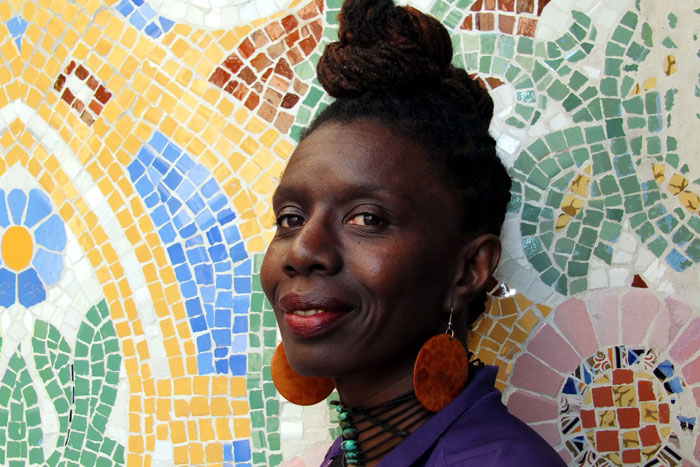
Dr. Valerie Mason-John is the co-founder of 8 Step Recovery and one of the leaders in the secular recovery movement. I tracked her down to ask about her history and her own recovery, as well as the movement she's creating.

  • By Kali Lux

A future free of addiction is in your hands

Recover from addiction at home with medication, community, and support—from the nonjudmental experts who really care.

Get started today

What's your goal?

Join the 35k+ members who treated addiction via their phone

A hand holds a Suboxone box up to the camera

A Dangerous Myth: “Suboxone is Just Legal Heroin”

Olivia Pennelle
A young man in a white t-shirt looks at himself in the mirror

Self-Care in Early Recovery

Alaine Sepulveda
Closeup on hands holding a smartphone

Drink Tracking Apps: Can They Help Reduce Your Drinking?

Olivia Pennelle

In this article

Dr. Valerie Mason-John M.A (hon.doc) is the co-founder of 8 Step Recovery and one of the leaders in the secular recovery movement.

At Workit, we all walk different paths towards addiction recovery, and we encourage everyone to find one that speaks to them. Recovery, like shoes, aren’t one size fits all. The Spirit section of the Workit program is devoted to mindfulness, and if you love working spirit, then Valerie Mason-John’s work is right up your alley. I tracked down Valerie Mason-John to ask her about her history and her own recovery, as well as the movement she’s creating.

Kali: You say, “What I have to offer is my recovery.” Your recovery story is remarkable. Can you summarize your journey?

Valerie: My Curriculum Vitae.

  • Sugar addict from aged 6 to 11
  • Shoe conditioner sniffing aged 13 to 15
  • Shop lifting addiction aged 13 to 15
  • Anorexia aged 17 to 21
  • Chronic Bulimia Nervosa aged 21 to 40
  • Uppers Freak 20s to 35
  • Champagne Late 20s  to 38
  • Meditation from 27 to  55 and hopefully beyond

What Social Service Records say:

  • Abandoned at 6 weeks.
  • With three foster families before the age of 5.
  • I became a problem because I was bleaching my skin
  • Enter Orphanage aged 5

What I remember:

  • Named Gruesome from 5 to 11
  • Sexual abuse, Sexual assault from age 7 to… early 20s
  • Sent to live with biological mother aged 11
  • Taken away by the police aged 12 and half
  • Attempts at taking my life aged 12, 13, 18
  • Went off the rails aged 13
  • Living on the Streets aged 14 – 15
  • Locked up  for shoplifting in Juvenile Centres
  • Attempt to take my life 18 and really meant it
  • Aged 27 guy tries to strangle me to death -and my life changes

What was your first touchpoint with recovery?

Knowing I was sick and I wanted out of that hell realm. I wanted to live, but not how I was living. I desperately wanted change.

How do you think we can better reach people who are still in active addiction, but seeking change?

The guidance appears when we are ready for it. You can talk to people, lecture people, show them how their life is being wrecked. But if they are not ready nothing will work. So the recovery is in the hands of the person who is lost in addiction. When they open up to change, we can reach them. But we have to know that sometimes people don’t want to go all the way. And we have to realize that for some people they will continually pick up and put down. Because addiction is the dis-ease of the brain, heart, mind, we must be compassionate with people who continually relapse.

You co-founded 8 Step Recovery, an alternative to 12-step recovery based on Buddhist teachings. What made you realize addiction treatment needed this additional program?

People realized that I had something to offer. They wanted to know what was it that made a difference in my life? When I reflected I realized that there were many people I grew up in the orphanages, and other institutions that had taken their life, were severely depressed, in their addiction, and not very happy at all. So when I was invited to write a new book by my publisher, I knew then it was time to share my path to recovery. I invited a psychiatrist friend of mine to write with me because I wanted it to have integrity. Not another misery story. But a universal story that all beings can benefit from.
“Seeing how we create extra suffering in life is the beginning of us breaking out of the prison of our minds.”

12-step recovery has Christian roots, and Refuge Recovery and 8 Step Recovery follow Buddhist teachings. But so many addicts struggle with the spiritual aspect of support groups. Do you think a spiritual solution is necessary for recovery?

Yes, and it can be Pagan, or animal, or nature. Basically, a spirituality that opens you up to kindness, compassion, and wisdom. It’s inevitable that many people with addictions struggle with spirituality because initially, their choice of addiction was unconscious about looking for spirituality, salvation, meaning of life, but the addiction hijacked their presence with one ness, with Allah, with God, Buddha, or Spirit.

Co-founder of AA Dr. Bob once wrote in a pamphlet Spiritual Milestones: “Consider the eight-part program laid down in Buddhism: Right view, right aim, right speech, right action, right living, right effort, right-mindedness and right contemplation. The Buddhist philosophy, as exemplified by these eight points, could be literally adopted by AA as a substitute for or addition to the Twelve Steps.”

In your TED talk, you say, “Forget about drugs, alcohol, food, sex, or rock and roll, my biggest addiction is my thinking.” What advice do you have for recognizing thinking as the problem, when it’s so easy to blame the substances or behaviors themselves? In active addiction, it’s easier to even blame our external circumstances than our addiction or our thinking.

Human beings have an inbuilt tendency to move away from all experience with either blame, self-pity, and/or distraction. Once we recognize that we can begin to kindly call ourselves out. Learning to be with experience is the magic pill to recovery. And that pill is excruciatingly painful to take. Few have the courage to sit and be with whatever arises without narrative. It’s easier to move into blame, self-pity, and distraction because they can make us feel more alive than sitting with unpleasantness. Seeing how we create extra suffering in life is the beginning of us breaking out of the prison of our minds.

You are called the Bully Doctor. How does bullying influence addiction?

Many people who are bullied escaped to a distraction for solace. There is a high correlation of young people who were repeatedly sexually abused (which is a form of bullying) with eating disorders. High correlation with homophobic bullying and drink and drugs. Targets of bullying often end up having addictions of some kind.

Who do you turn to for guidance and leadership in the recovery world or in your personal life?

I turn to my students. They keep me sober and abstinent. They inspire me and teach me. I seek guidance from my sponsor and mentor. In the recovery world, I seek guidance from The Buddha, Dr. Ambedkar, Kevin Griffin, Dori Langevin, Joan Tollifson, and Noah Levine. In my personal life, I am accountable to my partner who has been in AA and abstinent for 30 years. I seek guidance from the woman who ordained me Ratnavandana, and from several of my friends.

What advice do you have for people who come in and out of recovery, but can’t seem to stop relapsing?

Keep on picking yourself back up and when you do, give yourself a big hug, and say I love you. Reframe the word relapse. Know when you pick up in one moment you can put it down in the next. Even if you went out on a bender last night, you can put it down in the morning. Get honest!

Do you have any songs that get you motivated and pumped up when you’re feeling down?

Classical Music soothed my soul. Rave music. Techno, Trance saved my life. I still go out and dance without any stimulants.

What recovery tool do you use more than any other?

The breath. My body is the car I drive around 24/7, I get to use the breath as my hand break on thoughts of picking up. The breath is also my gear stick, if I breathe fully into my body, it stops me from going into automatic pilot.

What is your favorite act of self-care?

Giving myself enough sleep. If I don’t have enough hours for my body, I am at risk of picking up, relapsing, losing my cool. In brief, when I don’t sleep enough I’m threatening my sobriety of mind and abstinence.

Despite all your impressive accomplishments, I’m sure you still have struggles like we all do. What is your biggest challenge today, and how are you dealing with that?

Walking my talk. It’s so much easier to write books, lead retreats, give public talks. But to live recovery breath by breath, moment by moment is the biggest challenge I face today.

Watch Dr. Mason-John M.A (hon.doc) on TEDx:

TEDx Speaker Dr. Valerie Mason-John M.A (hon.doc) is one of the new leading African descent voices in Secular Mindfulness approaches for addiction. She is the co-founder of the Mindfulness Based Addiction Recovery (MBAR) and the co-founder and author of Eight Step Recovery Using The Buddha’s Teachings to Overcome Addiction. There are meetings in six countries. She is the new President of the International Organization Buddhist Recovery Network, and her mission is to make secular mindfulness and Buddhist recovery accessible to diverse communities. For more information www.valeriemason-john.com.

Kali Lux is a consumer marketing leader with a focus on healthcare and wellness. She has over a decade of experience in building and operating metrics-driven brand, demand generation, and customer experience teams. A founding member of Workit Health’s team and a person in recovery herself, she’s passionate about fighting stigma and developing strategies that allow more people access to quality treatment at the moment they’re ready for help.

PrevCould It Be Opiate Addiction?
Is It Time For Medication-Assisted Treatment To Leave NA?Next

Any general advice posted on our blog, website, or app is for informational purposes only and is not intended to replace or substitute for any medical or other advice. Workit Health, Inc. and its affiliated professional entities make no representations or warranties and expressly disclaim any and all liability concerning any treatment, action by, or effect on any person following the general information offered or provided within or through the blog, website, or app. If you have specific concerns or a situation arises in which you require medical advice, you should consult with an appropriately trained and qualified medical services provider.

Top

Get the latest recovery news

Instagram Linkedin-in Facebook-f Youtube
    • Treatments
    • Opioids
    • Kratom
    • Alcohol


  • About Workit Health
  • Contact us
  • Our team
  • Media spotlight
  • Careers
  • We Accept Insurance
  • Check insurance
  • Aetna
  • Anthem of Ohio
  • Horizon BCBSNJ
  • Humana
  • Resources
  • What is harm reduction?
  • Addiction recovery resources
  • Suboxone FAQs
  • Blog
  • Friends and Family
  • Resources for friends and family
  • Help Them Heal Guide
  • Refer a loved one
  • Members
  • Login
  • Community
  • Medical records request form
  • Medical Records Fax: 833-923-0584
  • Tech support guides
  • Call us: 855-659-7734 M-F 8am-9pm EST
    • Partners
    • Make a referral
    • For health plans
    • For providers and hospitals
    • Third-party medical records requests
Treatments
    • Opioids
    • Kratom
    • Alcohol
About Us
  • Contact us
  • Our team
  • Media spotlight
  • Careers
Resources
  • What is harm reduction?
  • Addiction recovery resources
  • Suboxone FAQs
  • Blog
Insurance
  • Check insurance
  • Aetna
  • Anthem of Ohio
  • Horizon BCBSNJ
  • Humana
Members
  • Login
  • Community
  • Medical records request form
  • Medical Records Fax: 833-923-0584
  • Tech support guides
  • Call us: 855-659-7734
    M-F 8am-9pm EST
Resources
  • What is harm reduction?
  • Addiction recovery resources
  • Suboxone FAQs
  • Blog
Friends and Family
  • Resources for friends and family
  • Help Them Heal Guide
Partners
    • Make a referral
    • For health plans
    • For providers and hospitals
    • Third-party medical records requests
Locations
  • Arizona
  • California
  • Florida
  • Illinois
  • Michigan
  • Montana
  • New Jersey
  • New Mexico
  • North Carolina
  • Ohio
  • Oklahoma
  • Texas
  • Washington
Read more about Suboxone risks and concerns

Suboxone (buprenorphine/naloxone) is indicated for the treatment of opioid dependence in adults. Suboxone should not be taken by individuals who have been shown to be hypersensitive to buprenorphine or naloxone as serious adverse reactions, including anaphylactic shock, have been reported. Taking Suboxone (buprenorphine/naloxone) with other opioid medicines, benzodiazepines, alcohol, or other central nervous system depressants can cause breathing problems that can lead to coma and death. Other side effects may include headaches, nausea, vomiting, constipation, insomnia, pain, increased sweating, sleepiness, dizziness, coordination problems, physical dependence or abuse, and liver problems. For more information about Suboxone (buprenorphine/naloxone) see Suboxone.com, the full Prescribing Information, and Medication Guide, or talk to your healthcare provider. You are encouraged to report negative side effects of drugs to the FDA. Visit www.fda.gov/medwatch or call 1-800-FDA-1088.

All clinical and medical services are provided by licensed physicians and clinicians who are practicing as employees or contractors of independently owned and operated professional medical practices that are owned by licensed physicians. These medical practices include Workit Health (MI), PLLC; Workit Health (CA), P.C.; Workit Health (NJ), LLC; Workit Health (OH), LLC; Virtual Physician Practice (NY), PLLC; and any other Workit Health professional entity that is established in the future.

Clinic locations

Arizona
2501 N Hayden Rd.
Ste 103
Scottsdale, AZ 85257
fax (HIPAA): (833) 664-5441

California
1460 Maria Lane
Ste 300
Walnut Creek, CA 94596
fax (HIPAA): (855) 716-4494

Florida
600 Heritage Dr.
Ste 210, #17
Jupiter, FL 33458
fax (HIPAA): (813) 200-2822

Illinois
1280 Iroquois Ave
Ste 402
Naperville, IL 60563
fax (HIPAA): (855) 716-4494

Michigan
3300 Washtenaw Ave
Ste 280
Ann Arbor, MI 48104
fax (HIPAA): (855) 716-4494

Montana
415 N Higgins Ave
Ste 6
Missoula, MT 59802
fax (HIPAA): (855) 716-4494

New Jersey
5 Greentree Center
Ste 117
Marlton, NJ 08053
fax (HIPAA): (609) 855-5027

New Mexico
5901 Indian School Road, NE
Ste 212
Albuquerque, NM 87110
fax (HIPAA): (855) 716-4494

North Carolina
3719 Latrobe Drive
Ste 850-M
Charlotte, NC 28211-4827
fax (HIPAA): (855) 716-4494

Ohio
6855 Spring Valley Dr
Ste 110
Holland, OH 43528
fax (HIPAA): (513) 823-3247

Oklahoma
1010 24th Ave NW
Suite 100
Norman, OK 73069
fax (HIPAA): (855) 716-4494

Texas
5373 W Alabama St
Ste 204
Houston, TX 77056
fax (HIPAA): (737) 738-5046

Washington
9116 Gravelly Lake Dr SW
Ste 107 #3, PMB 1963
Lakewood, WA 98499-3148.
fax (HIPAA): (833) 328-1407

AICPA SOC

Terms of Service

Privacy Policy

Notice of Privacy Practice

View Accessibility Statement

© 2026 Workit Health. All rights reserved.

Not ready to start? We'll send you more information:

  • Workit Health

    When I opt in, Workit Health will send information about their program and recovery resources.

    *I agree to receive marketing and member care messages by email. Messaging frequency varies. I can unsubscribe at any time.

    **I agree to receive marketing and member care messages by text (SMS). Messaging frequency varies. Message and data rates may apply. I can opt out at any time by replying STOP. I can reply HELP to receive support. If I do not consent to receive SMS, and Workit Health is unable to reach me by email, I understand that they will not be able to contact me by text.

    Carriers are not liable for delayed or undelivered messages.

    View our Privacy Policy, Terms of Service, and Consent to SMS and Email.

  • Should be Empty:

This site uses cookies to improve your experience. By using this site, you consent to our use of cookies.

Accept Cookies