Skip to content

Supporting Loved Ones in Addiction | Wed. March 25th

  • Online Recovery
    • Quit Opioids
    • Including prescription pain medication and heroin
    • Suboxone
    • Insurance or self-pay
    • At-home drug screenings
    • Quit Kratom
    • Including 7-OH
    • Medication assistance
    • Insurance or self-pay
    • Whole-person care (anxiety, insomnia, etc.)
    • Quit Drinking
    • Campral
    • Naltrexone
    • Insurance or self-pay
    • 100% Online
    • Non-judgmental providers
    • Help with co-occurring disorders​
    • Recovery groups
    • Real people (No AI bots)
  • About Us
    • Our Research

    Advancing substance use treatment through rigorous, peer-reviewed research and actionable insights.

    • Our Mission

    Everyone deserves access to the gold standard of treatment, without judgment.

    • Growing Our Team

    Join us in transforming addiction treatment and improving lives through digital care.

    • Founded and operated by people in recovery since 2015
  • Resources
    • 33% of members were referred by friends or family
    Free Help Them Heal Guide
    • Articles
    • Member stories
    • Opioid addiction help
    • Suboxone Basics
    • Quit drinking
    • Naltrexone basics
    • For friends and family
    • Workit Health
    • Insurance checker
    • Locations
    • Reviews
    • Resources
    • Mental health apps
    • Helplines and support
    • Community in recovery
    • Medication resources
    • 32k+ App store reviews
    • 35k+ Members
    • 85% of Workit clinicians have supported a loved one
  • Make A Referral
    • Friends and Family

    For friends or family members supporting someone they care about.

    • Partners and Providers

    For healthcare professionals making a patient referral.

    • 33% of members were referred by friends or family
  • Partners
Book now
  • Culture
  • addiction, alcohol, drinking, LGBT+

Alcohol Companies Sponsoring Pride Month is Still the Worst

  • Fact Checked and Peer Reviewed
Alcohol use within the LGBTQ+ community is a serious problem. Sean Paul Mahoney is here to educate us on the issue and how to overcome the sponsored pride.
  • By Sean Paul Mahoney

Ready to make a change?

Get help for alcohol use directly through your phone.​

Learn more

What's your goal?

Join the 35k+ members who treated addiction via their phone

Seen from a distance, a man walks to the edge of a jutting, rocky cliff.

What to Know About Precipitated Withdrawal from Opioids

Olivia Pennelle
A young Black man raises an eyebrow skeptically.

Take a Closer Look at Your Drinking

Alaine Sepulveda
Boston Paul is a White man with a shaved head and a goatee, holding a small dog

Boston Paul’s Story

Workit Team

In this article

You would think with what we know about the LGBTQ+ community and its toxic relationship with alcohol that we still wouldn’t have to talk about liquor companies sponsoring Pride. 

Alcohol is a huge part of Pride marketing

Tents filled with beer and floats sponsored by Stoli vodka feel a little outdated in this day and age. As the community is widely considered to be at risk to develop substance use disorders, a booze brand sponsoring Pride feels like a high school dance being sponsored by a gun manufacturer. You would think that and you would be wrong. The doomed marriage between alcohol and Pride rages on, common sense be damned. Alcohol makers line the shelves with bottles of rainbow liquor and cases of Gay Beer. Check out your grocery store’s wine aisle this month and I guarantee you will spot at least one bottle decorated for Pride.  

Absolut, a longtime pusher to the gay community, once again packaged its rainbow bottles under the guise and pomp that they are allies to the community. According to GLAAD’s chief program officer Zeke Stokes, “Absolut’s commitment to celebrating the LGBTQ community all year long, and not only during Pride month, is a shining example of how brands can bring inclusivity, diversity, and acceptance to the forefront of their mission.” These are nice words, but when said product is literally killing a group of people, they words are meaningless. If Absolut truly wanted to serve the LGBTQ+ community, donating profits towards culturally specific treatment centers would mean a hell of a lot more than selling cheap rainbow-colored bottles. Just saying. 

Why does this make me upset?

Is marketing alcohol to LGBTQ+ really all that bad? In a word, yes.

I came out in an era where you came out in bars. These were safe spaces, but were also where places people like me who loved to party could find any and everything they wanted with relative ease. The gay culture in the 90s involved meeting people while drinking or using drugs. It’s who we were. We didn’t recognize that many of us, myself included, were drawn to drugs and alcohol to help self-soothe our various traumas, many of which were caused by being queer. Dozens of statistics show that queer individuals are twice as likely as their straight counterparts to develop substance use disorders. I know that in my own life, the societal weight I carried as a gay man, the discrimination, the internal hatred because of my sexual orientation mixed with a family tree filled with addicts and alcoholics … all of these combined to make me the perfect target for this kind of marketing.

In my early twenties in the 1990s I moved to Los Angeles. Brands like Budweiser, Coors, and Absolute were already marching in Pride parades and setting up booths at gay festivals. At the time, these brands were being bold. After all, Ellen had just come out and Will & Grace was on TV. Being gay was becoming more acceptable. It seemed like it was finally time for all of America to get on board with the LGBT community. 

As a young regular of bars and nightclubs, it seemed cool and progressive to me that brands would laugh in the face of heteronormativity. They were selling their products directly to me and my friends.  These brands weren’t like my parent’s brands! They were down with the cause and supported us. But as it turns out, that wasn’t cool at all. 

These huge companies launched campaigns targeted to me and my friends for the same reasons they put billboards for malt liquor in black communities or marketed cigarettes in Spanish in Latino neighborhoods: because they knew their customers. Companies like Coors and Smirnoff spend millions on demographics research to figure who’s buying what so they can push even harder to those folks. Once they figured out that my people were spending lots of money on booze, they heavily invested in finding ways to make us spend even more. What’s beyond messed up about this is that we know better now. We know the rate of addiction with queer people is out of control. We know that LGBTQ+ face more mental health conditions than their straight counterparts.  We have the receipts of years of data that shows this isn’t solidarity or support. It’s simply about money made by exploiting people who are struggling the most. Yet they continue to do it anyway. 

Before it was a party, Pride was a riot

Pushing aside the bottles and shot glasses decked out in rainbow colors, it’s important to remember that Pride celebrates the Stonewall Riots. These were the first move toward gay rights in this country and started by queer and trans people of color. This movement wasn’t about being a product; it was about being people. It was about being treated fairly like everyone else. Our rights are constantly threatened even today, and we don’t need stuff marketed to us. We need help. If a company really wants to support gay, lesbian, bisexual, asexual, trans and queer people, it will take more than selling merchandise. What my community deserves is access to a culturally specific treatment, free mental healthcare, and comprehensive campaigns that don’t sell vodka, but sell the idea of recovery while smashing the stigma.

Now, that would be something to really be proud of. 
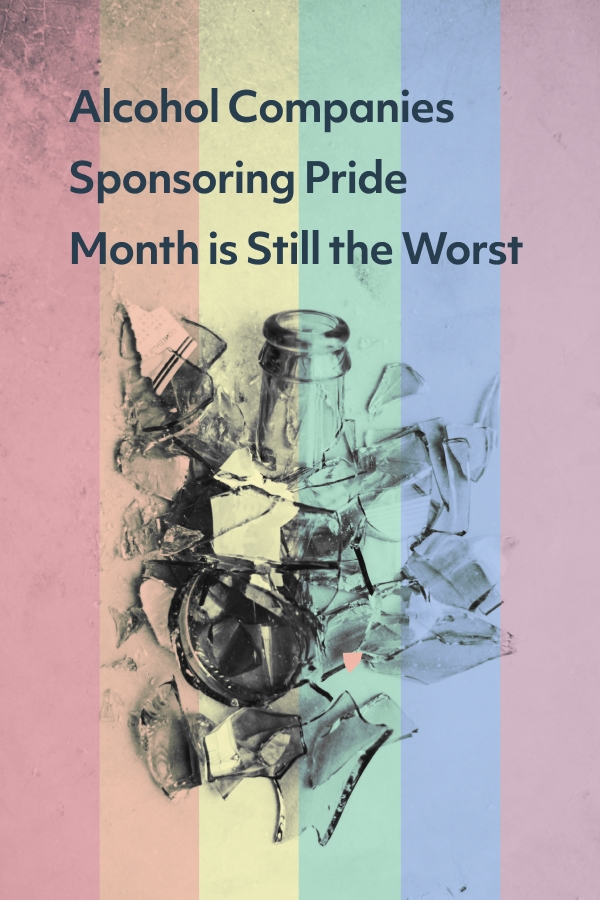
Members of the LGBTQ+ community are at higher risk of developing addiction, alcoholism, and substance use disorders. in light of this, Sean Paul Mahoney discusses the problem of alcohol companies sponsoring Pride.

Sean Paul Mahoney is the author of the new collection of essays Now That You’ve Stopped Dying and the co-host of the LGBTQ recovery podcast Queer Mental Condition. He also works as a recovery mentor and peer support specialist in Portland, Oregon.

PrevCall Me Bisexual
A Brief History of Opioid UseNext

Any general advice posted on our blog, website, or app is for informational purposes only and is not intended to replace or substitute for any medical or other advice. Workit Health, Inc. and its affiliated professional entities make no representations or warranties and expressly disclaim any and all liability concerning any treatment, action by, or effect on any person following the general information offered or provided within or through the blog, website, or app. If you have specific concerns or a situation arises in which you require medical advice, you should consult with an appropriately trained and qualified medical services provider.

Top

Get the latest recovery news

Instagram Linkedin-in Facebook-f Youtube
    • Treatments
    • Opioids
    • Kratom
    • Alcohol


  • About Workit Health
  • Contact us
  • Our team
  • Media spotlight
  • Careers
  • We Accept Insurance
  • Check insurance
  • Aetna
  • Anthem of Ohio
  • Horizon BCBSNJ
  • Humana
  • Resources
  • What is harm reduction?
  • Addiction recovery resources
  • Suboxone FAQs
  • Blog
  • Friends and Family
  • Resources for friends and family
  • Help Them Heal Guide
  • Refer a loved one
  • Members
  • Login
  • Community
  • Medical records request form
  • Medical Records Fax: 833-923-0584
  • Tech support guides
  • Call us: 855-659-7734 M-F 8am-9pm EST
    • Partners
    • Make a referral
    • For health plans
    • For providers and hospitals
    • Third-party medical records requests
Treatments
    • Opioids
    • Kratom
    • Alcohol
About Us
  • Contact us
  • Our team
  • Media spotlight
  • Careers
Resources
  • What is harm reduction?
  • Addiction recovery resources
  • Suboxone FAQs
  • Blog
Insurance
  • Check insurance
  • Aetna
  • Anthem of Ohio
  • Horizon BCBSNJ
  • Humana
Members
  • Login
  • Community
  • Medical records request form
  • Medical Records Fax: 833-923-0584
  • Tech support guides
  • Call us: 855-659-7734
    M-F 8am-9pm EST
Resources
  • What is harm reduction?
  • Addiction recovery resources
  • Suboxone FAQs
  • Blog
Friends and Family
  • Resources for friends and family
  • Help Them Heal Guide
Partners
    • Make a referral
    • For health plans
    • For providers and hospitals
    • Third-party medical records requests
Locations
  • Arizona
  • California
  • Florida
  • Illinois
  • Michigan
  • Montana
  • New Jersey
  • New Mexico
  • North Carolina
  • Ohio
  • Oklahoma
  • Texas
  • Washington
Read more about Suboxone risks and concerns

Suboxone (buprenorphine/naloxone) is indicated for the treatment of opioid dependence in adults. Suboxone should not be taken by individuals who have been shown to be hypersensitive to buprenorphine or naloxone as serious adverse reactions, including anaphylactic shock, have been reported. Taking Suboxone (buprenorphine/naloxone) with other opioid medicines, benzodiazepines, alcohol, or other central nervous system depressants can cause breathing problems that can lead to coma and death. Other side effects may include headaches, nausea, vomiting, constipation, insomnia, pain, increased sweating, sleepiness, dizziness, coordination problems, physical dependence or abuse, and liver problems. For more information about Suboxone (buprenorphine/naloxone) see Suboxone.com, the full Prescribing Information, and Medication Guide, or talk to your healthcare provider. You are encouraged to report negative side effects of drugs to the FDA. Visit www.fda.gov/medwatch or call 1-800-FDA-1088.

All clinical and medical services are provided by licensed physicians and clinicians who are practicing as employees or contractors of independently owned and operated professional medical practices that are owned by licensed physicians. These medical practices include Workit Health (MI), PLLC; Workit Health (CA), P.C.; Workit Health (NJ), LLC; Workit Health (OH), LLC; Virtual Physician Practice (NY), PLLC; and any other Workit Health professional entity that is established in the future.

Clinic locations

Arizona
2501 N Hayden Rd.
Ste 103
Scottsdale, AZ 85257
fax (HIPAA): (833) 664-5441

California
1460 Maria Lane
Ste 300
Walnut Creek, CA 94596
fax (HIPAA): (855) 716-4494

Florida
600 Heritage Dr.
Ste 210, #17
Jupiter, FL 33458
fax (HIPAA): (813) 200-2822

Illinois
1280 Iroquois Ave
Ste 402
Naperville, IL 60563
fax (HIPAA): (855) 716-4494

Michigan
3300 Washtenaw Ave
Ste 280
Ann Arbor, MI 48104
fax (HIPAA): (855) 716-4494

Montana
415 N Higgins Ave
Ste 6
Missoula, MT 59802
fax (HIPAA): (855) 716-4494

New Jersey
5 Greentree Center
Ste 117
Marlton, NJ 08053
fax (HIPAA): (609) 855-5027

New Mexico
5901 Indian School Road, NE
Ste 212
Albuquerque, NM 87110
fax (HIPAA): (855) 716-4494

North Carolina
3719 Latrobe Drive
Ste 850-M
Charlotte, NC 28211-4827
fax (HIPAA): (855) 716-4494

Ohio
6855 Spring Valley Dr
Ste 110
Holland, OH 43528
fax (HIPAA): (513) 823-3247

Oklahoma
1010 24th Ave NW
Suite 100
Norman, OK 73069
fax (HIPAA): (855) 716-4494

Texas
5373 W Alabama St
Ste 204
Houston, TX 77056
fax (HIPAA): (737) 738-5046

Washington
9116 Gravelly Lake Dr SW
Ste 107 #3, PMB 1963
Lakewood, WA 98499-3148.
fax (HIPAA): (833) 328-1407

AICPA SOC

Terms of Service

Privacy Policy

Notice of Privacy Practice

View Accessibility Statement

© 2026 Workit Health. All rights reserved.

Not ready to start? We'll send you more information:

  • Workit Health

    When I opt in, Workit Health will send information about their program and recovery resources.

    *I agree to receive marketing and member care messages by email. Messaging frequency varies. I can unsubscribe at any time.

    **I agree to receive marketing and member care messages by text (SMS). Messaging frequency varies. Message and data rates may apply. I can opt out at any time by replying STOP. I can reply HELP to receive support. If I do not consent to receive SMS, and Workit Health is unable to reach me by email, I understand that they will not be able to contact me by text.

    Carriers are not liable for delayed or undelivered messages.

    View our Privacy Policy, Terms of Service, and Consent to SMS and Email.

  • Should be Empty:

This site uses cookies to improve your experience. By using this site, you consent to our use of cookies.

Accept Cookies