

Skip to content

Supporting Loved Ones in Addiction | Wed. March 25th

  • Online Recovery
    • Quit Opioids
    • Including prescription pain medication and heroin
    • Suboxone
    • Insurance or self-pay
    • At-home drug screenings
    • Quit Kratom
    • Including 7-OH
    • Medication assistance
    • Insurance or self-pay
    • Whole-person care (anxiety, insomnia, etc.)
    • Quit Drinking
    • Campral
    • Naltrexone
    • Insurance or self-pay
    • 100% Online
    • Non-judgmental providers
    • Help with co-occurring disorders​
    • Recovery groups
    • Real people (No AI bots)
  • About Us
    • Our Research

    Advancing substance use treatment through rigorous, peer-reviewed research and actionable insights.

    • Our Mission

    Everyone deserves access to the gold standard of treatment, without judgment.

    • Growing Our Team

    Join us in transforming addiction treatment and improving lives through digital care.

    • Founded and operated by people in recovery since 2015
  • Resources
    • 33% of members were referred by friends or family
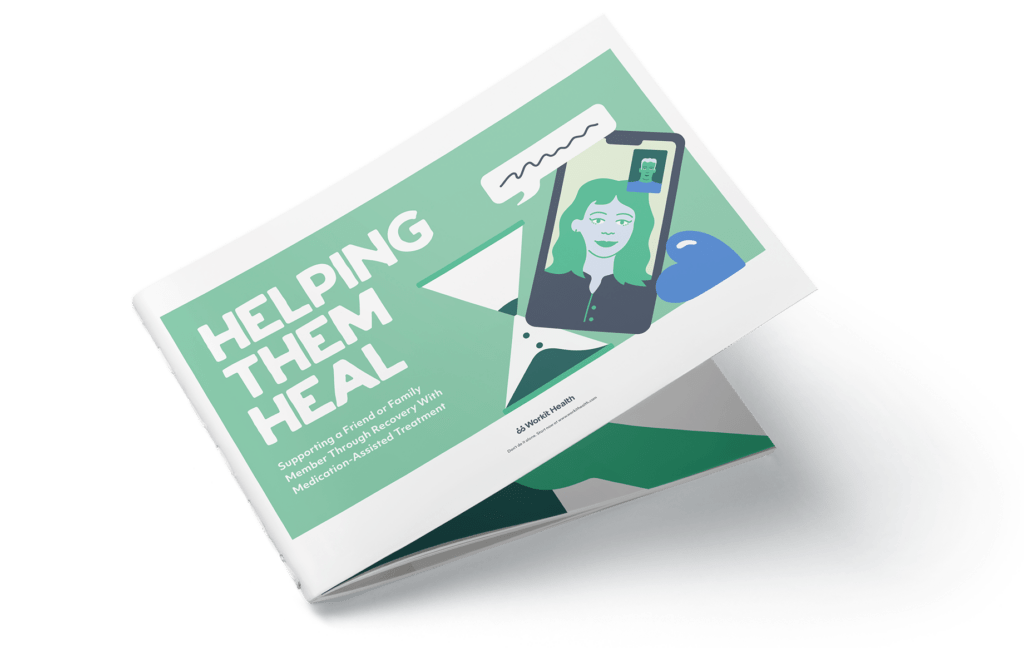
    Free Help Them Heal Guide
    • Articles
    • Member stories
    • Opioid addiction help
    • Suboxone Basics
    • Quit drinking
    • Naltrexone basics
    • For friends and family
    • Workit Health
    • Insurance checker
    • Locations
    • Reviews
    • Resources
    • Mental health apps
    • Helplines and support
    • Community in recovery
    • Medication resources
    • 32k+ App store reviews
    • 35k+ Members
    • 85% of Workit clinicians have supported a loved one
  • Make A Referral
    • Friends and Family

    For friends or family members supporting someone they care about.

    • Partners and Providers

    For healthcare professionals making a patient referral.

    • 33% of members were referred by friends or family
  • Partners
Book now
Book now
Book now
Login
  • Quit Opioids
  • Including prescription pain medication and heroin
  • Suboxone
  • Insurance or self-pay
  • At home drug screenings
  • Quit Kratom
  • Including 7-OH
  • Medication assistance
  • Insurance or self-pay
  • Whole-person care (anxiety, insomnia,etc.)
  • Quit Drinking
  • Medication assistance
  • Insurance or self-pay
  • Recovery groups
  • 33% of members are referred by friends or family
Free Help them Heal Guide
  • 100% Online
  • Non-judgmental providers
  • 35k+ Members
  • 3.4k+ Reviews
About Us
  • Our Research
  • Our Mission
  • Growing Our Team
Resources
  • Workit Health
  • Insurance checker
  • Locations
  • Reviews
  • Articles
  • Member stories
  • Opioid addiction help
  • Suboxone Basics
  • Quit drinking
  • Naltrexone basics
  • For friends and family
  • Resources
  • Mental health apps
  • Helplines and support
  • Community in recovery
  • Medication resources
Make a Referral
  • Friends and Family
  • Partners and Providers
  • Partners

PTSD and Addiction

Substance use disorder (SUD) and post-traumatic stress disorder (PTSD) often co-occur. 

Research shows that around 47 percent of people with PTSD meet the criteria for SUD, and half of the individuals seeking treatment for addiction also meet the criteria for PTSD.

Table of Contents

What is PTSD?

Post-traumatic stress disorder can be a debilitating condition. Those with PTSD re-experiencing traumatic event(s). These events could be natural disasters, violent or sexual assaults, acts of terrorism, combat, the loss of a loved one, or a number of adverse childhood experiences.

There is a common misconception that only those who have served in the military will acquire PTSD. That is not accurate! According to the National Center for PTSD, only 6 out of every 100 people will experience PTSD. It is more common in women than men. The National Institute on Mental Health (NIMH) indicates that not everyone who experiences a traumatic event will develop PTSD and not everyone with PTSD has been through a dangerous event.

Symptoms of PTSD usually begin within 3 months of a traumatic event, but can arise up to a year later. These symptoms can significantly impair a person’s day-to-day functioning, and many people with one fo these stress disorders will seek to relieve the pain of reliving these experiences through using substances.

Typically, patients are diagnosed by a psychiatrist, or mental health provider using the Diagnostic and Statistical Manual (DSM-5). NIMH has usefully categorized the symptoms as follows. An individual must experience the following PTSD symptoms for at least one month:

  • At least one re-experiencing symptom: these symptoms might include flashbacks, bad dreams, frightening thoughts. Sometimes these symptoms are accompanied by a racing heart.
  • At least one avoidance symptom: this may include avoiding places associated with the event, avoiding thoughts and feelings related to the event. It can also involve self-medicating with alcohol and substance abuse.
  • At least two arousal and reactivity symptoms: this may include feeling tense, or easily startled, having difficulty sleeping, and/or having outbursts.
  • At least two cognition and mood symptoms: this might look like difficulty remembering, negative thoughts, loss of interest in enjoyable activities, and other distorted feelings like feeling guilty or ashamed.


The relationship between addiction and PTSD

People with co-occurring PTSD and SUD experience often intense cravings for drugs and alcohol. They also have higher instances of relapse compared to those without PTSD.

Drug and alcohol use can rewire the brain, linking drugs and alcohol to the brain’s reward system. Given the complexity of PTSD and the way substance use changes the brain, it is particularly important to treat both conditions simultaneously.


Treatment of addiction and PTSD

There are a range of treatment options for SUD, including inpatient addiction treatment, digital treatment, and assisted treatment. Usually, these treatments will be combined with behavioral therapies, like cognitive behavioral therapy (CBT), dialectical behavioral therapy (DBT), acceptance and commitment therapy (ACT). It is critical that any treatment is trauma-informed to ensure patients with PTSD do not feel triggered and reduce the risk of re-experiencing symptoms.

A number of other non-facility treatments, including physical exercise, 12-step meetings, and/or medication such as medication-assisted treatment, antidepressants, or anxiety medication.

Workit Health has treatment programs for opioid and alcohol use disorders and some mental health conditions, but does not have a program specifically for PTSD.

Trauma and Addiction Blog Content

Two chess knights facing one another on a yellow background. What The Queen's Gambit got right about addiction

What the Queen’s Gambit Gets Right About Addiction

December 9, 2020
Read More >
Blog_trauma

Dealing With Trauma in Sobriety

July 28, 2020
Read More >
Chris McMullen, sharing his experience as a gay man of color in recovery.

I’m More Than a Statistic

June 30, 2020
Read More >

Get the latest recovery news

Instagram Linkedin-in Facebook-f Youtube
    • Treatments
    • Opioids
    • Kratom
    • Alcohol


  • About Workit Health
  • Contact us
  • Our team
  • Media spotlight
  • Careers
  • We Accept Insurance
  • Check insurance
  • Aetna
  • Anthem of Ohio
  • Horizon BCBSNJ
  • Humana
  • Resources
  • What is harm reduction?
  • Addiction recovery resources
  • Suboxone FAQs
  • Blog
  • Friends and Family
  • Resources for friends and family
  • Help Them Heal Guide
  • Refer a loved one
  • Members
  • Login
  • Community
  • Medical records request form
  • Medical Records Fax: 833-923-0584
  • Tech support guides
  • Call us: 855-659-7734 M-F 8am-9pm EST
    • Partners
    • Make a referral
    • For health plans
    • For providers and hospitals
    • Third-party medical records requests
Treatments
    • Opioids
    • Kratom
    • Alcohol
About Us
  • Contact us
  • Our team
  • Media spotlight
  • Careers
Resources
  • What is harm reduction?
  • Addiction recovery resources
  • Suboxone FAQs
  • Blog
Insurance
  • Check insurance
  • Aetna
  • Anthem of Ohio
  • Horizon BCBSNJ
  • Humana
Members
  • Login
  • Community
  • Medical records request form
  • Medical Records Fax: 833-923-0584
  • Tech support guides
  • Call us: 855-659-7734
    M-F 8am-9pm EST
Resources
  • What is harm reduction?
  • Addiction recovery resources
  • Suboxone FAQs
  • Blog
Friends and Family
  • Resources for friends and family
  • Help Them Heal Guide
Partners
    • Make a referral
    • For health plans
    • For providers and hospitals
    • Third-party medical records requests
Locations
  • Arizona
  • California
  • Florida
  • Illinois
  • Michigan
  • Montana
  • New Jersey
  • New Mexico
  • Ohio
  • Oklahoma
  • Texas
  • Washington
Read more about Suboxone risks and concerns

Suboxone (buprenorphine/naloxone) is indicated for the treatment of opioid dependence in adults. Suboxone should not be taken by individuals who have been shown to be hypersensitive to buprenorphine or naloxone as serious adverse reactions, including anaphylactic shock, have been reported. Taking Suboxone (buprenorphine/naloxone) with other opioid medicines, benzodiazepines, alcohol, or other central nervous system depressants can cause breathing problems that can lead to coma and death. Other side effects may include headaches, nausea, vomiting, constipation, insomnia, pain, increased sweating, sleepiness, dizziness, coordination problems, physical dependence or abuse, and liver problems. For more information about Suboxone (buprenorphine/naloxone) see Suboxone.com, the full Prescribing Information, and Medication Guide, or talk to your healthcare provider. You are encouraged to report negative side effects of drugs to the FDA. Visit www.fda.gov/medwatch or call 1-800-FDA-1088.

All clinical and medical services are provided by licensed physicians and clinicians who are practicing as employees or contractors of independently owned and operated professional medical practices that are owned by licensed physicians. These medical practices include Workit Health (MI), PLLC; Workit Health (CA), P.C.; Workit Health (NJ), LLC; Workit Health (OH), LLC; Virtual Physician Practice (NY), PLLC; and any other Workit Health professional entity that is established in the future.

Clinic locations

Arizona
2501 N Hayden Rd.
Ste 103
Scottsdale, AZ 85257
fax (HIPAA): (833) 664-5441

California
1460 Maria Lane
Ste 300
Walnut Creek, CA 94596
fax (HIPAA): (855) 716-4494

Florida
600 Heritage Dr.
Ste 210, #17
Jupiter, FL 33458
fax (HIPAA): (813) 200-2822

Illinois
1280 Iroquois Ave
Ste 402
Naperville, IL 60563
fax (HIPAA): (855) 716-4494

Michigan
3300 Washtenaw Ave
Ste 280
Ann Arbor, MI 48104
fax (HIPAA): (855) 716-4494

Montana
415 N Higgins Ave
Ste 6
Missoula, MT 59802
fax (HIPAA): (855) 716-4494

New Jersey
5 Greentree Center
Ste 117
Marlton, NJ 08053
fax (HIPAA): (609) 855-5027

New Mexico
5901 Indian School Road, NE
Ste 212
Albuquerque, NM 87110
fax (HIPAA): (855) 716-4494

Ohio
6855 Spring Valley Dr
Ste 110
Holland, OH 43528
fax (HIPAA): (513) 823-3247

Oklahoma
1010 24th Ave NW
Suite 100
Norman, OK 73069
fax (HIPAA): (855) 716-4494

Texas
5373 W Alabama St
Ste 204
Houston, TX 77056
fax (HIPAA): (737) 738-5046

Washington
9116 Gravelly Lake Dr SW
Ste 107 #3, PMB 1963
Lakewood, WA 98499-3148.
fax (HIPAA): (833) 328-1407

AICPA SOC

Terms of Service

Privacy Policy

Notice of Privacy Practice

View Accessibility Statement

© 2026 Workit Health. All rights reserved.

Not ready to start? We'll send you more information:

  • Workit Health

    When I opt in, Workit Health will send information about their program and recovery resources.

    *I agree to receive marketing and member care messages by email. Messaging frequency varies. I can unsubscribe at any time.

    **I agree to receive marketing and member care messages by text (SMS). Messaging frequency varies. Message and data rates may apply. I can opt out at any time by replying STOP. I can reply HELP to receive support. If I do not consent to receive SMS, and Workit Health is unable to reach me by email, I understand that they will not be able to contact me by text.

    Carriers are not liable for delayed or undelivered messages.

    View our Privacy Policy, Terms of Service, and Consent to SMS and Email.

  • Should be Empty:

Your recovery, your way—
100% online

Book your appointment
Check your insurance coverage
  • Aetna
  • Humana
  • Horizon
  • Cigna
  • Blue Cross Blue Shield
  • and more

👉 Using insurance? Coverage checks are always for free in the Workit Health app.

Check your coverage

Not ready to start? We'll send you more information:

This site uses cookies to improve your experience. By using this site, you consent to our use of cookies.

Accept Cookies