Skip to content

Workit Health Presents: A Dopey Interview of Amy Dresner · Live on YouTube · June 10, 2026 · 7pm est

  • Treatments
    • Opioid Use Disorder

    Start Suboxone treatment online with a licensed provider without judgment.

    • Alcohol Use Disorder

    Flexible goals — moderation or abstinence. Evidence-based, no 12-step requirement

    • Kratom & 7-OH

    Medication options that actually work for withdrawals and cravings.

    Anxiety · Depression · Insomnia · Hepatitis C · And more

    Substance use often goes hand-in-hand with other conditions. Your provider can prescribe for many of these, including anxiety, depression, and insomnia—so you can get back on solid ground. They can even treat hepatitis C and prescribe PrEP for HIV prevention.

    Start treatment
  • Pricing
  • Locations

    Available now

    • Arizona
    • California
    • Florida
    • Illinois
    • Michigan
    • Montana
    • New Jersey
    • New Mexico
    • New York
    • North Carolina
    • Ohio
    • Oklahoma
    • Texas
    • Washington
    Get notified if we open in your state
  • Reviews
  • About
    • About Workit Health

    Our mission, founders, and clinical team.

    • Workit Labs · Research

     Peer-reviewed publications on telehealth addiction care.

    • Blog

    Plain language guides on recovery, medication, and family-support.

    • Careers

    Join the team building the future of addiction care

  • Help Someone
Login
Get started
Get started
  • Login to my account
Treatments
  • Opioid use disorder
  • Suboxone
  • Alcohol use disorder
  • Kratom & 7-OH dependency

whole person care included

Substance use often goes hand-in-hand with other conditions. Your provider can prescribe for many of these, including anxiety, depression, insomnia, hepatitis C, and more—so you can get back on solid ground.

  • Insurance or Self-pay
Locations
  • Arizona
  • California
  • Florida
  • Illinois
  • Michigan
  • Montana
  • New Jersey
  • New Mexico
  • New York
  • North Carolina
  • Ohio
  • Oklahoma
  • Texas
  • Washington
  • Get notified of new state openings →
  • Reviews
About
  • About Workit Health
  • Workit Labs · Research
  • Blog
  • Careers
  • Refer a friend
  • Help Someone
Get started

In crisis? Call or text: 988

Home > Blog > Pain Medication After Surgery and How It Affected My Recovery

  • Stories Of Recovery

Pain Medication After Surgery and How It Affected My Recovery

BY

  • Rebecca Rush
  • Fact-checked & medically reviewed

on this page

My reaction to pain medication after surgery reminded me that recovery is something I cannot do alone.

A “freelapse” is a term in some recovery circles to describe the taking of narcotic medications for a legitimate medical purpose—or, if you live in Los Angeles, plastic surgery.

I’ve always gotten excited about the idea of it—the idea of taking something that I normally wouldn’t and having it not count seemed to be the greatest loophole in sobriety.

Everyone’s recovery is different. Some people are on medications that they need in order to live a life worth living, and others have given up harder substances but still use substances that don’t carry the same negative impact on their life, such as marijuana. I have been part of both those scenarios, and I know that all pathways to recovery are valid. For me, where caution is required is at any point that I will be adding something that isn’t part of my usual repertoire.

The first time I found myself in this position was when I got Ultherapy, a painful, repetitive laser designed to increase collagen. I was too afraid to take the pills offered, and tried to suffer through with just numbing cream. After fifteen minutes, my tears were getting in the way of the laser, so my providers brought in their other option, nitrous oxide.

Mind-altering substances activates my addiction

The minute that gas hit my bloodstream, I changed. Nitrous is a dissociative anesthetic that played a role in my final drinking binge. I started doing it with a friend one night and woke up alone five days later in my apartment, my bed covered in metal nitrous cartridges. It worked for the pain of a procedure that many would say is unnecessary—but hello! I live in Los Angeles; it’s totally necessary.

When the procedure was over, my first thought was that I never wanted to leave the room with the tank again. I live here now, I thought, they cannot take this from me.

But the part of my brain that is recovered knew that if I continued to breathe in that gas after I no longer needed it, I would be in even more danger and guilt.

Driving home that evening, the neon signs on the marijuana dispensary seemed more inviting than usual.

My addiction had been activated. It took about a week for the cravings to go away.

Taking meds as prescribed can still lead me into dangerous territory

More recently, I had surgery to correct the issue that I had been trying to fix with that laser. This treatment required full anesthesia, and pain medication afterward. I would have to sleep on my back, so sleep medication was prescribed. I would have nerve pain, for which I was given a beta-blocker. In all, I had three medications to take the first week that would change the way I felt.

In recovery, we talk a lot about taking things as prescribed. This is great. This is an important conversation. It’s how we are able to take medications at all. We must be able to humble ourselves enough to trust the prescribing doctor rather than our own brain, a brain that will typically, when faced with something it likes, clamor for more.

I went into the surgery with that mindset—as long as I take things as prescribed, I will be okay.

However, taking things as prescribed will not prevent our addictions from being activated.

I am personally grateful that opiate laws have changed, and that there are greater restrictions on these highly addictive substances now. When I was in college, I left my wisdom teeth extraction with a prescription for 30 Percocet 10s plus two refills. When the refills ran out, I was able to take the bottle to my college health center and get it refilled again, weeks and weeks after surgery. I was a young, blond, white girl claiming pain in the early 2000s. They would give me anything.

This time, I was given a prescription for 10 Percocet 5s after actual surgery. After over two and a half years of complete sobriety, taking one pill every six hours relieved my pain—and got me high. That was where things got dangerous. Halfway through my prescription, I was gripped by the terror of running out. I began to compose an email to my doctor about how much pain I was in, how I needed more. I wrote and deleted a line about how I was “taking them as prescribed.” A normal person would never have to point that out.

I have help when I feel this way

I knew I was in trouble and texted friends who are also in recovery to tell them what was going on.

“I’m afraid to run out of pills—and I emailed my doctor for more but I think it’s more in my head than actual necessity—is that normal?”

Once everything that my head was telling me was no longer secret, it began to lose power.

My friends in recovery told me it was totally normal, that it’s just my addiction talking, that I didn’t have to listen to it.

I then learned something that I pray every addict will stay sober long enough to find out—Tylenol and Advil work!

There are so many things my addiction tells me that sound incredibly reasonable until I hear myself say them aloud to another person in recovery.

If you find yourself in the position of needing (for medical reasons) to take mood-changing medications that you don’t normally take, I hope you remember that it is okay for it to be difficult, and that you have people you can talk to without fear of being judged.

It’s one of the great recovery paradoxes: I cannot stay sober without being able to tell people when I want to use.
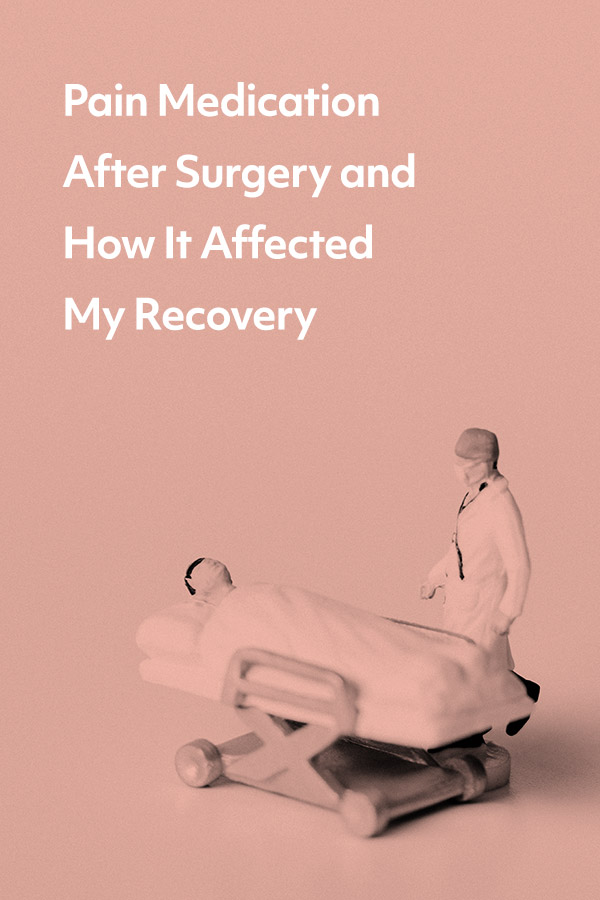

Sometimes it's necessary to take pain medication as prescribed, but that doesn't mean it has no impact on our in-recovery brains and bodies
PrevpreviousDoes Alcohol Make Anxiety Worse?
nextWhat is Grief, But My Recovery Persevering?Next

on this page

need help?

Stop the cycle of cravings and withdrawal

  • Suboxone prescribed online*
  • Most major insurance accepted
  • $25–$35/mo with insurance
  • ~2 days to first appointment

*as clinically appropriate

Download the app →

Learn about treatment

PrevpreviousDoes Alcohol Make Anxiety Worse?
nextWhat is Grief, But My Recovery Persevering?Next

ABOUT THE AUTHOR

Rebecca Rush is a writer and comedian from Westbrook, CT. She hosts Vulnerability: A Comedy Show at The Hollywood Improv and the Brutal Vulnerability Podcast and is a regular contributor to Workit Health. She’s been featured on Viceland and Funny or Die. Her words have appeared in numerous outlets, including Input Mag, The Miami New Times, Fodor’s Travel, and Huffington Post. Her personal essay “I’ve Been Swindled” is pending publication in a red flags-themed anthology from Running Wild Press. She holds a B.A. in English Literature with a Concentration in Creative Writing from the University of Connecticut. She lives in Los Angeles, where she is currently shopping a collection of essays.

ready when you are​

Download the app. Get back to yourself.

Sign up takes about 5 minutes. Most members have their first appointment within 2 days. Covered by most insurance.

Download the app
Learn more

KEEP READING

Why Is Suboxone Taken Sublingually?

Many medications are swallowed, but Suboxone (buprenorphine/naloxone) is taken under the tongue (sublingually) or on the cheek (buccally).

Read now

5 Questions About Online Suboxone Treatment, Answered

Workit Health treats opioid addiction with medication like Suboxone online via telehealth. How do we do it? In this post, we answer several common questions.

Read now

5 Sneaky Alcohol Myths and the Truth Behind Them

If you’ve drink at all, you’ve likely heard rumors and myths about alcohol and hangovers. Let’s go beyond the myths to face facts.

Read now

Any general advice posted on our blog, website, or app is for informational purposes only and is not intended to replace or substitute for any medical or other advice. Workit Health, Inc. and its affiliated professional entities make no representations or warranties and expressly disclaim any and all liability concerning any treatment, action by, or effect on any person following the general information offered or provided within or through the blog, website, or app. If you have specific concerns or a situation arises in which you require medical advice, you should consult with an appropriately trained and qualified medical services provider.

A future free of addiction is in your hands

Recover from addiction at home with medication, community, and support—from the nonjudmental experts who really care.

Get started today

100% virtual addiction treatment for opioid, alcohol, and kratom use disorders. Evidence-based medication, therapy, and recovery support—from your phone.

hello@workithealth.com

Instagram Linkedin-in Facebook-f Youtube
    • TREATMENTS
    • Opioids
    • Kratom & 7-OH
    • Alcohol
    • Insurance & Cost
    • Locations
    • Get started
    • HELP SOMEONE
    • Help a loved one
    • Refer a friend
    • Recovery blog
    • Narcan guide
    • COMPANY
    • About
    • Workit Labs · Research
    • Careers
    • Partnerships
    • Contact
    • MEMBERS
    • Login
    • Create account
    • Refer a friend
    • Medical records request form
    • Fax: 833-923-0584
    • Phone: 855-659-7734
AICPA SOC
  • 42 CFR Part 2
  • WCAG 2.1 AA

contact information

Arizona
2501 N Hayden Rd.
Ste 103
Scottsdale, AZ 85257
fax (HIPAA): (833) 664-5441

California
1460 Maria Lane
Ste 300
Walnut Creek, CA 94596
fax (HIPAA): (833) 244-6705

Florida
600 Heritage Dr.
Ste 210, #17
Jupiter, FL 33458
fax (HIPAA): (813) 200-2822

Illinois
1280 Iroquois Ave
Ste 402
Naperville, IL 60563
fax (HIPAA): (833) 664-8715

Michigan
3300 Washtenaw Ave
Ste 280
Ann Arbor, MI 48104
fax (HIPAA): (855) 716-4494

Montana
415 N Higgins Ave
Ste 6
Missoula, MT 59802
fax (HIPAA): (833) 664-5486

New Jersey
5 Greentree Center
Ste 117
Marlton, NJ 08053
fax (HIPAA): (609) 855-5027

New Mexico
5901 Indian School Road, NE
Ste 212
Albuquerque, NM 87110
fax (HIPAA): (833) 664-5701

New York
845 Central Avenue
Ste 204
Albany, NY 12206
fax (HIPAA): (844) 921-1079

North Carolina
3719 Latrobe Drive
Ste 850-M
Charlotte, NC 28211-4827
fax (HIPAA): (984) 375-6710

Ohio
6855 Spring Valley Dr
Ste 110
Holland, OH 43528
fax (HIPAA): (513) 823-3247

Oklahoma
1010 24th Ave NW
Suite 100
Norman, OK 73069
fax (HIPAA): (833) 672-3125

Texas
5373 W Alabama St
Ste 204
Houston, TX 77056
fax (HIPAA): (737) 738-5046

Washington
9116 Gravelly Lake Dr SW
Ste 107 #3, PMB 1963
Lakewood, WA 98499-3148.
fax (HIPAA): (833) 328-1407

suboxone risk & concerns

Suboxone (buprenorphine/naloxone) is indicated for the treatment of opioid dependence in adults. Suboxone should not be taken by individuals who have been shown to be hypersensitive to buprenorphine or naloxone as serious adverse reactions, including anaphylactic shock, have been reported. Taking Suboxone (buprenorphine/naloxone) with other opioid medicines, benzodiazepines, alcohol, or other central nervous system depressants can cause breathing problems that can lead to coma and death. Other side effects may include headaches, nausea, vomiting, constipation, insomnia, pain, increased sweating, sleepiness, dizziness, coordination problems, physical dependence or abuse, and liver problems. For more information about Suboxone (buprenorphine/naloxone) see Suboxone.com, the full Prescribing Information, and Medication Guide, or talk to your healthcare provider. You are encouraged to report negative side effects of drugs to the FDA. Visit www.fda.gov/medwatch or call 1-800-FDA-1088.

© 2026 Workit Health. All rights reserved.
Privacy Policy

Notice of Privacy Practice

Terms of Service

View Accessibility Statement

All clinical and medical services are provided by licensed physicians and clinicians who are practicing as employees or contractors of independently owned and operated professional medical practices that are owned by licensed physicians. These medical practices include Workit Health (MI), PLLC; Workit Health (CA), P.C.; Workit Health (NJ), LLC; Workit Health (OH), LLC; Virtual Physician Practice (NY), PLLC; and any other Workit Health professional entity that is established in the future.

Not ready to start? We'll send you more information:

  • Workit Health

    When I opt in, Workit Health will send information about their program and recovery resources.

    *I agree to receive marketing and member care messages by email. Messaging frequency varies. I can unsubscribe at any time.

    **I agree to receive marketing and member care messages by text (SMS). Messaging frequency varies. Message and data rates may apply. I can opt out at any time by replying STOP. I can reply HELP to receive support. If I do not consent to receive SMS, and Workit Health is unable to reach me by email, I understand that they will not be able to contact me by text.

    Carriers are not liable for delayed or undelivered messages.

    View our Privacy Policy, Terms of Service, and Consent to SMS and Email.

  • Should be Empty:

This site uses cookies to improve your experience. By using this site, you consent to our use of cookies.

Accept Cookies