Skip to content

Supporting Loved Ones in Addiction | Wed. March 25th

  • Online Recovery
    • Quit Opioids
    • Including prescription pain medication and heroin
    • Suboxone
    • Insurance or self-pay
    • At-home drug screenings
    • Quit Kratom
    • Including 7-OH
    • Medication assistance
    • Insurance or self-pay
    • Whole-person care (anxiety, insomnia, etc.)
    • Quit Drinking
    • Campral
    • Naltrexone
    • Insurance or self-pay
    • 100% Online
    • Non-judgmental providers
    • Help with co-occurring disorders​
    • Recovery groups
    • Real people (No AI bots)
  • About Us
    • Our Research

    Advancing substance use treatment through rigorous, peer-reviewed research and actionable insights.

    • Our Mission

    Everyone deserves access to the gold standard of treatment, without judgment.

    • Growing Our Team

    Join us in transforming addiction treatment and improving lives through digital care.

    • Founded and operated by people in recovery since 2015
  • Resources
    • 33% of members were referred by friends or family
    Free Help Them Heal Guide
    • Articles
    • Member stories
    • Opioid addiction help
    • Suboxone Basics
    • Quit drinking
    • Naltrexone basics
    • For friends and family
    • Workit Health
    • Insurance checker
    • Locations
    • Reviews
    • Resources
    • Mental health apps
    • Helplines and support
    • Community in recovery
    • Medication resources
    • 32k+ App store reviews
    • 35k+ Members
    • 85% of Workit clinicians have supported a loved one
  • Make A Referral
    • Friends and Family

    For friends or family members supporting someone they care about.

    • Partners and Providers

    For healthcare professionals making a patient referral.

    • 33% of members were referred by friends or family
  • Partners
Book now
Book now
Book now
Login
  • Quit Opioids
  • Including prescription pain medication and heroin
  • Suboxone
  • Insurance or self-pay
  • At home drug screenings
  • Quit Kratom
  • Including 7-OH
  • Medication assistance
  • Insurance or self-pay
  • Whole-person care (anxiety, insomnia,etc.)
  • Quit Drinking
  • Medication assistance
  • Insurance or self-pay
  • Recovery groups
  • 33% of members are referred by friends or family
Free Help them Heal Guide
  • 100% Online
  • Non-judgmental providers
  • 35k+ Members
  • 3.4k+ Reviews
About Us
  • Our Research
  • Our Mission
  • Growing Our Team
Resources
  • Workit Health
  • Insurance checker
  • Locations
  • Reviews
  • Articles
  • Member stories
  • Opioid addiction help
  • Suboxone Basics
  • Quit drinking
  • Naltrexone basics
  • For friends and family
  • Resources
  • Mental health apps
  • Helplines and support
  • Community in recovery
  • Medication resources
Make a Referral
  • Friends and Family
  • Partners and Providers
  • Partners

Medical Professionals Experience Substance Use Disorder

Intelligence, training, and subject knowledge are no defense against addiction. An estimated 868,000 members of the medical profession struggle with substance use disorder. 

Sign up online
Busy hospital hallway. Healthcare professionals struggle with addiction too

Medical Professionals Experience Substance Use Disorder

Intelligence, training, and subject knowledge are no defense against addiction. An estimated 868,000 members of the medical profession struggle with substance use disorder. 

Sign up online

Medical professionals face unique challenges in treating their mental health and addiction.

Doctors, nurses, and other members of healthcare professions are, to some extent, put on a pedestal in our society. Medical professionals are highly educated, highly skilled, and carry a professional authority that many admire. Despite this occupational awe, these professionals experience substance use disorder (SUD) at similar rates to the rest of the population. Neither education nor skill offers protection against substance use disorder. Healthcare workers are often unwilling to seek treatment due to stigma and fear of professional sanctions.

Prevalence of substance use disorders among medical professionals

On the whole, physicians tend to engage in healthier habits than the general population, but this does not extend to substance use. It is estimated that 10-12% of doctors will develop an SUD during their careers. Rates are similar for nurses and pharmacists. This is not only a source of personal concern for the medical professionals affected, it is also a serious public health issue. Healthcare workers hold positions of authority and responsibility, and when impacted by SUD, can do great harm.

Occupational challenges facing medical professionals

Working in the medical field brings unique pressures and challenges that often become risk factors for SUD.

  • Stress

    Medicine is a high-pressure field. Patient care never really stops, and work hours are often long. Many in the healthcare industry are shouldering both the weight of patient outcomes and the burden of institutional pressure to work more and faster. Many in the field cope with this stress by self-medicating.

  • Access to substances in the workplace

    One challenge that is unique to the medical field is access to medications and controlled substances. Working in a pharmacy, doctor’s office, or hospital often provides access to medications that laypeople don’t have.

  • Physical pain

    People outside the healthcare industry often have no idea how physically demanding many medical roles are. From nursing assistants all the way up to surgeons, healthcare professionals deal with heavy lifting, long hours on their feet, repetitive stress, pulled muscles, and more … often contributing to chronic pain. Managing physical pain is cited as one of the most common reasons medical professionals misuse drugs.

  • Confidence in self-medicating

    Years of medical training and professional experience can lull many into a false sense of security. After all, if they know how meds affect a person, surely they can avoid the dangers. Some call this fallacy “pharmaceutical invincibility.” Unfortunately, history shows that neither medical degrees nor experience protect against substance use disorder. Addictive substances affect highly knowledgeable brains in the same ways they affect others.

  • Compassion fatigue

    Compassion fatigue is a risk among healthcare professionals. This is a secondary traumatic stress disorder that can develop from helping others, leading to symptoms of anger, depression, and apathy.  Like other mental health concerns, compassion fatigue can lead to substance misuse in an attempt to escape or manage it.

Obstacles that keep medical professionals from seeking help

Despite experiencing SUD at the same rates as laypeople (some studies say higher), medical professionals are often loathe to seek treatment. Here are a few of the most commonly cited concerns:

  • Stigma

    Reputation can feel like everything in the medical field, and many are unwilling to risk their professional reputation if others learn that they are in treatment for an SUD. The other side of this coin is that by not seeking treatment, they make it more likely that their active addiction or substance use will be discovered. 

  • Disciplinary action and professional sanctions 

    Despite the existence of health professional monitoring programs and health professional recovery programs that help medical professionals, many in the field fear the consequences if they are discovered to have an SUD. They are concerned with the loss of license to practice, and with employers levying professional consequences.

  • Distrust of the treatment

    It is a conundrum that many medical professionals make the worst patients. Their own knowledge can make it difficult to trust in the expertise of others to prescribe them care, especially if they have not been able to vet the clinicians or counselors who are treating them. This is especially true if they have any disagreement with their own healthcare provider about the course of treatment.

Doctor's hands during a patient consult. Medical professionals suffer from addiction

Signs of substance use disorder among medical professionals

According to the American Medical Association Journal of Ethics, some signs of SUD or addiction in healthcare professionals include:

  • Attendance issues: being late to appointments, having more absences, unknown whereabouts
  • Unusual rounding times, either very early or very late
  • Increase in patient complaints
  • Increased secrecy
  • Decrease in quality of care; making careless medical decisions
  • Incorrect or incomplete charting or writing of prescriptions
  • Decrease in productivity or efficiency
  • Increased conflicts with colleagues
  • Increased irritability and aggression
  • Smell of alcohol; overt intoxication; needle marks
  • Erratic job history

Getting help for addiction

It’s estimated that only one in ten people who need treatment for addiction receive it. Doctors, nurses, pharmacists, and other medical professionals are often among the majority who struggle alone, whether out of fear of professional consequences, distrust of the treatment, or peer pressure that normalizes substance use while dismissing help. Despite these concerns, healthcare workers deserve support to get their lives back. And taking care of themselves will make them better equipped to heal and care for others.

Treatment can offer support that will help stabilize addiction recovery and care for the other mental health concerns that might be tied to substance use. While many medical professionals do not feel able to go away to an in-person rehab for thirty or sixty days, the rise in telemedicine has made it possible to receive effective, science-backed addiction treatment via phone or computer. Workit Health is secure, WCAG-accessible, and a SOC 2 Type II compliant program—an industry leader in telehealth care.

A healthcare worker smiles comfortingly at her patient. Doctors and nurses have substance use disorder

For yourself, your loved ones, and your patients

The stigma around substance use disorder keeps many from seeking treatment, and this is especially true among medical professionals. With licensure and professional reputation on the line, we understand this reluctance. But substance use disorder is serious and often progressive, with consequences that affect yourself, your loved ones, and your patients. 

You deserve expert care that can help you recover.

Start now

Start your recovery

No waiting rooms, no judgment, just easy streamlined virtual recovery care
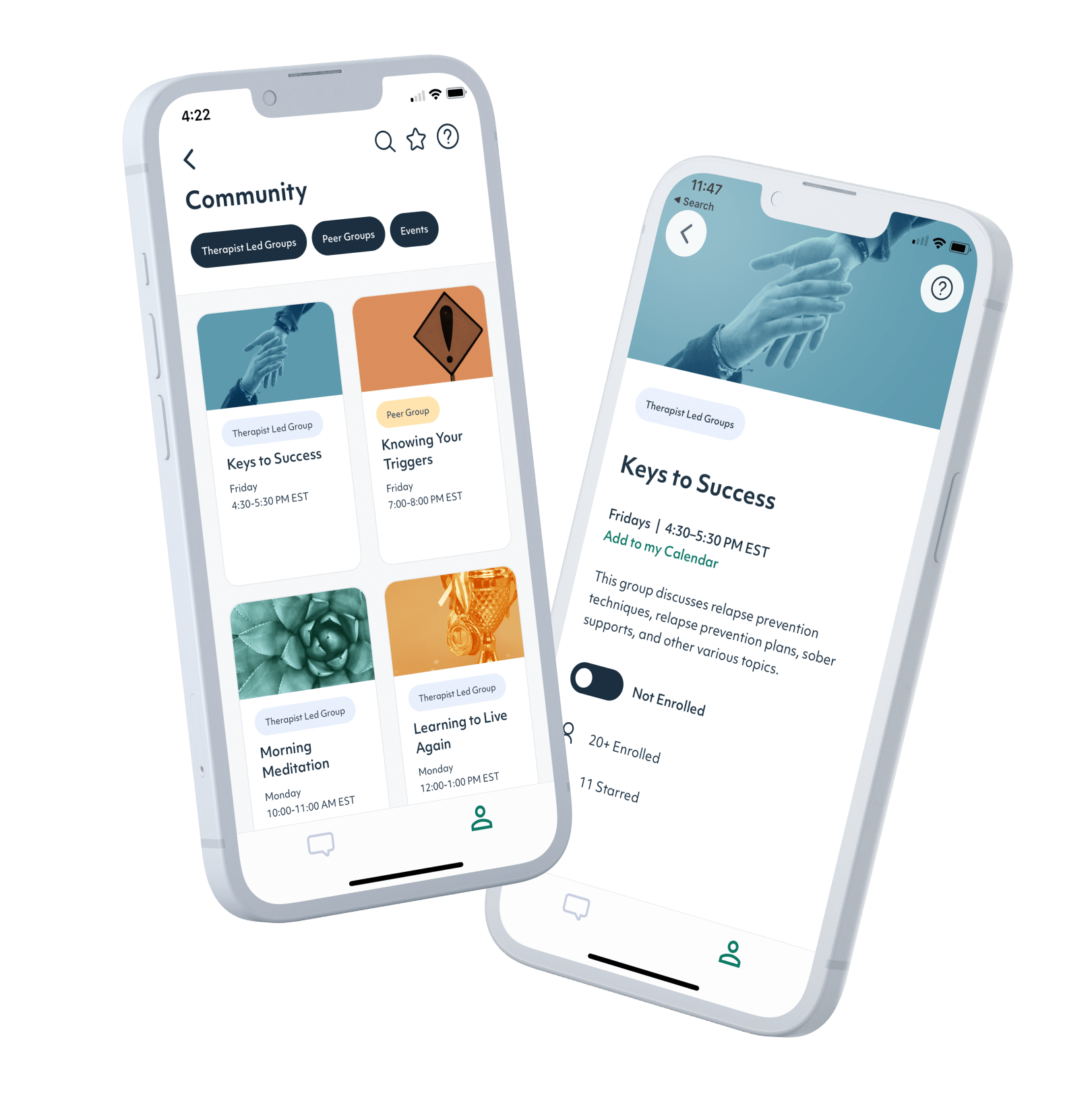
1. Sign up

It only takes a few minutes. Download our app and answer a few questions about your treatment goals, then schedule your first appointment.
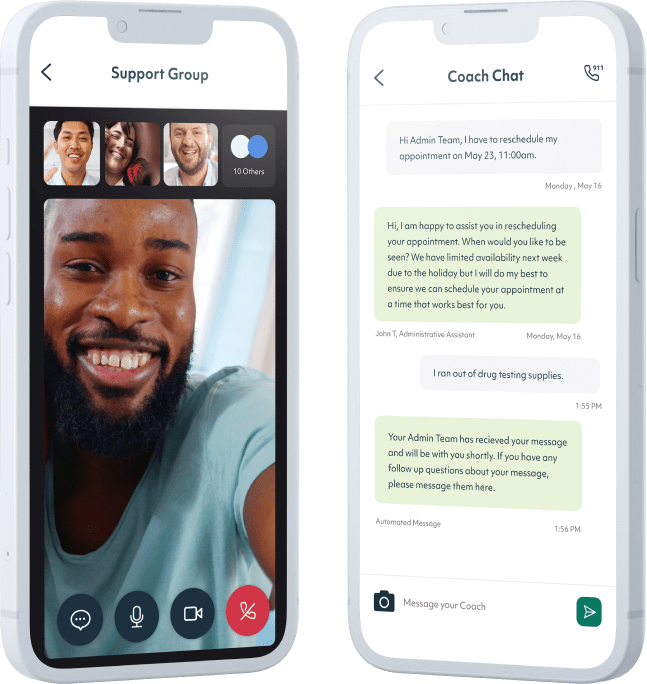
Two phones featuring Workit Health App screens - Support Group and Coach Chat

2. Meet with a provider

Meet with a licensed provider via a secure video appointment to set your recovery goals and establish your treatment plan.
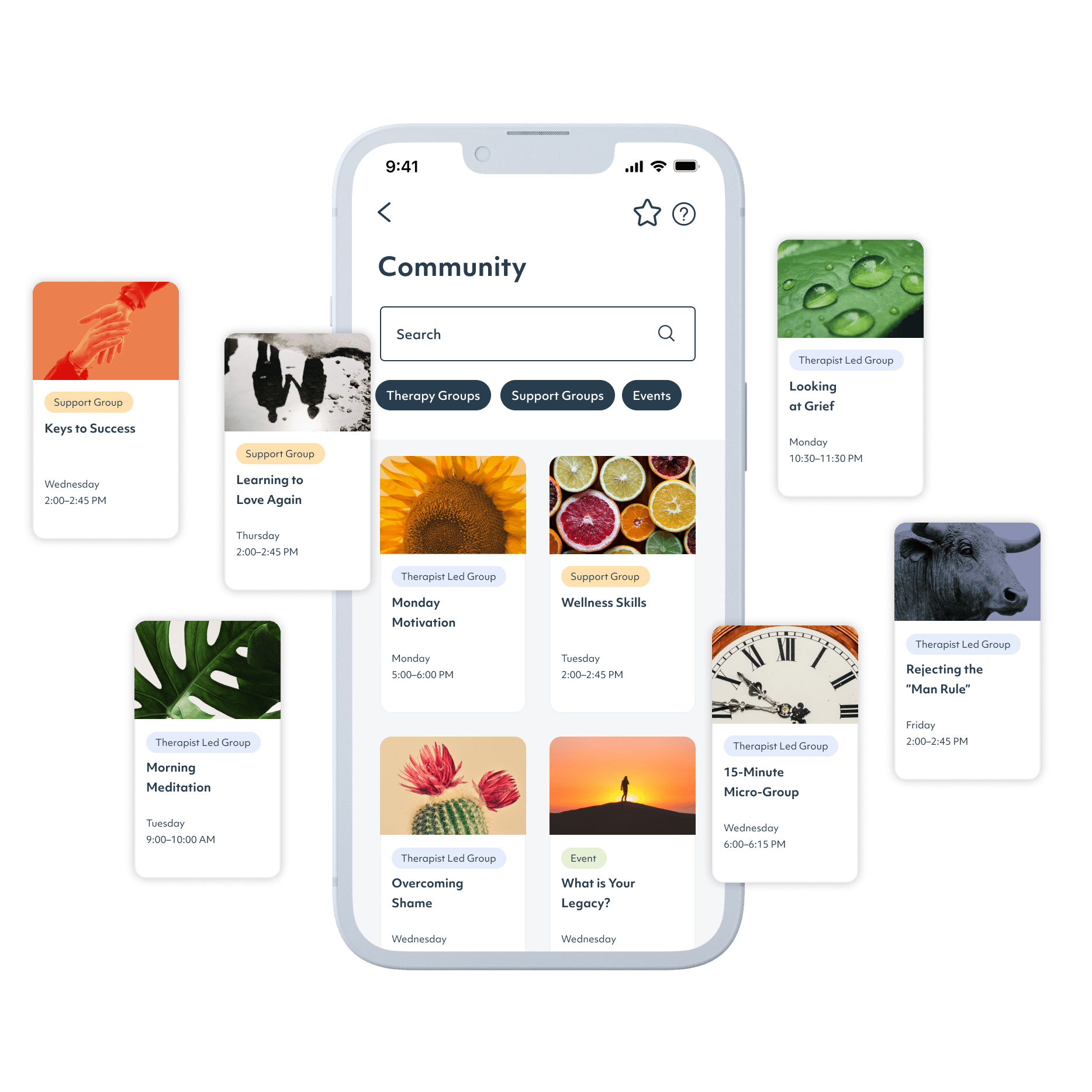
A smartphone displays recovery group options in the Workit Health app. Images of other group options float around the phone, symbolizing variety.

3. Get ongoing support

Shared Follow-up Appointments, recovery groups, and online community provide support and help you build skills to navigate life sober.

No waiting rooms, no judgment, just easy streamlined virtual recovery care

Join today

Trusted by major insurance providers

Citations

1. Pew Research Center (2019). “Trust and Mistrust in Americans’ Views of Scientific Experts” 

2. Bass, K., & McGeeney, K. (2012). U.S. Physicians Set Good Health Example. Gallup. https://news.gallup.com/poll/157859/physicians-set-good-health-example.aspx

3. Kenna, G. A., & Wood, M. D. (2004). Prevalence of Substance Use by Pharmacists and Other Health Professionals. Journal of the American Pharmacists Association, 44:6, 684-693.
https://doi.org/10.1331/1544345042467281.

4. Merlo, L.J., & Gold, M.S. (2008). Prescription Opioid Abuse and Dependence Among Physicians: Hypotheses and Treatment. Harvard Review of Psychiatry. 16:3, 181-194. https://doi.org/10.1080/10673220802160316.

5. Kenna, G. A., & Lewis, D. C. (2008). Risk factors for alcohol and other drug use by healthcare professionals. Substance abuse treatment, prevention, and policy, 3:3. https://doi.org/10.1186/1747-597X-3-3

6. Ross, S. (2003) Identifying an impaired physician. Virtual Mentor. 5:12, 420-422. https://doi.org/10.1001/virtualmentor.2003.5.12.cprl1-0312.

Get the latest recovery news

Instagram Linkedin-in Facebook-f Youtube
    • Treatments
    • Opioids
    • Kratom
    • Alcohol


  • About Workit Health
  • Contact us
  • Our team
  • Media spotlight
  • Careers
  • We Accept Insurance
  • Check insurance
  • Aetna
  • Anthem of Ohio
  • Horizon BCBSNJ
  • Humana
  • Resources
  • What is harm reduction?
  • Addiction recovery resources
  • Suboxone FAQs
  • Blog
  • Friends and Family
  • Resources for friends and family
  • Help Them Heal Guide
  • Refer a loved one
  • Members
  • Login
  • Community
  • Medical records request form
  • Medical Records Fax: 833-923-0584
  • Tech support guides
  • Call us: 855-659-7734 M-F 8am-9pm EST
    • Partners
    • Make a referral
    • For health plans
    • For providers and hospitals
    • Third-party medical records requests
Treatments
    • Opioids
    • Kratom
    • Alcohol
About Us
  • Contact us
  • Our team
  • Media spotlight
  • Careers
Resources
  • What is harm reduction?
  • Addiction recovery resources
  • Suboxone FAQs
  • Blog
Insurance
  • Check insurance
  • Aetna
  • Anthem of Ohio
  • Horizon BCBSNJ
  • Humana
Members
  • Login
  • Community
  • Medical records request form
  • Medical Records Fax: 833-923-0584
  • Tech support guides
  • Call us: 855-659-7734
    M-F 8am-9pm EST
Resources
  • What is harm reduction?
  • Addiction recovery resources
  • Suboxone FAQs
  • Blog
Friends and Family
  • Resources for friends and family
  • Help Them Heal Guide
Partners
    • Make a referral
    • For health plans
    • For providers and hospitals
    • Third-party medical records requests
Locations
  • Arizona
  • California
  • Florida
  • Illinois
  • Michigan
  • Montana
  • New Jersey
  • New Mexico
  • Ohio
  • Oklahoma
  • Texas
  • Washington
Read more about Suboxone risks and concerns

Suboxone (buprenorphine/naloxone) is indicated for the treatment of opioid dependence in adults. Suboxone should not be taken by individuals who have been shown to be hypersensitive to buprenorphine or naloxone as serious adverse reactions, including anaphylactic shock, have been reported. Taking Suboxone (buprenorphine/naloxone) with other opioid medicines, benzodiazepines, alcohol, or other central nervous system depressants can cause breathing problems that can lead to coma and death. Other side effects may include headaches, nausea, vomiting, constipation, insomnia, pain, increased sweating, sleepiness, dizziness, coordination problems, physical dependence or abuse, and liver problems. For more information about Suboxone (buprenorphine/naloxone) see Suboxone.com, the full Prescribing Information, and Medication Guide, or talk to your healthcare provider. You are encouraged to report negative side effects of drugs to the FDA. Visit www.fda.gov/medwatch or call 1-800-FDA-1088.

All clinical and medical services are provided by licensed physicians and clinicians who are practicing as employees or contractors of independently owned and operated professional medical practices that are owned by licensed physicians. These medical practices include Workit Health (MI), PLLC; Workit Health (CA), P.C.; Workit Health (NJ), LLC; Workit Health (OH), LLC; Virtual Physician Practice (NY), PLLC; and any other Workit Health professional entity that is established in the future.

Clinic locations

Arizona
2501 N Hayden Rd.
Ste 103
Scottsdale, AZ 85257
fax (HIPAA): (833) 664-5441

California
1460 Maria Lane
Ste 300
Walnut Creek, CA 94596
fax (HIPAA): (855) 716-4494

Florida
600 Heritage Dr.
Ste 210, #17
Jupiter, FL 33458
fax (HIPAA): (813) 200-2822

Illinois
1280 Iroquois Ave
Ste 402
Naperville, IL 60563
fax (HIPAA): (855) 716-4494

Michigan
3300 Washtenaw Ave
Ste 280
Ann Arbor, MI 48104
fax (HIPAA): (855) 716-4494

Montana
415 N Higgins Ave
Ste 6
Missoula, MT 59802
fax (HIPAA): (855) 716-4494

New Jersey
5 Greentree Center
Ste 117
Marlton, NJ 08053
fax (HIPAA): (609) 855-5027

New Mexico
5901 Indian School Road, NE
Ste 212
Albuquerque, NM 87110
fax (HIPAA): (855) 716-4494

Ohio
6855 Spring Valley Dr
Ste 110
Holland, OH 43528
fax (HIPAA): (513) 823-3247

Oklahoma
1010 24th Ave NW
Suite 100
Norman, OK 73069
fax (HIPAA): (855) 716-4494

Texas
5373 W Alabama St
Ste 204
Houston, TX 77056
fax (HIPAA): (737) 738-5046

Washington
9116 Gravelly Lake Dr SW
Ste 107 #3, PMB 1963
Lakewood, WA 98499-3148.
fax (HIPAA): (833) 328-1407

AICPA SOC

Terms of Service

Privacy Policy

Notice of Privacy Practice

View Accessibility Statement

© 2026 Workit Health. All rights reserved.

Not ready to start? We'll send you more information:

  • Workit Health

    When I opt in, Workit Health will send information about their program and recovery resources.

    *I agree to receive marketing and member care messages by email. Messaging frequency varies. I can unsubscribe at any time.

    **I agree to receive marketing and member care messages by text (SMS). Messaging frequency varies. Message and data rates may apply. I can opt out at any time by replying STOP. I can reply HELP to receive support. If I do not consent to receive SMS, and Workit Health is unable to reach me by email, I understand that they will not be able to contact me by text.

    Carriers are not liable for delayed or undelivered messages.

    View our Privacy Policy, Terms of Service, and Consent to SMS and Email.

  • Should be Empty:

Your recovery, your way—
100% online

Book your appointment
Check your insurance coverage
  • Aetna
  • Humana
  • Horizon
  • Cigna
  • Blue Cross Blue Shield
  • and more

👉 Using insurance? Coverage checks are always for free in the Workit Health app.

Check your coverage

Not ready to start? We'll send you more information:

This site uses cookies to improve your experience. By using this site, you consent to our use of cookies.

Accept Cookies