Skip to content

Supporting Loved Ones in Addiction | Wed. March 25th

  • Online Recovery
    • Quit Opioids
    • Including prescription pain medication and heroin
    • Suboxone
    • Insurance or self-pay
    • At-home drug screenings
    • Quit Kratom
    • Including 7-OH
    • Medication assistance
    • Insurance or self-pay
    • Whole-person care (anxiety, insomnia, etc.)
    • Quit Drinking
    • Campral
    • Naltrexone
    • Insurance or self-pay
    • 100% Online
    • Non-judgmental providers
    • Help with co-occurring disorders​
    • Recovery groups
    • Real people (No AI bots)
  • About Us
    • Our Research

    Advancing substance use treatment through rigorous, peer-reviewed research and actionable insights.

    • Our Mission

    Everyone deserves access to the gold standard of treatment, without judgment.

    • Growing Our Team

    Join us in transforming addiction treatment and improving lives through digital care.

    • Founded and operated by people in recovery since 2015
  • Resources
    • 33% of members were referred by friends or family
    Free Help Them Heal Guide
    • Articles
    • Member stories
    • Opioid addiction help
    • Suboxone Basics
    • Quit drinking
    • Naltrexone basics
    • For friends and family
    • Workit Health
    • Insurance checker
    • Locations
    • Reviews
    • Resources
    • Mental health apps
    • Helplines and support
    • Community in recovery
    • Medication resources
    • 32k+ App store reviews
    • 35k+ Members
    • 85% of Workit clinicians have supported a loved one
  • Make A Referral
    • Friends and Family

    For friends or family members supporting someone they care about.

    • Partners and Providers

    For healthcare professionals making a patient referral.

    • 33% of members were referred by friends or family
  • Partners
Book now
Book now
Book now
Login
  • Quit Opioids
  • Including prescription pain medication and heroin
  • Suboxone
  • Insurance or self-pay
  • At home drug screenings
  • Quit Kratom
  • Including 7-OH
  • Medication assistance
  • Insurance or self-pay
  • Whole-person care (anxiety, insomnia,etc.)
  • Quit Drinking
  • Medication assistance
  • Insurance or self-pay
  • Recovery groups
  • 33% of members are referred by friends or family
Free Help them Heal Guide
  • 100% Online
  • Non-judgmental providers
  • 35k+ Members
  • 3.4k+ Reviews
About Us
  • Our Research
  • Our Mission
  • Growing Our Team
Resources
  • Workit Health
  • Insurance checker
  • Locations
  • Reviews
  • Articles
  • Member stories
  • Opioid addiction help
  • Suboxone Basics
  • Quit drinking
  • Naltrexone basics
  • For friends and family
  • Resources
  • Mental health apps
  • Helplines and support
  • Community in recovery
  • Medication resources
Make a Referral
  • Friends and Family
  • Partners and Providers
  • Partners
  • Culture, For Friends And Family
  • holiday, Relationships

Why Are the Holidays so Stressful to People in Addiction Recovery?

  • Fact Checked and Peer Reviewed
If you have a loved one in early adiction recovery, you should know that the holidays can be extra stressful for them. We want to help you understand why, so you can better support your friends and family in recovery.
  • By Elizabeth Brico

Concerned about a loved one?​

Download our free guide about how to better support a loved one with substance use disorder.

Free Help Them Heal Guide (PDF)

What's your goal?

Join the 35k+ members who treated addiction via their phone

A Black man wags one finger in correction.

Suboxone IS Sober and Here’s Why

Amy Dresner and Joe Schrank
X-ray images of a person's cranium, with peach-colored spots highlighting different sections of the brain. Kinds of cravings and how to combat them.

Kinds of Cravings and How To Combat Them

Alaine Sepulveda
Seen from a distance, a man walks to the edge of a jutting, rocky cliff.

What to Know About Precipitated Withdrawal from Opioids

Olivia Pennelle

In this article

Holidays are notoriously stressful for everyone, and especially so for people newly in addiction recovery.

If you have a friend, family member, or significant other who began treatment for their addiction this year, you’re probably looking forward to the return of happy holiday celebrations. After all, for so long, the pain and loneliness of their active addiction was probably amplified during the holidays. Addicted family members may be absent from celebrations, show up obviously intoxicated, or pick messy fights that transform what should have been a joyous time into a devastating reminder of the cruel power of addiction. So it’s natural to look forward to getting back to “normal” holiday celebrations when your family member returns to health and happiness. But you should know that things might not go exactly as you hope.

Holidays are notoriously stressful for everyone, and especially so for people newly in addiction recovery (or even people who have been in recovery or remission for a long time). Many people relapse during the holidays—so it’s crucial that you provide support to your loved one during this time. Workit Health has previously shared about some ways the families of people in recovery can help to support them, and ways people in recovery can support themselves. Today, I’m going to talk a little bit about why holidays can produce so much extra stress, so that you can better understand and help your loved one in early recovery.

Expectations and anxiety about familial reactions

Especially if this is the first big family gathering since your loved one started their addiction recovery journey, they might feel a lot of trepidation about the way the family will treat them. They might feel embarrassed or ashamed about things they did in the past, or anxious that everyone is going to be watching for signs of relapse.
I know when I am around people who have known me more high than sober, I feel self-conscious about something as simple as a runny nose. Do they think I’m snorting drugs, or in withdrawal? This discomfort makes me act totally weird—like not blowing my nose, as though it’s less conspicuous to let snot trickle down my face than to grab a tissue. And of course, when I realize how suspiciously my anxiety is causing me to behave, I become even more anxious and paranoid about being judged. It’s a vicious cycle, and it’s not unique to me. It’s very possible your loved one is going through something similar.

“I know when I am around people who have known me more high than sober, I feel self-conscious about something as simple as a runny nose.”

There’s also a good chance your loved one shares your excitement about getting together with the family now that they’re sober. But that also means they’re placing expectations on themselves, some of which may not be met. For example, people who are used to functioning under the influence of drugs often find sober life tedious during the early months of recovery. They might build up an idea of a loving, fun sober get-together, only to find they’re really bored and have no idea what to do without getting high or drunk.

Countering that anxiety

Make an effort to include them in conversations, even if they’re hanging out in the corner avoiding everyone. You might also try giving them a low-stress, low-effort responsibility, like taking people’s coats. Yeah, I seriously just said to talk to them, and ask them to hang coats. These things sound ridiculously simple, but helping your loved one to feel useful and occupied will help keep them engaged in the present—which is a really powerful tool against relapse.

“Helping your loved one to feel useful and occupied will help keep them engaged in the present—which is a really powerful tool against relapse.”

The problem of too much money

One of the most tangibly gratifying rewards of recovery is having more cash available than we did when we were using. Drugs are expensive and alcohol adds up, so if we stop buying them, we find that items that once seemed unreachable are now affordable. Being able to buy holiday gifts for the first time in years is an incredible feeling. But having extra money can also be triggering. Your loved one is likely used to throwing any extra cash they get at drugs or alcohol. Their holiday bonus might feel like it’s begging to slip into her dealer’s pocket or the liquor store’s till. Your loved one can go out and spend the funds on gifts right away, but until they actually gives the presents out, the possibility of returning them and buying drugs remains. People who don’t have experience with addiction don’t always consider or understand, but having access to money can be one of the most difficult triggers to contend with.

“Having access to money can be one of the most difficult triggers to contend with.”

The problem of not enough money

On the other end of the spectrum, some people new to recovery don’t have as much money as they did while using. Treatment can be expensive depending on someone’s location and insurance. Some people lose some of their cash flow when they start rebuilding their lives. This may be because they were selling drugs, stealing, or engaging in other illegal or risky activities to fund their habit, and stepping away from that is part of their recovery. If your loved one has post-traumatic stress disorder (PTSD) like I do, their substance use may have been masking some of those symptoms, and therefore actually allowing them to work.

When I was using every day, I made enough money to fund my own heroin habit, my boyfriend’s considerably more expensive habit, pay rent on a room, and save for grad school. When I stopped, I became a nervous wreck. I continuously had to call out sick and eventually quit jobs because my PTSD symptoms were too overwhelming. I eventually built up a freelance writing career that allows me to earn income while also being able to work around my PTSD and depression symptoms, but I’m still just eking by compared to my finances while using. Your loved one could be in a similar position. Instead of being able to buy a ton of awesome presents, they may only be able to buy very inexpensive ones—or none at all. And that will likely make them feel like crap. And since they’re not masking their feelings with substances, that crap feeling can hit hard.

Alcohol at celebrations

As a friend or family member of someone in recovery, you might be hyper-aware of the presence of alcohol at family gatherings. Some hosts choose not to have alcohol present, or to moderate their own consumption. I’ve had people handle this situation by awkwardly asking me whether it’s okay for them to have the drink they’re already pouring. That’s always such an uncomfortable situation—even if it is triggering, who is going to actually say, “No, don’t enjoy that drink you clearly want?” So if you think alcohol might be a trigger, it’s definitely better to ask your loved one beforehand. At the very least, pull them aside so they’re not put on the spot in front of everyone.

“If you think alcohol might be a trigger, it’s definitely better to ask your loved one beforehand.”

But you also need to realize that everyone’s recovery is different. Some people whose problem is drugs choose to still consume alcohol while staying abstinent from other substances. Some people choose to moderate their usage. Don’t simply assume your loved one doesn’t want to drink. And definitely don’t yell at them if it turns out that they are drinking. That will only amplify all of that anxiety they’re likely already feeling. A better idea is to ask them ahead of time whether they want to drink, how much they want to drink, and if there’s any way you can support that choice (and if they say to please let them handle it themselves, respect that).

The holiday season can be a wonderful time to reconnect with your loved one in recovery. But not everything is going to go perfectly as planned. It never does. Take a moment to recognize that your loved one is undergoing a lot of stress right now. An extra dose of love and understanding will go a long way.
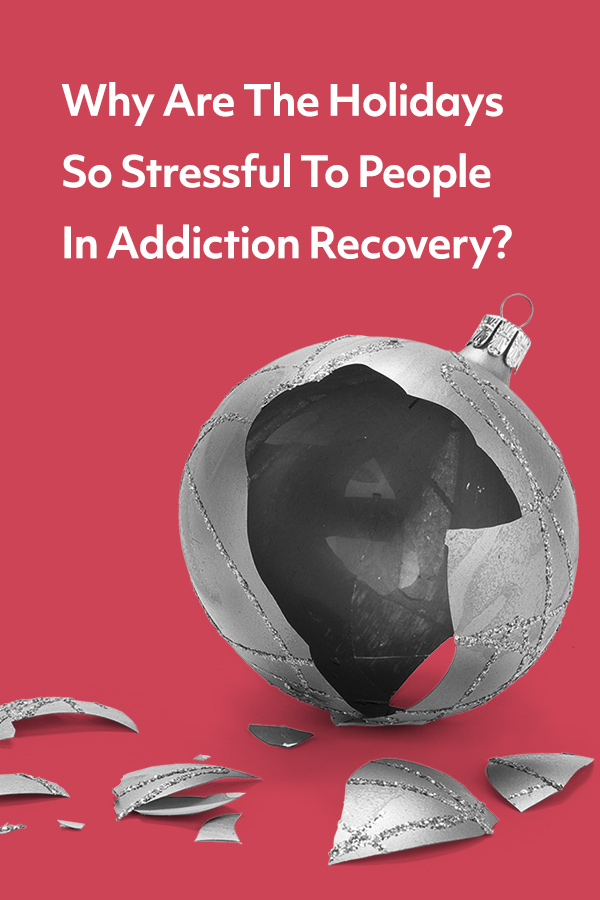
Holidays are stressful for people newly in addiction recovery. Learn why holidays create stress, so you can understand and help your loved one.

Elizabeth Brico is a freelance writer with an MFA in Writing & Poetics from Naropa University. She is a journalism fellow with TalkPoverty and a recipient of the 2021/22 Unicorn Fund. She is also a regular contributing writer for HealthyPlace’s trauma blog. Her work has appeared on Vice, Vox, Stat News, The Fix, and others. When she isn’t working, she can usually be found reading, writing, or watching speculative fiction.

PrevSuboxone Online Treatment: New Announcement for 2025
Tim’s StoryNext

Any general advice posted on our blog, website, or app is for informational purposes only and is not intended to replace or substitute for any medical or other advice. Workit Health, Inc. and its affiliated professional entities make no representations or warranties and expressly disclaim any and all liability concerning any treatment, action by, or effect on any person following the general information offered or provided within or through the blog, website, or app. If you have specific concerns or a situation arises in which you require medical advice, you should consult with an appropriately trained and qualified medical services provider.

Top

Get the latest recovery news

Instagram Linkedin-in Facebook-f Youtube
    • Treatments
    • Opioids
    • Kratom
    • Alcohol


  • About Workit Health
  • Contact us
  • Our team
  • Media spotlight
  • Careers
  • We Accept Insurance
  • Check insurance
  • Aetna
  • Anthem of Ohio
  • Horizon BCBSNJ
  • Humana
  • Resources
  • What is harm reduction?
  • Addiction recovery resources
  • Suboxone FAQs
  • Blog
  • Friends and Family
  • Resources for friends and family
  • Help Them Heal Guide
  • Refer a loved one
  • Members
  • Login
  • Community
  • Medical records request form
  • Medical Records Fax: 833-923-0584
  • Tech support guides
  • Call us: 855-659-7734 M-F 8am-9pm EST
    • Partners
    • Make a referral
    • For health plans
    • For providers and hospitals
    • Third-party medical records requests
Treatments
    • Opioids
    • Kratom
    • Alcohol
About Us
  • Contact us
  • Our team
  • Media spotlight
  • Careers
Resources
  • What is harm reduction?
  • Addiction recovery resources
  • Suboxone FAQs
  • Blog
Insurance
  • Check insurance
  • Aetna
  • Anthem of Ohio
  • Horizon BCBSNJ
  • Humana
Members
  • Login
  • Community
  • Medical records request form
  • Medical Records Fax: 833-923-0584
  • Tech support guides
  • Call us: 855-659-7734
    M-F 8am-9pm EST
Resources
  • What is harm reduction?
  • Addiction recovery resources
  • Suboxone FAQs
  • Blog
Friends and Family
  • Resources for friends and family
  • Help Them Heal Guide
Partners
    • Make a referral
    • For health plans
    • For providers and hospitals
    • Third-party medical records requests
Locations
  • Arizona
  • California
  • Florida
  • Illinois
  • Michigan
  • Montana
  • New Jersey
  • New Mexico
  • Ohio
  • Oklahoma
  • Texas
  • Washington
Read more about Suboxone risks and concerns

Suboxone (buprenorphine/naloxone) is indicated for the treatment of opioid dependence in adults. Suboxone should not be taken by individuals who have been shown to be hypersensitive to buprenorphine or naloxone as serious adverse reactions, including anaphylactic shock, have been reported. Taking Suboxone (buprenorphine/naloxone) with other opioid medicines, benzodiazepines, alcohol, or other central nervous system depressants can cause breathing problems that can lead to coma and death. Other side effects may include headaches, nausea, vomiting, constipation, insomnia, pain, increased sweating, sleepiness, dizziness, coordination problems, physical dependence or abuse, and liver problems. For more information about Suboxone (buprenorphine/naloxone) see Suboxone.com, the full Prescribing Information, and Medication Guide, or talk to your healthcare provider. You are encouraged to report negative side effects of drugs to the FDA. Visit www.fda.gov/medwatch or call 1-800-FDA-1088.

All clinical and medical services are provided by licensed physicians and clinicians who are practicing as employees or contractors of independently owned and operated professional medical practices that are owned by licensed physicians. These medical practices include Workit Health (MI), PLLC; Workit Health (CA), P.C.; Workit Health (NJ), LLC; Workit Health (OH), LLC; Virtual Physician Practice (NY), PLLC; and any other Workit Health professional entity that is established in the future.

Clinic locations

Arizona
2501 N Hayden Rd.
Ste 103
Scottsdale, AZ 85257
fax (HIPAA): (833) 664-5441

California
1460 Maria Lane
Ste 300
Walnut Creek, CA 94596
fax (HIPAA): (855) 716-4494

Florida
600 Heritage Dr.
Ste 210, #17
Jupiter, FL 33458
fax (HIPAA): (813) 200-2822

Illinois
1280 Iroquois Ave
Ste 402
Naperville, IL 60563
fax (HIPAA): (855) 716-4494

Michigan
3300 Washtenaw Ave
Ste 280
Ann Arbor, MI 48104
fax (HIPAA): (855) 716-4494

Montana
415 N Higgins Ave
Ste 6
Missoula, MT 59802
fax (HIPAA): (855) 716-4494

New Jersey
5 Greentree Center
Ste 117
Marlton, NJ 08053
fax (HIPAA): (609) 855-5027

New Mexico
5901 Indian School Road, NE
Ste 212
Albuquerque, NM 87110
fax (HIPAA): (855) 716-4494

Ohio
6855 Spring Valley Dr
Ste 110
Holland, OH 43528
fax (HIPAA): (513) 823-3247

Oklahoma
1010 24th Ave NW
Suite 100
Norman, OK 73069
fax (HIPAA): (855) 716-4494

Texas
5373 W Alabama St
Ste 204
Houston, TX 77056
fax (HIPAA): (737) 738-5046

Washington
9116 Gravelly Lake Dr SW
Ste 107 #3, PMB 1963
Lakewood, WA 98499-3148.
fax (HIPAA): (833) 328-1407

AICPA SOC

Terms of Service

Privacy Policy

Notice of Privacy Practice

View Accessibility Statement

© 2026 Workit Health. All rights reserved.

Not ready to start? We'll send you more information:

  • Workit Health

    When I opt in, Workit Health will send information about their program and recovery resources.

    *I agree to receive marketing and member care messages by email. Messaging frequency varies. I can unsubscribe at any time.

    **I agree to receive marketing and member care messages by text (SMS). Messaging frequency varies. Message and data rates may apply. I can opt out at any time by replying STOP. I can reply HELP to receive support. If I do not consent to receive SMS, and Workit Health is unable to reach me by email, I understand that they will not be able to contact me by text.

    Carriers are not liable for delayed or undelivered messages.

    View our Privacy Policy, Terms of Service, and Consent to SMS and Email.

  • Should be Empty:

Your recovery, your way—
100% online

Book your appointment
Check your insurance coverage
  • Aetna
  • Humana
  • Horizon
  • Cigna
  • Blue Cross Blue Shield
  • and more

👉 Using insurance? Coverage checks are always for free in the Workit Health app.

Check your coverage

Not ready to start? We'll send you more information:

This site uses cookies to improve your experience. By using this site, you consent to our use of cookies.

Accept Cookies