Skip to content

Workit Health Presents: A Dopey Interview of Amy Dresner · Live on YouTube · June 10, 2026 · 7pm est

  • Treatments
    • Opioid Use Disorder

    Start Suboxone treatment online with a licensed provider without judgment.

    • Alcohol Use Disorder

    Flexible goals — moderation or abstinence. Evidence-based, no 12-step requirement

    • Kratom & 7-OH

    Medication options that actually work for withdrawals and cravings.

    Anxiety · Depression · Insomnia · Hepatitis C · And more

    Substance use often goes hand-in-hand with other conditions. Your provider can prescribe for many of these, including anxiety, depression, and insomnia—so you can get back on solid ground. They can even treat hepatitis C and prescribe PrEP for HIV prevention.

    Start treatment
  • Pricing
  • Locations

    Available now

    • Arizona
    • California
    • Florida
    • Illinois
    • Michigan
    • Montana
    • New Jersey
    • New Mexico
    • New York
    • North Carolina
    • Ohio
    • Oklahoma
    • Texas
    • Washington
    Get notified if we open in your state
  • Reviews
  • About
    • About Workit Health

    Our mission, founders, and clinical team.

    • Workit Labs · Research

     Peer-reviewed publications on telehealth addiction care.

    • Blog

    Plain language guides on recovery, medication, and family-support.

    • Careers

    Join the team building the future of addiction care

  • Help Someone
Login
Get started
Get started
  • Login to my account
Treatments
  • Opioid use disorder
  • Suboxone
  • Alcohol use disorder
  • Kratom & 7-OH dependency

whole person care included

Substance use often goes hand-in-hand with other conditions. Your provider can prescribe for many of these, including anxiety, depression, insomnia, hepatitis C, and more—so you can get back on solid ground.

  • Insurance or Self-pay
Locations
  • Arizona
  • California
  • Florida
  • Illinois
  • Michigan
  • Montana
  • New Jersey
  • New Mexico
  • New York
  • North Carolina
  • Ohio
  • Oklahoma
  • Texas
  • Washington
  • Get notified of new state openings →
  • Reviews
About
  • About Workit Health
  • Workit Labs · Research
  • Blog
  • Careers
  • Refer a friend
  • Help Someone
Get started

In crisis? Call or text: 988

Home > Blog > 6 Non-Addictive Anxiety Medications

  • Sobriety Tips and Tools

6 Non-Addictive Anxiety Medications

BY

  • Olivia Pennelle
  • Fact-checked & medically reviewed

on this page

Anxiety is the most common mental health disorder in the U.S., impacting 40 million adults.

While anxiety is treatable, more than 6 out of every 10 people suffering from anxiety do not receive treatment for it. That’s about 24 million people struggling with their anxiety, untreated. Given how prevalent anxiety is—and how commonly people with substance use disorder also struggle with anxiety—we’re going to give you an overview of anxiety, how it intersects with addiction, and some of the most commonly prescribed non-addictive anxiety medications.

What is anxiety?

You might think anxiety is just feeling stressed or apprehensive, but there’s actually a range of anxiety disorders with related but distinct symptoms. The Anxiety and Depression Association of America recognizes these nine types of anxiety:

    1. Generalized anxiety disorder (GAD): Includes persistent and excessive worry even when there is no apparent reason for concern, restlessness, and difficulty concentrating. GAD has similar symptoms to panic disorder and obsessive-compulsive disorder. It affects 6.8 million adults in the US population.
    2. Panic disorder: Is characterized by panic attacks. Panic disorder affects 6 million American adults.
    3. Social anxiety disorder: Affects social interactions and causes irrational anxiety. Social anxiety disorder affects 15 million adults in the U.S.
    4. Specific phobias: Phobias go beyond being a little scared—a phobia is the persistent and excessive fear of an object, person, animal, or situation. Phobias affect 19 million adults in the U.S.
    5. Stress: Everyone experiences stress and anxiety in their lives. Technically, anxiety is a response to stress, while stress is in response to a threat. According to the American Psychiatric Association, one-third of Americans live with extreme stress and just over half of the population believe that their stress has increased over the past 5 years.
    6. Obsessive-compulsive disorder (OCD): Characterized by excessive orderliness, unreasonable thoughts and fears, and compulsive behaviors. OCD affects 7.7 million American adults.
    7. Post-traumatic stress disorder (PTSD): This disorder is typically characterized by difficulty recovering from a traumatic experience. Symptoms may include flashbacks, nightmares, feeling a sense of threat when there isn’t one, heightened anxiety, or depressed mood. PTSD is more common among women than men, and it impacts 7.7 million Americans.
    8. Major depressive disorder (MDD): This is the leading cause of disability in the US for people aged 15-43, affecting 16.1 million adults. Symptoms include irritability, trouble sleeping, sadness, anxiety, restlessness, mood swings, changes in appetite, isolation, crying, weight loss or gain, and ruminating.
    9. Persistent depressive disorder: This chronic form of depression lasts for at least two years. It affects 1.5 percent of the American population.

Do people with addiction also suffer from anxiety?

Yes. As the list above illustrates, anxiety disorders affect millions of Americans. Anxiety disorders co-occur with substance use disorders at a high rate. Anxiety and substance use disorders are often risk factors for one other. This means that people with addiction are at increased risk of suffering from anxiety, and those with anxiety are at increased risk of suffering from addiction. According to the Substance Abuse and Mental Health Services Administration (SAMHSA), people with substance use disorders are more likely to have co-occurring mental disorders, including depressive disorder, anxiety disorders, ADHD, eating disorders, and personality disorders.
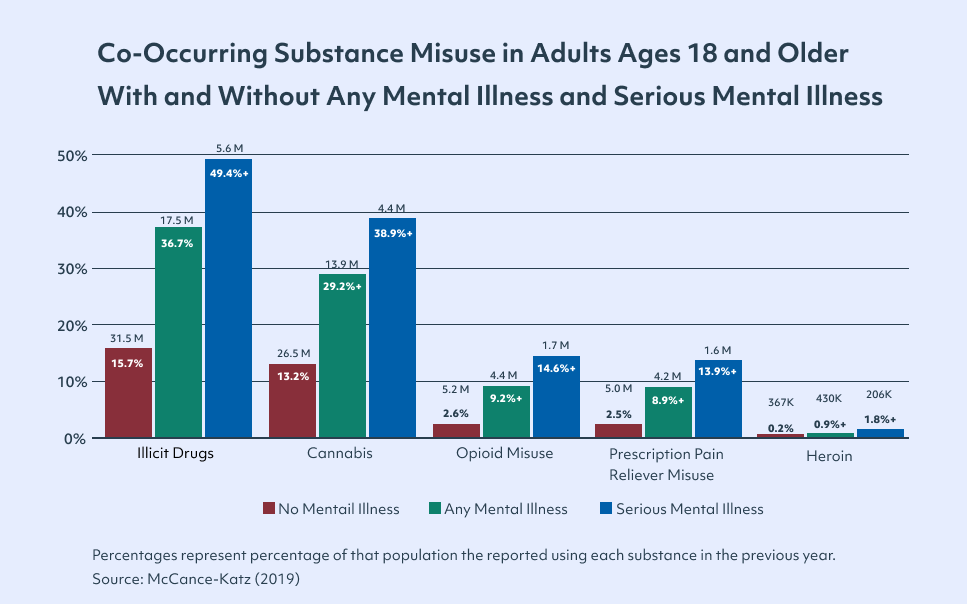
 

Graph of substance use and mental health concerns

Co-occurring disorders can have a significant impact on a person’s life—emotionally, physically, socially, and economically. Unfortunately, there remain treatment gaps in the behavioral health field in treatment approaches for both conditions. This makes it particularly important for addiction treatment professionals (or people in recovery) to expect mental illness at some point within recovery.

For those not in recovery, it’s important to note that certain substances can exacerbate anxiety, including alcohol, benzodiazepines, amphetamines (methamphetamine and Adderall), cocaine, and opioids. It’s not unusual for people to use these substances to self-medicate anxiety or other types of mental illness.

It’s vital that those with substance use disorder seek help for their addiction which will help reduce symptoms of anxiety.

Anxiety symptoms to watch out for

Above, we listed the main symptoms associated with each disorder. However, it’s also helpful to have a short list of symptoms to watch out for on hand:

  • Restlessness/feeling on edge
  • Excessive worry
  • Difficulty concentrating
  • Tension in your body
  • Changes to sleep patterns
  • Lack of tolerance/irritability

If you experience any of these symptoms, you may want to discuss them with your medical provider. You don’t have to wait for these symptoms to cause you a certain amount of pain or distress—if you’re concerned about the anxiety symptoms you’re feeling, that’s a good enough reason to talk to your provider.

Non-addictive anxiety medications

Many people with addiction are wary of taking medication for their mental health because they fear new substance use disorders. And it is true that some anxiety medications (like benzodiazepines) can become addictive. But there are also many non-habit-forming anxiety medications. Some non-addictive anxiety medications include:

  • Hydroxyzine (Vistaril): A non-habit-forming antihistamine that has a calming and sedative effect. Possible side effects of hydroxyzine are usually minimal, and include dry mouth, constipation, confusion, dizziness, and headache.
  • SSRIs: Selective Serotonin Reuptake Inhibitors are used to treat many of the anxiety disorders listed above, including GAD, OCD, panic disorder, phobias, and PTSD. They work by increasing the neurotransmitter serotonin, which is responsible for mood. SSRIs are non-habit-forming and usually have minimal side effects. Possible side effects of SSRIs include nausea, headache, drowsiness, dry mouth, insomnia, nervousness, sexual problems, and impact on appetite. Some commonly prescribed SSRIs are:
    • escitalopram (Lexapro®)
    • fluoxetine (Prozac®)
    • citalopram (Celexa®)
    • paroxetine (Paxil®)
    • sertraline (Zoloft®)
  • SNRIs: Serotonin and Norepinephrine Reuptake Inhibitors do the same thing as SSRIs, but also increase the chemical messenger norepinephrine, which increases alertness and arousal affecting a person’s mood and ability to focus. Possible side effects of SNRIs include nausea, dry mouth, dizziness, headache, excessive sweating, tiredness, constipation, changes in sexual function, and loss of appetite. SNRIs approved to treat anxiety are:
    • Duloxetine (Cymbalta®)
    • Venlafaxine (Effexor XR®)
  • Beta-Blockers: Although not specifically approved for the treatment of anxiety, beta-blockers are often prescribed off-label for anxiety disorders. They work by blocking the effects of epinephrine (adrenaline), which lowers the heartbeat and reduces the physical sensations of anxiousness. They are particularly helpful for when people experience anxiety in specific situations, like public speaking, but not appropriate for some other kinds of anxiety. The most common beta-blocker available is propranolol (Inderal®).
  • Buspirone: This medication influences neurochemical messaging of a serotonin receptor, changing the balance of neurotransmitters in the brain. Buspirone doesn’t have some of the sexual side effects that can be present with SSRIs and SNRIs. Possible side effects of buspirone include dizziness, nausea, headache, fatigue, difficulty falling asleep or staying asleep, lightheadedness, and increased sweating. Buspirone can take 4-6 weeks to achieve efficacy. Brand names of buspirone include:
    • Buspar®
    • Vanspar®

It can take time to find the anxiety medication and dosage that works well for you. Your medical provider will be able to discuss your specific concerns and make recommendations. Many people find that the most effective treatment plan for anxiety is a combination of medication and psychotherapy.

Additional resources for anxiety

There are a number of helpful tools and resources available from the following organizations about anxiety disorders:

National Alliance on Mental Illness
Anxiety and Depression Association of America
Centers for Disease Control and Prevention, Division of Mental Health
National Institute on Mental Health

PrevpreviousAsk Robin: Tracking Time
nextThe Science Of Suboxone (Buprenorphine/Naloxone)Next

on this page

need help?

Stop the cycle of cravings and withdrawal

  • Suboxone prescribed online*
  • Most major insurance accepted
  • $25–$35/mo with insurance
  • ~2 days to first appointment

*as clinically appropriate

Download the app →

Learn about treatment

PrevpreviousAsk Robin: Tracking Time
nextThe Science Of Suboxone (Buprenorphine/Naloxone)Next

ABOUT THE AUTHOR

Olivia Pennelle (Liv) has a masters in clinical social work from Portland State University. She is a mental health therapist, writer, and human activist. Her writing has appeared in STAT News, Insider, Filter Magazine, Ravishly, The Temper, and Shondaland. She is the founder of Liv’s Recovery Kitchen, Life After 12-Step Recovery, and Tera Collaborations. She lives near Portland, Oregon. Follow her on Instagram @Livwritesrecovery and @teracollaborations

ready when you are​

Download the app. Get back to yourself.

Sign up takes about 5 minutes. Most members have their first appointment within 2 days. Covered by most insurance.

Download the app
Learn more

KEEP READING

Why Is Suboxone Taken Sublingually?

Many medications are swallowed, but Suboxone (buprenorphine/naloxone) is taken under the tongue (sublingually) or on the cheek (buccally).

Read now

5 Questions About Online Suboxone Treatment, Answered

Workit Health treats opioid addiction with medication like Suboxone online via telehealth. How do we do it? In this post, we answer several common questions.

Read now

5 Sneaky Alcohol Myths and the Truth Behind Them

If you’ve drink at all, you’ve likely heard rumors and myths about alcohol and hangovers. Let’s go beyond the myths to face facts.

Read now

Any general advice posted on our blog, website, or app is for informational purposes only and is not intended to replace or substitute for any medical or other advice. Workit Health, Inc. and its affiliated professional entities make no representations or warranties and expressly disclaim any and all liability concerning any treatment, action by, or effect on any person following the general information offered or provided within or through the blog, website, or app. If you have specific concerns or a situation arises in which you require medical advice, you should consult with an appropriately trained and qualified medical services provider.

A future free of addiction is in your hands

Recover from addiction at home with medication, community, and support—from the nonjudmental experts who really care.

Get started today

100% virtual addiction treatment for opioid, alcohol, and kratom use disorders. Evidence-based medication, therapy, and recovery support—from your phone.

hello@workithealth.com

Instagram Linkedin-in Facebook-f Youtube
    • TREATMENTS
    • Opioids
    • Kratom & 7-OH
    • Alcohol
    • Insurance & Cost
    • Locations
    • Get started
    • HELP SOMEONE
    • Help a loved one
    • Refer a friend
    • Recovery blog
    • Narcan guide
    • COMPANY
    • About
    • Workit Labs · Research
    • Careers
    • Partnerships
    • Contact
    • MEMBERS
    • Login
    • Create account
    • Refer a friend
    • Medical records request form
    • Fax: 833-923-0584
    • Phone: 855-659-7734
AICPA SOC
  • 42 CFR Part 2
  • WCAG 2.1 AA

contact information

Arizona
2501 N Hayden Rd.
Ste 103
Scottsdale, AZ 85257
fax (HIPAA): (833) 664-5441

California
1460 Maria Lane
Ste 300
Walnut Creek, CA 94596
fax (HIPAA): (833) 244-6705

Florida
600 Heritage Dr.
Ste 210, #17
Jupiter, FL 33458
fax (HIPAA): (813) 200-2822

Illinois
1280 Iroquois Ave
Ste 402
Naperville, IL 60563
fax (HIPAA): (833) 664-8715

Michigan
3300 Washtenaw Ave
Ste 280
Ann Arbor, MI 48104
fax (HIPAA): (855) 716-4494

Montana
415 N Higgins Ave
Ste 6
Missoula, MT 59802
fax (HIPAA): (833) 664-5486

New Jersey
5 Greentree Center
Ste 117
Marlton, NJ 08053
fax (HIPAA): (609) 855-5027

New Mexico
5901 Indian School Road, NE
Ste 212
Albuquerque, NM 87110
fax (HIPAA): (833) 664-5701

New York
845 Central Avenue
Ste 204
Albany, NY 12206
fax (HIPAA): (844) 921-1079

North Carolina
3719 Latrobe Drive
Ste 850-M
Charlotte, NC 28211-4827
fax (HIPAA): (984) 375-6710

Ohio
6855 Spring Valley Dr
Ste 110
Holland, OH 43528
fax (HIPAA): (513) 823-3247

Oklahoma
1010 24th Ave NW
Suite 100
Norman, OK 73069
fax (HIPAA): (833) 672-3125

Texas
5373 W Alabama St
Ste 204
Houston, TX 77056
fax (HIPAA): (737) 738-5046

Washington
9116 Gravelly Lake Dr SW
Ste 107 #3, PMB 1963
Lakewood, WA 98499-3148.
fax (HIPAA): (833) 328-1407

suboxone risk & concerns

Suboxone (buprenorphine/naloxone) is indicated for the treatment of opioid dependence in adults. Suboxone should not be taken by individuals who have been shown to be hypersensitive to buprenorphine or naloxone as serious adverse reactions, including anaphylactic shock, have been reported. Taking Suboxone (buprenorphine/naloxone) with other opioid medicines, benzodiazepines, alcohol, or other central nervous system depressants can cause breathing problems that can lead to coma and death. Other side effects may include headaches, nausea, vomiting, constipation, insomnia, pain, increased sweating, sleepiness, dizziness, coordination problems, physical dependence or abuse, and liver problems. For more information about Suboxone (buprenorphine/naloxone) see Suboxone.com, the full Prescribing Information, and Medication Guide, or talk to your healthcare provider. You are encouraged to report negative side effects of drugs to the FDA. Visit www.fda.gov/medwatch or call 1-800-FDA-1088.

© 2026 Workit Health. All rights reserved.
Privacy Policy

Notice of Privacy Practice

Terms of Service

View Accessibility Statement

All clinical and medical services are provided by licensed physicians and clinicians who are practicing as employees or contractors of independently owned and operated professional medical practices that are owned by licensed physicians. These medical practices include Workit Health (MI), PLLC; Workit Health (CA), P.C.; Workit Health (NJ), LLC; Workit Health (OH), LLC; Virtual Physician Practice (NY), PLLC; and any other Workit Health professional entity that is established in the future.

Not ready to start? We'll send you more information:

  • Workit Health

    When I opt in, Workit Health will send information about their program and recovery resources.

    *I agree to receive marketing and member care messages by email. Messaging frequency varies. I can unsubscribe at any time.

    **I agree to receive marketing and member care messages by text (SMS). Messaging frequency varies. Message and data rates may apply. I can opt out at any time by replying STOP. I can reply HELP to receive support. If I do not consent to receive SMS, and Workit Health is unable to reach me by email, I understand that they will not be able to contact me by text.

    Carriers are not liable for delayed or undelivered messages.

    View our Privacy Policy, Terms of Service, and Consent to SMS and Email.

  • Should be Empty:

This site uses cookies to improve your experience. By using this site, you consent to our use of cookies.

Accept Cookies